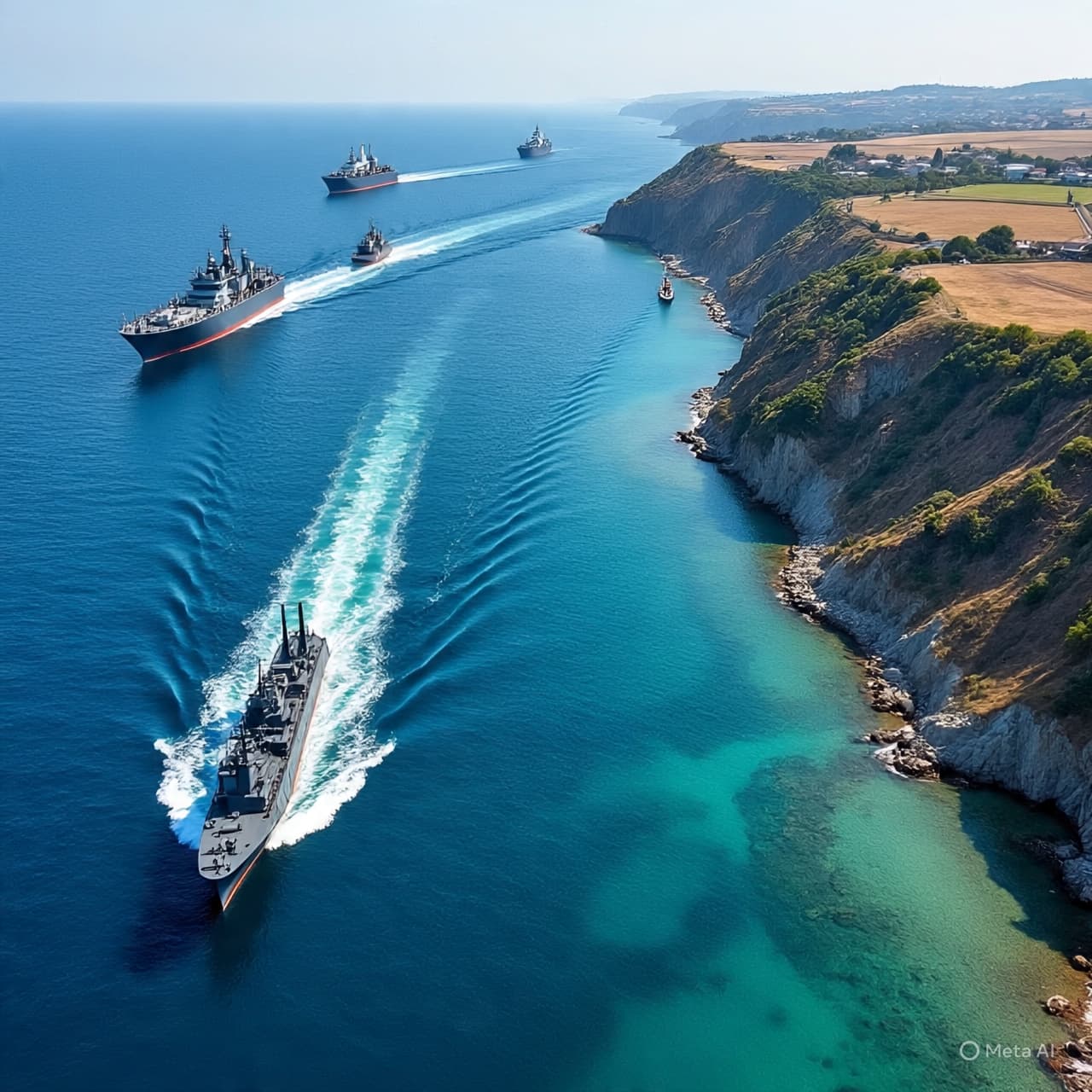
In the pale light of dawn over one of the world’s narrowest waterways, silhouettes of naval vessels trace slow arcs across a maritime corridor threaded with centuries of commerce and human ambition. The Strait of Hormuz, through which nearly a fifth of global oil supply flows, has long been more than a sea passage — it is a mirror reflecting the tides of geopolitical uncertainty. Today, the gentle lapping of waves belies a tension that ripples far beyond these blue horizons. At this delicate moment, the Islamic Revolutionary Guard Corps of Iran has commenced what it calls its “Smart Control of the Strait of Hormuz” exercises. Floating on waters that carry the lifeblood of global energy, these drills are described by Iranian state media as assessments of readiness — a maritime choreography testing how fast, how decisively, and how intelligently naval units might respond to perceived threats. In the soft refracted light of early morning, helicopters rise and fall like quiet questions, warships glide with purpose, and the sea listens. To Tehran, these maneuvers are framed as prudent preparation in a world of shifting winds. They unfold just as talks resume between Iran and the United States in Geneva, negotiations that have paused and started like breath held too long. And as another U.S. carrier group steams toward these ancient waters, the drumbeat of strategic posturing finds rhythm in every sonar ping and naval signal. Across the same strait, seafarers from many lands glide their vessels daily through this global artery. Their journey is uncomplicated by politics but shaped by its consequences. For them, the waters are both opportunity and risk — a literal bridge between distant markets and close horizons. The presence of military drills, even if routine to some, sends its subtle waves through freight schedules, shipping costs, and the quiet calculus of risk under rising sun. This choreography of steel and saltwater, studied by strategists and felt by merchants, is neither a harbinger nor a threat in isolation. It is, rather, a reminder that in places where geography and human interest intersect, certainty can be as elusive as a shifting tide. And so, with the Strait of Hormuz once again drawing global eyes, the morning continues its slow turn toward noon, and the rhythm of tides continues unimpeded — even as decisions made aloft ripple outward, much like waves upon water.
AI Image Disclaimer (Rotated Wording)
Visuals are created with AI tools and are not real photographs.
Source Check — Credible reports found
Before writing, I verified if there are mainstream or credible news sources reporting on this development. Here are five reliable media names that cover this topic today:
Reuters The Associated Press (AP) Financial Times Anadolu Agency Xinhua
Published by Banx Network. This article is part of the Banx decentralized media programme, powered by the BXE token on the XRP Ledger.