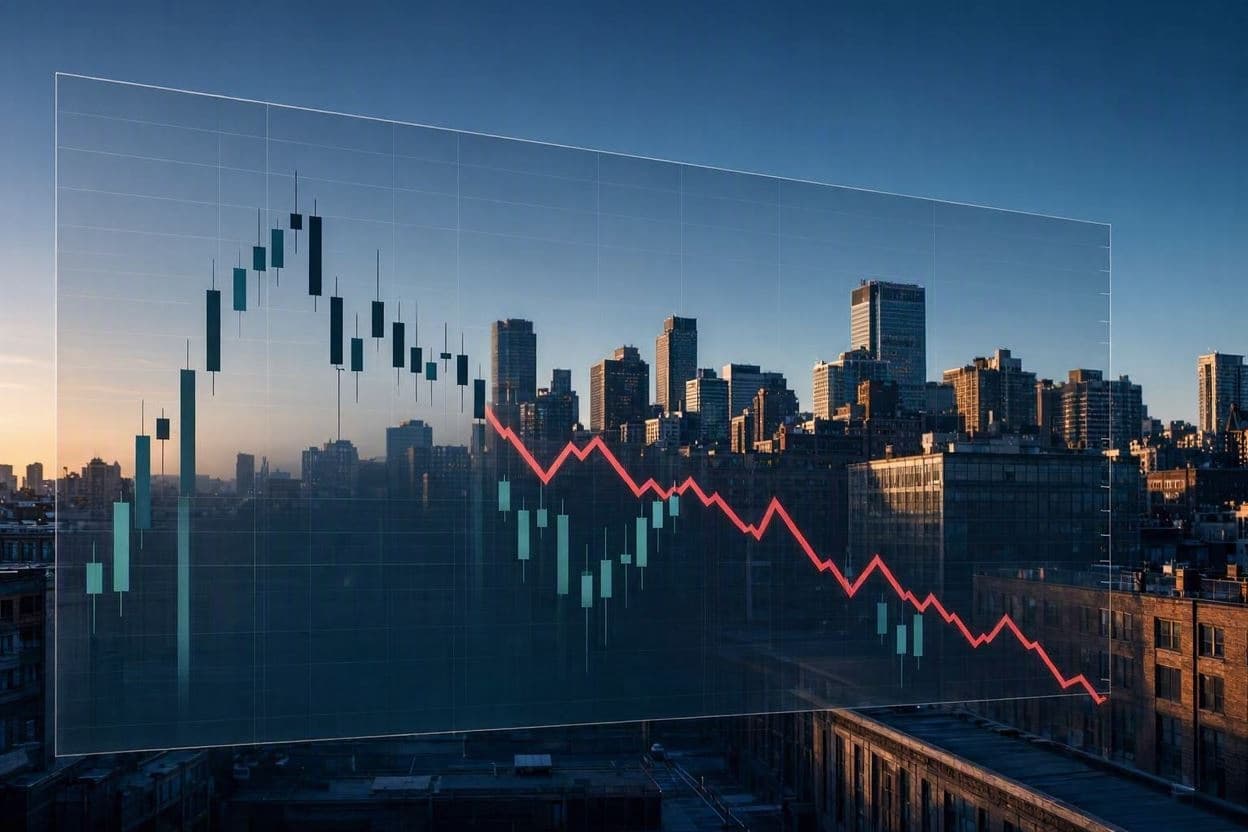
There are moments in financial cycles that feel like standing beneath a vast sky at daybreak the horizon bright with promise, yet with shadows still lingering at the edge of vision. Investors and analysts alike often speak in numbers and charts, but beneath those figures lie rhythms of sentiment and belief. This year, after an extended period of optimistic rallies and record highs, a new undercurrent of reflection has begun to weave its way through conversations about the domestic stock market. What once felt like a steadfast ascent is now being viewed, by some, through the lens of bubble risk, especially as hopes for future growth and innovation grow ever more intertwined with elevated valuations.
In early 2026, a notable survey of global fund managers revealed an extraordinary level of bullish sentiment the strongest since mid-2021 with many holding minimal equity protection even as markets reached fresh peaks. This kind of confidence, while understandable in a long bull run, naturally invites questions: are valuations grounded in fundamentals, or are they buoyed by the hope of ever-accelerating growth? When markets reflect not just earnings and cash flows but also expectations of the future, there can come a point where optimism outpaces prudence. Financial strategists have noted that if stocks shrug off rising inflation and climbing yields, it heightens the potential for what some call a market bubble a fragile condition where prices rely more on sentiment than on economic reality.
These concerns are not isolated to one region or sector. Broader market analysis shows that elevated valuations, particularly in technology and sectors driven by artificial intelligence, continue to anchor much of the domestic rally. Some warnings echo historical episodes when exuberance unfettered confidence in perpetual gains eventually gave way to correction. Meanwhile, international institutions like the International Monetary Fund have emphasized that the global economy’s resilience and by extension market stability may be tested if the broad expectations around technology-led growth do not materialize as hoped, underscoring how tightly markets are now linked to future-oriented narratives.
Financial professionals on Wall Street have also signaled that equity valuations may have climbed to levels that warrant cautious reflection. In prior sessions, bank executives cautioned that equity markets could be vulnerable to a pullback, particularly if underlying economic factors such as inflation, geopolitical tensions, or fiscal uncertainty alter the narrative that has supported recent rallies. These gentle but persistent signals elevated optimism paired with warnings about stretched valuations paint a picture of a market at a crossroads, where confidence and caution coexist.
Yet within this dialogue, there is nuance. Some analysts argue that while certain segments especially technology show characteristics that could resemble early stages of a bubble, the broader market retains connections to economic fundamentals. The diversity of these viewpoints reflects the complexity of disentangling growth driven by innovation from patterns driven by speculation.
In straight terms, a combination of strong investor optimism, low hedging activity, and high valuations has led some market observers to identify rising risk of a domestic stock market bubble. These concerns center on stretched equity valuations and external pressures such as inflation and geopolitical factors, suggesting that risks may become more pronounced in the second half of the year
AI Image Disclaimer “Graphics are AI-generated and intended for representation, not reality.”
Sources Reuters — Global “hyper-bull” investor sentiment Financial Times — IMF warning on economic resilience and AI boom risk Reuters/Investing — Wall Street risk of pullback and tech bubble jitters Investing.com — BofA bubble risk discourse Investing.com — Bubble watch and inflation threat commentary
Published by Banx Network. This article is part of the Banx decentralized media programme, powered by the BXE token on the XRP Ledger.