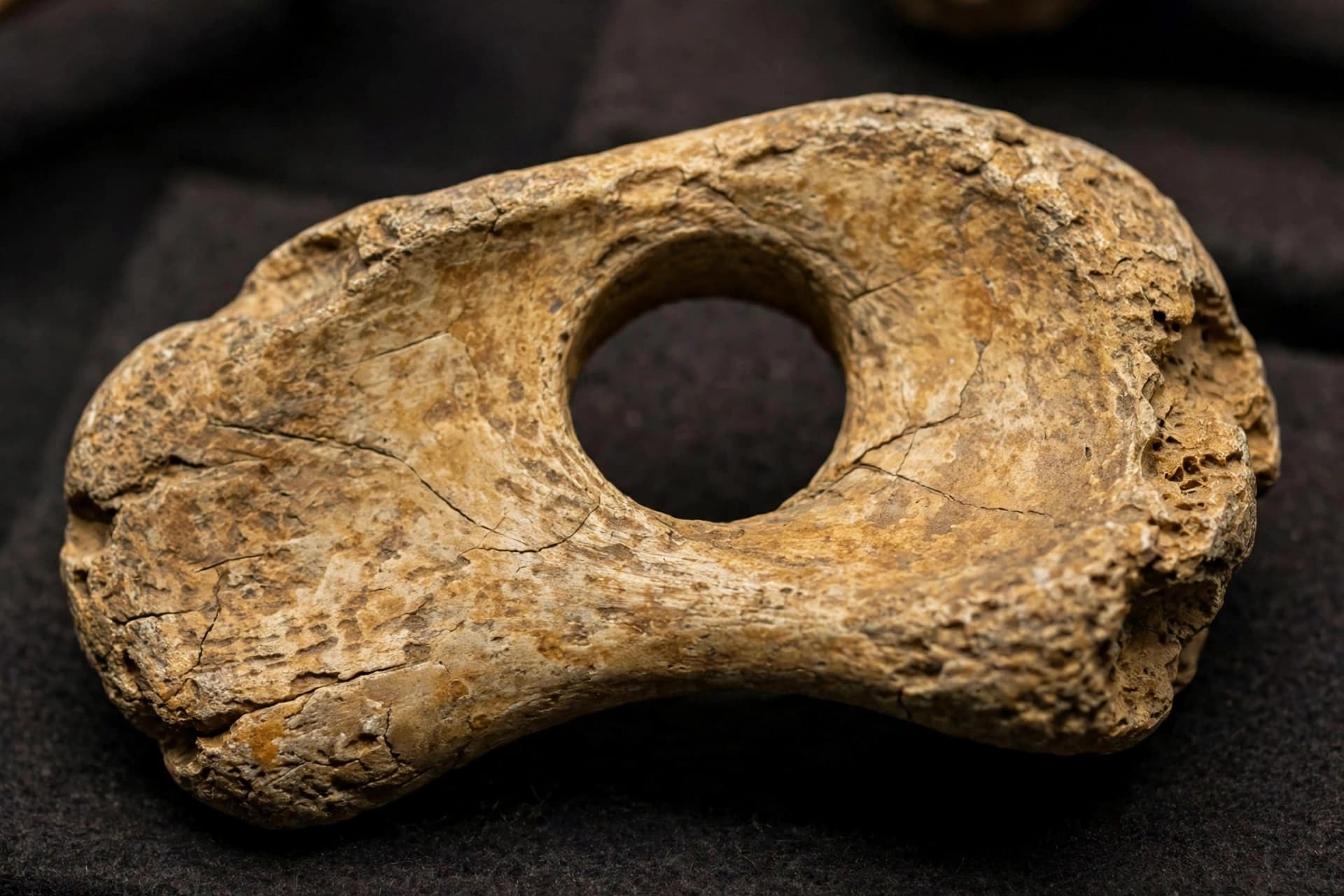
In the dim corridors of a museum storeroom, beneath the hush of corridors frequented by scholars and curious visitors alike, a skeleton sleeps in quiet repose. Bone upon stone, it rests there as a testament to lives once lived beneath ancient waves. Yet in some rare instances, time’s slow alchemy preserves more than shape and frame: it preserves the outline of soft flesh that once rippled with life.
Such is the case with a remarkable specimen unearthed from the Jurassic‑age Posidonia Shale of southern Germany—a fossil that extends our reach ever so slightly beyond the domain of mere bones and into the realm of skin itself. This 183‑million‑year‑old marine reptile, a plesiosaur known to researchers as MH7, carries traces of its original integument preserved in delicate detail. After decades in storage, it has now been re‑examined with modern tools and fresh eyes, offering scientists an unprecedented peek at the exterior of one of the sea’s great ancient travelers.
Plesiosaurs are among the most evocative of prehistoric marine reptiles—long‑necked, four‑flippered denizens of Mesozoic seas that shifted through the waters with an elegance now seen only in reconstructions. For generations, paleontologists have pieced together their lives and forms from skeletons alone, filling in what flesh might have looked like more by educated imagination than direct evidence. Yet preservation of soft tissue is rare in fossil records, especially for creatures whose organic material typically decays long before burial can commence.
In the case of MH7, unique conditions in the Jurassic seafloor’s chemistry allowed fragments of skin—both smooth surfaces and patches bearing tiny scales—to survive. Under the scrutiny of microscopic study, scientists discovered that the tail region bore skin that seemed remarkably smooth, while the edges of its flippers carried small, scale‑like structures. This mosaic of textures hints at how these ancient animals were adapted to their aquatic worlds, possibly enhancing speed and maneuverability through the interplay of drag reduction and propulsion.
Such revelations invite a fuller picture of life in prehistoric oceans. Skin and scale impressions not only shape images in museum halls and illustrations on pages, they also whisper to us about movement, behavior, and environment—suggesting how a creature might have sliced through water or hunted among shoals of fish. These soft tissues are like elusive brushstrokes on the canvas of deep time, adding dimension to forms once known only by skeletons.
Of course, the interpretation of such soft remains carries its own constraints. What survives in stone is never a complete echo of what once was, and scientists tread lightly between evidence and inference. Yet every fragment preserved beyond mere bone enriches the narrative of life on Earth. These traces remind us that the story of the plesiosaur is not only about its age or size, but about its presence in a world both distant and deeply connected to ours through the continuity of life.
In straight news terms, researchers have re‑examined a 183‑million‑year‑old plesiosaur fossil from Germany that preserves rare soft tissue, revealing that its skin texture included both smooth and small scale‑like regions. This finding provides new evidence to refine reconstructions of how these extinct marine reptiles may have appeared and moved in their environment.
AI Image Disclaimer: Illustrations were created using AI tools and are not real photographs.
Sources
Reuters Smithsonian Magazine IFLScience Sci.News Popular Science
Published by Banx Network. This article is part of the Banx decentralized media programme, powered by the BXE token on the XRP Ledger.