Some nights, the sky reminds us that even above the familiar horizon there is wider weather at play, not of clouds and fronts, but of particles and magnetic fields stretching between the Sun and Earth. This weekend, space weather forecasts suggest such a moment may be arriving again: the northern lights — also known as the aurora borealis — could be visible from parts of the United States as far south as 15 states on Sunday night, giving skywatchers a chance to glimpse shimmering lights that are usually seen closer to the poles.
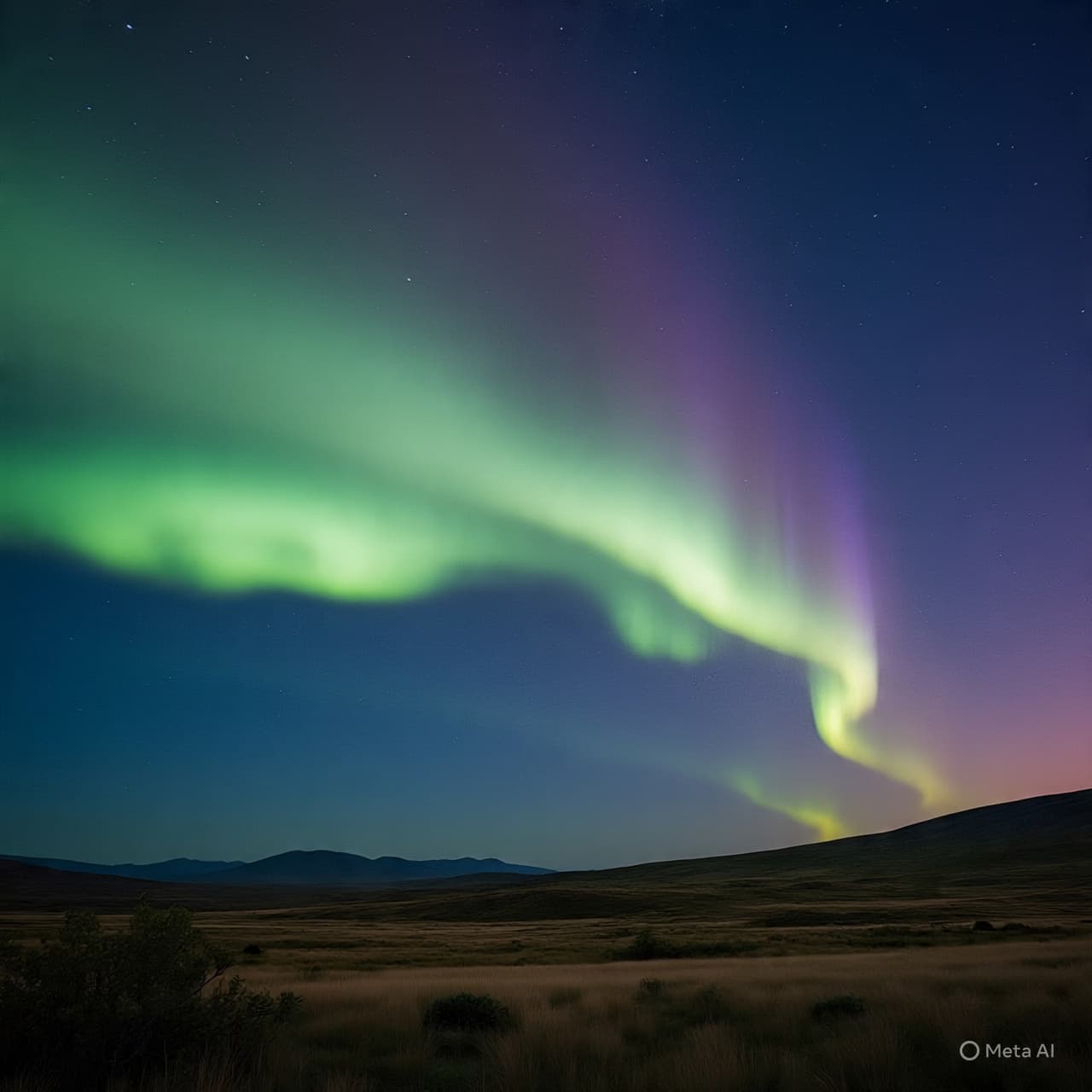
The aurora borealis occurs when charged particles flowing from the Sun — carried by streams in the solar wind — interact with Earth’s magnetic field and collide with gases high in the atmosphere. This interaction releases flashes of light, often green, pink or pale violet, that ripple and dance across dark northern skies. When conditions in space are just right, those lights can spread southward from the Arctic Circle into higher northern states.
According to space weather observers, forecasts this weekend point to minor to moderate geomagnetic activity, meaning Earth’s magnetic field may be stirred enough that glowing displays extend into parts of the northern United States. This could place stretches of sky over states along the U.S.–Canada border — from the Pacific Northwest to the Northeast — within reach of the aurora view line. On clear, dark nights, especially away from city lights, residents of these states might see something unusual and beautiful overhead.
States where sightings are considered more likely include far northern areas of Washington, Idaho, Montana, North Dakota and South Dakota, as well as parts of Minnesota, Wisconsin, northern Michigan and northern Iowa. Further east, the aurora might stretch into upstate New York and the northern reaches of Vermont, New Hampshire and Maine — and, of course, Alaska, where such displays are more common.
For many people, the best odds of seeing the lights will come late in the evening and into the early hours of Monday, particularly between about 10 p.m. and 2 a.m., when skies are darkest and aurora activity tends to peak. Observers are often advised to find a north-facing spot with as little light pollution as possible — a quiet field, lakeshore or hillside where the horizon is broad and unobstructed.
Photography enthusiasts sometimes find that even when the lights are faint to the naked eye, they show up more vividly in long-exposure shots. A stable camera on a tripod, set to low light settings, can often capture colors and arcs that are hard to see in real time.
Experiences like this echo something quietly human in all of us: an awareness that there’s more above us than streetlamps and stars, a reminder of the dynamic relationship between our planet and the Sun. On nights like this, when space weather cooperates and the skies are clear, small gatherings may form under the dark sky — families, friends, solitary watchers — hoping to see the lights flicker above in shapes and hues that have stirred wonder for generations.
And even if the aurora proves faint or elusive this time, the very chance of seeing it invites people to look up, pause, and connect with something larger than the everyday. It’s a quiet spectacle that speaks to the enduring allure of the night sky and to the surprising moments when Earth and Sun meet in light.
AI Image Disclaimer Visuals are created with AI tools and are intended for representation, not actual photographs.
Sources
• Coverage from major space weather and science news outlets on forecasts indicating that geomagnetic activity may make the northern lights visible from up to 15 U.S. states.
Published by Banx Network. This article is part of the Banx decentralized media programme, powered by the BXE token on the XRP Ledger.