There are things that seem, by their nature, impossible to hold. Light is among them—always moving, always arriving and leaving, never settling long enough to be contained. It travels across space with quiet certainty, indifferent to boundaries, slipping through the world in ways that feel almost untouchable.
And yet, in the careful spaces of laboratory work, where attention narrows and materials are shaped at scales beyond ordinary perception, this assumption begins to soften. Light, it seems, can be persuaded—not stopped entirely, but guided, slowed, and held within confines so small they approach the limits of visibility.
In recent research, scientists have demonstrated the ability to confine light within a layer of material roughly a thousand times thinner than a human hair. This layer, measured at the nanoscale, acts not as a barrier, but as a surface along which light can travel, compressed and contained in a way that alters its usual behavior.
The mechanism behind this effect lies in the interaction between light and specially engineered materials. When light encounters certain surfaces, it can couple with electrons, forming hybrid waves known as polaritons. These waves move more slowly than light itself and can be guided along extremely thin layers, effectively trapping the energy within a confined space.
What is notable is not only the scale, but the degree of control. By designing materials with precise properties, researchers can influence how light behaves—how tightly it is confined, how far it travels, and how it interacts with its surroundings. The result is a form of light that is no longer free in the conventional sense, but structured, directed, and held within a defined path.
This work exists within a broader effort to manipulate light at ever smaller scales. As electronic devices approach physical limits, attention has turned toward photonics—the use of light to carry information. Being able to confine and guide light in such thin layers opens possibilities for faster, more efficient systems, where signals move with reduced loss and greater precision.
There is also a more fundamental aspect to the discovery. It reflects a shift in how light is understood—not only as something that travels through space, but as something that can interact with matter in ways that reshape its character. In these interactions, the distinction between light and material begins to blur, creating behaviors that belong to neither entirely.
The thinness of the layer itself carries a certain weight. A human hair, already fine to the eye, becomes a point of comparison for something far smaller. Within this narrow boundary, light is guided along a path it would not naturally take, its motion altered without being extinguished.
There is a quiet precision in this achievement. It does not announce itself loudly, nor does it alter the visible world in immediate ways. Instead, it exists at the edge of perception, where the smallest changes can lead to broader possibilities.
Scientists have demonstrated that light can be confined within a nanoscale layer about 1,000 times thinner than a human hair by using advanced materials that guide hybrid light–matter waves. The discovery could contribute to future developments in photonics and nanoscale technologies.
AI Image Disclaimer
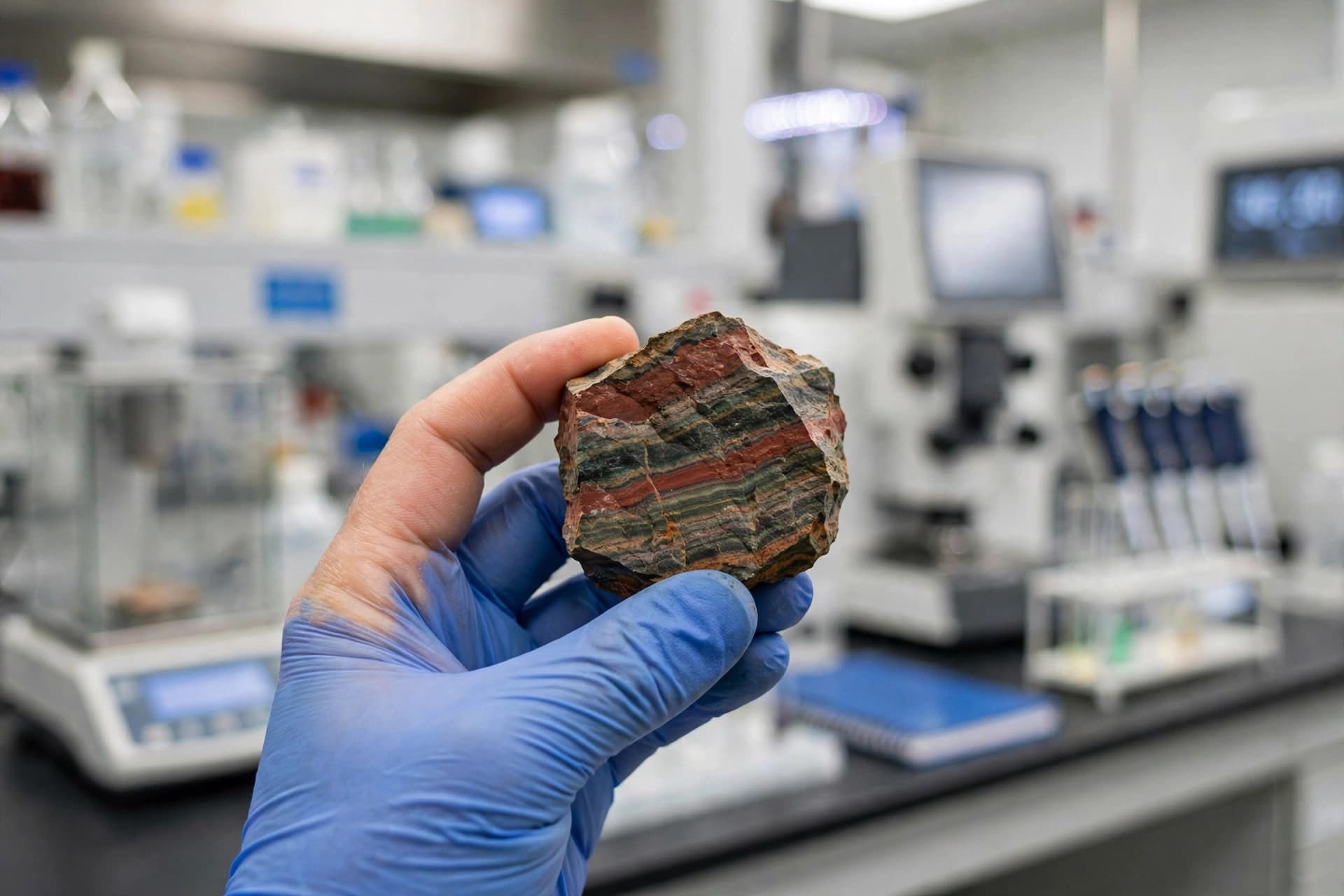
These visuals are AI-generated representations intended to illustrate scientific concepts and are not real experimental images.
Source Check Nature Science MIT Technology Review BBC The Guardian
Published by Banx Network. This article is part of the Banx decentralized media programme, powered by the BXE token on the XRP Ledger.