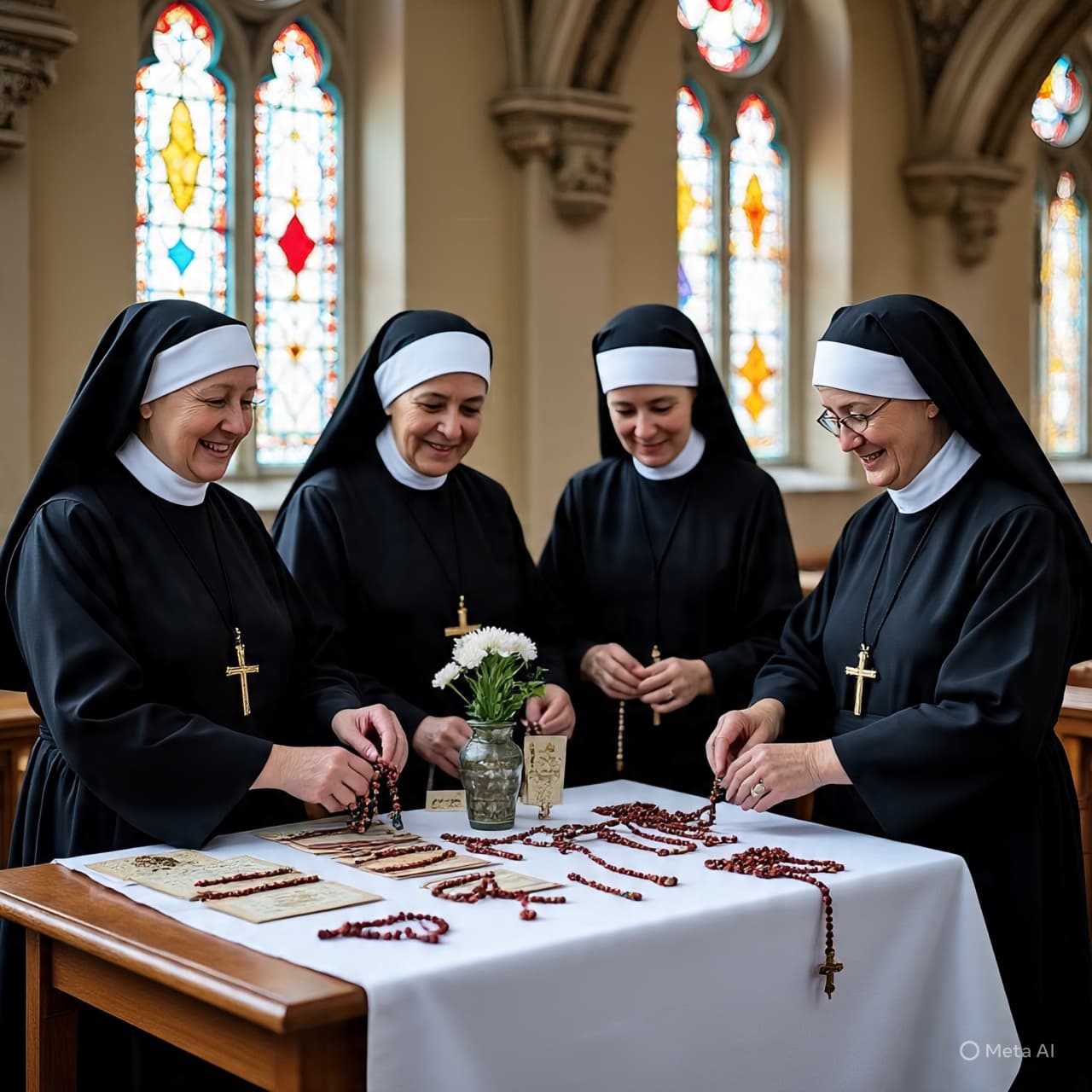
Sometimes the most unexpected chapters in our shared human story emerge not from battlefields or political chambers, but in the quiet aisles where the faithful gather. In the soft light that filters through stained glass, thought to illuminate hope and prayer, there can also be shadows that invite deeper reflection. This week, that contrast was thrown into sharp relief in parts of Northern Europe, where an episode involving a group of women cloaked in habit has stirred both concern and contemplation about the intersection of faith, identity, and influence.
In Sweden, authorities and church leaders have been grappling with a situation that feels at once surreal and unsettling. Members of a Belarusian convent known as the St. Elisabeth Monastery — informally dubbed the “Z-nuns” due to their association with the pro-invasion “Z” symbol — were found to be operating in at least 20 church communities across the country, selling religious items and interacting warmly with parishioners. What appeared at first to be simple charitable outreach soon raised deeper questions. Swedish church officials came to believe that the income from these activities was being used not for pastoral care or fellowship, but to support Russian nationalism and, ultimately, the military campaign in Ukraine.
The Church of Sweden, a body long accustomed to welcoming diverse expressions of Christian vocation, issued formal warnings to parishes to cease hosting the nuns and stop purchasing goods from them. Leaders described how confident they had been in inviting members of a distant religious community, only to discover later that their presence carried implications far beyond holiday markets and handicraft stalls. One Swedish rector reflected that his own understanding of such engagements had been rooted in goodwill, unaware of what critics now suggest may be a complex web of influence and ties to Russian military intelligence.
This episode has prompted broader reflection within European religious and civic circles about how platforms typically devoted to comfort and counsel might be leveraged to advance political or ideological aims. The heart of the matter, for many observers, is not whether faith itself is politicized, but whether sacred spaces can be unwittingly entangled in agendas foreign to their spiritual mission.
For parishioners who encountered the nuns in their local communities, the experience has been both poignant and perplexing — a reminder that symbols of peace can sometimes carry messages far more complex than their appearance suggests. In a world where the flow of information and influence knows no borders, even the most familiar settings can become unexpected crossroads of culture, conviction, and concern.
In straight reporting: Swedish church authorities have warned parishes against cooperating with representatives of the St. Elisabeth Monastery from Belarus, citing concerns that proceeds from sales in Swedish churches may have supported Russian nationalist causes and have ties to Russian military intelligence. Church leaders have recommended that congregations avoid hosting the nuns or purchasing their goods as investigations and discussions continue among religious and civic institutions
AI Image Disclaimer Visuals are created with AI tools and are not real photographs; they are intended for representation, not reality.
Source Check
The Telegraph GB News Church of Sweden official statements reported in press Newsmax (via reporting on the Church of Sweden warning) European independent news coverage (Euromaidan Press summarizing Telegraph reporting)
Published by Banx Network. This article is part of the Banx decentralized media programme, powered by the BXE token on the XRP Ledger.