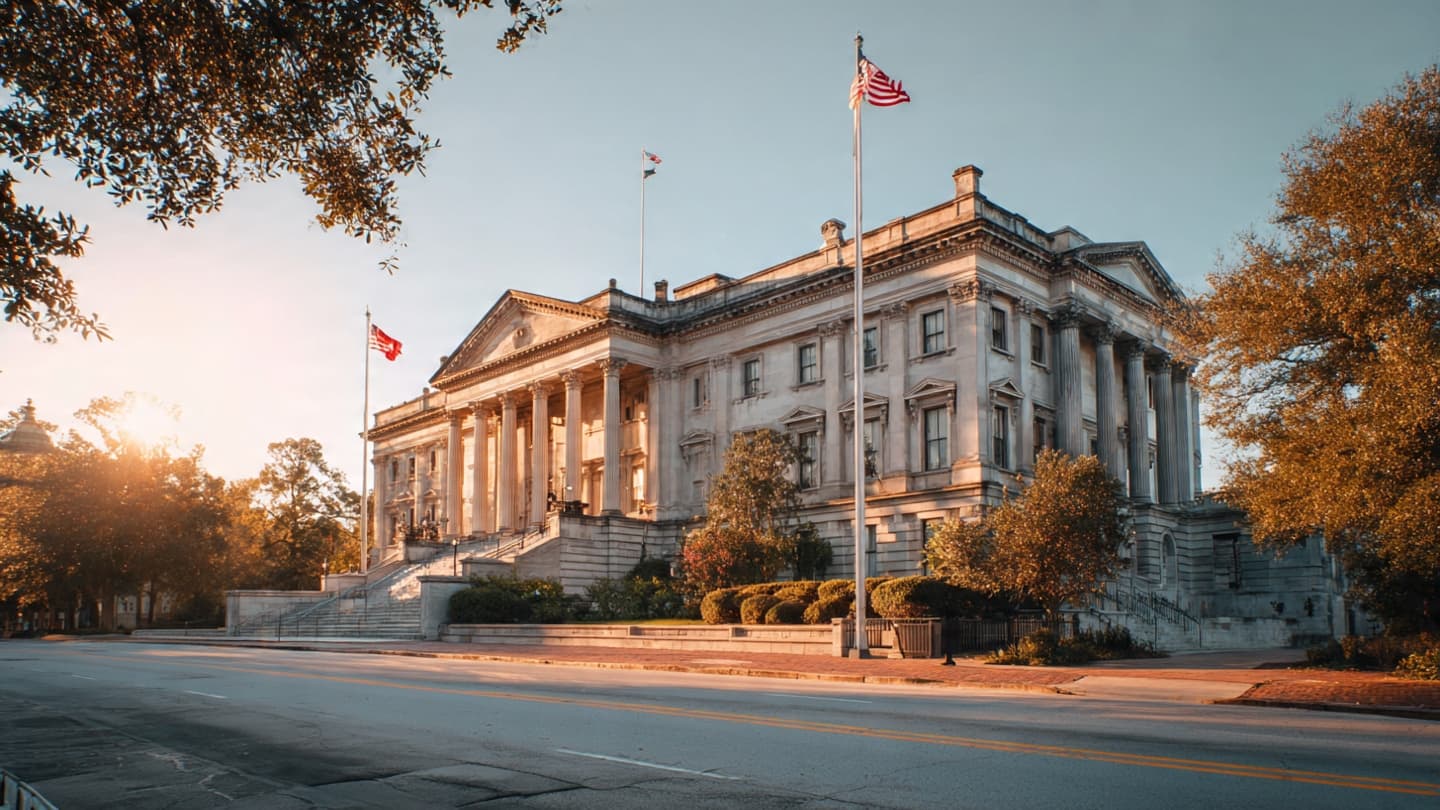
Some mornings in Columbia begin with a familiar rhythm. Sunlight settles over the State House dome, oak-lined streets awaken to the sounds of commuters, and history seems to linger quietly among buildings that have witnessed generations of public service. Leadership changes with time, yet the institutions themselves remain, carrying memories of those who came before while making room for those who now step forward.
That quiet transition has taken on new significance in South Carolina, where Senator Darline Graham has announced that she will seek a full term in the United States Senate after being appointed to complete the remaining months of the term held by her late brother, Senator Lindsey Graham. Her decision transforms what had been an interim appointment into the beginning of a competitive campaign for one of the state's highest elected offices.
Darline Graham was appointed by Governor Henry McMaster following Lindsey Graham's death earlier this month. The appointment allows her to serve until January, when the winner of the special election will begin a new term. In announcing her candidacy, she said she had reflected with her family, prayed about the decision, and felt prepared to continue serving the people of South Carolina.
Her entry into the race comes during an unusually compressed election schedule. South Carolina Republicans face a special primary in August to determine their nominee, with several prominent candidates already expressing interest or formally entering the contest. The campaign is expected to focus on issues ranging from economic development and national security to infrastructure and public services, while also reflecting the political legacy left by Lindsey Graham after more than two decades in the Senate.
President Donald Trump has publicly endorsed Darline Graham's candidacy, encouraging Republican voters to support her bid for a full six-year term. The endorsement is likely to become an important factor in the primary campaign, although the outcome will ultimately depend on South Carolina voters during a closely watched election.
For many residents, the campaign represents more than a contest between candidates. It reflects the way public institutions continue after moments of loss, balancing remembrance with the practical responsibilities of governance. Legislative work proceeds, committee meetings continue, and public offices remain active even as communities pause to honor leaders who have departed.
The coming weeks will likely bring debates, campaign appearances, and conversations across South Carolina's towns and cities. Voters will consider experience, priorities, and vision for the future while deciding who should represent the state in Washington. Such moments remind us that democratic transitions are shaped not only by individual candidates but also by the participation of citizens who quietly determine the next chapter.
As another season unfolds beneath South Carolina's broad summer skies, the Senate seat once held by Lindsey Graham enters a new phase of its history. Darline Graham's decision to seek a full term marks the beginning of a campaign grounded in continuity as well as change. Whether the path ahead leads to a new mandate or another representative, the enduring rhythm of public service continues—steady, reflective, and always moving toward the next chapter.
AI Image Disclaimer The visuals accompanying this article were created using AI and are intended as conceptual representations rather than actual photographs.
Sources Reuters Associated Press South Carolina Governor's Office CBS News Roll Call
Published by Banx Network. This article is part of the Banx decentralized media programme, powered by the BXE token on the XRP Ledger.