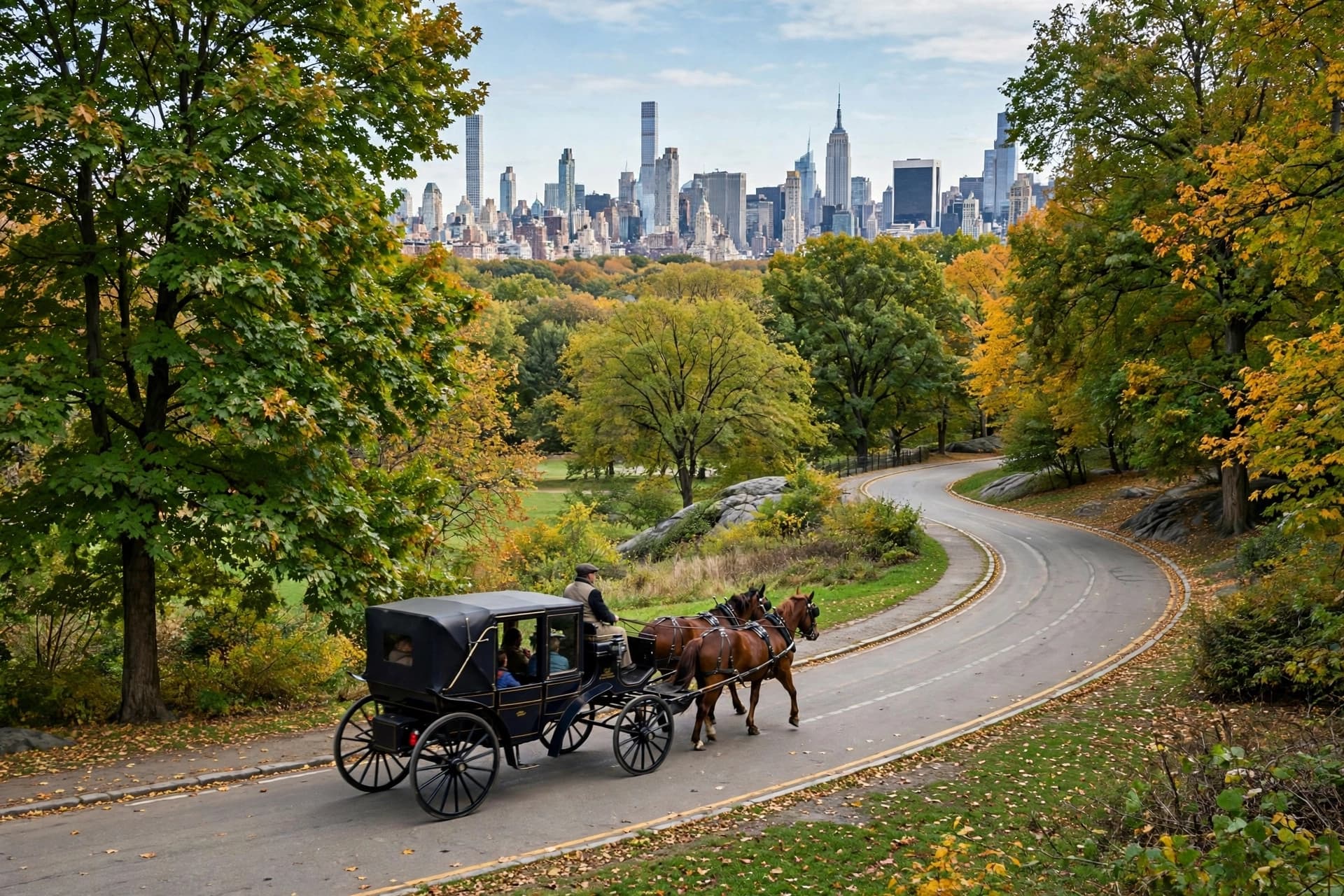
For more than a century and a half, the clip-clop of hooves against asphalt has been part of the soundtrack of Central Park—a sound that evokes a New York of another era, when the city moved at a slower pace and the park was a refuge from the clamor of the streets. But traditions, like cities, are not static. They bend, they strain, and sometimes they break. This week, New York City moved closer to ending the era of horse-drawn carriages, as Mayor Zohran Mamdani and City Council Speaker Julie Menin reached a deal on legislation that would abolish the practice .
The bill, known as Romanch’s Law, is named for an 18-year-old tourist who died last summer after jumping from a runaway carriage in Central Park . According to the industry’s labor union and the Central Park Conservancy, Mahajan is believed to be the first person to die in a carriage accident since the rides began more than 150 years ago . His death renewed calls to ban the industry, which had already faced years of criticism from animal rights advocates who argued that the horses were overworked, easily spooked, and housed in inadequate stables .
The carriage owners and drivers have long disputed those claims. They argue that the animals are well cared for, that the stables meet city codes, and that the industry has been a fixture of New York life for generations. The International Brotherhood of Teamsters, which represents the drivers, has said the ban would leave workers without a way to make a living . In recent years, as scrutiny intensified, the union increased training and safety measures for drivers .
The bill’s supporters frame the issue differently. Speaker Menin said the death of Romanch Mahajan “made clear that the status quo is no longer acceptable,” describing horse-drawn carriages as a “growing public safety liability” in an increasingly busy Central Park . The legislation would phase out carriage operations, with licensed owners required to certify by March 1, 2027, that they will not violate the rules, and a full ban taking effect on June 1, 2028 . The bill includes language about an “industry transition framework”—potentially including job placement, training, career counseling, and financial compensation—but the Transport Workers Union has criticized it for offering “no meaningful economic relief” .
The debate is not simply about horses or safety or even tradition. It is about what a city owes to the people who have built their lives around an industry that the city has decided to end. The drivers, many of them immigrants, have spent years—sometimes decades—working in a trade that is now being legislated out of existence. The horses, too, have a future that must be considered: where will they go, and who will care for them? City Hall has said it is working toward a “just transition that protects workers” , but the details of that transition remain to be seen.
For visitors who have taken a carriage ride through the park, the experience has been a small piece of romance—a way to see the city as it might have looked in a different time. For critics, it has been a relic of a time when animals were treated as tools rather than creatures deserving of their own consideration. Both perspectives carry weight, and both will be part of the conversation as the bill moves to a vote.
The City Council is expected to vote on the legislation on October 22 . If passed, the ban would take effect in 2028, bringing to an end a practice that has been part of Central Park for more than a century. The horses, the drivers, and the park itself will all be different for it.
Disclaimer: The visuals in this article are generated by AI and do not depict real events.
---
Sources: CNN, PIX11, New York City Council, The Associated Press
Published by Banx Network. This article is part of the Banx decentralized media programme, powered by the BXE token on the XRP Ledger.