In the vastness where white horizons fold into the sea, Antarctica has long been a testament to deep cold and whispered stillness. Its ice, a slow, breathing archive of countless winters, seems eternal — a quiet monument to time itself. Yet in the subtle movements of this frozen realm, a story unfolds that carries the patience of centuries and the humor of inevitability that science seeks to understand.
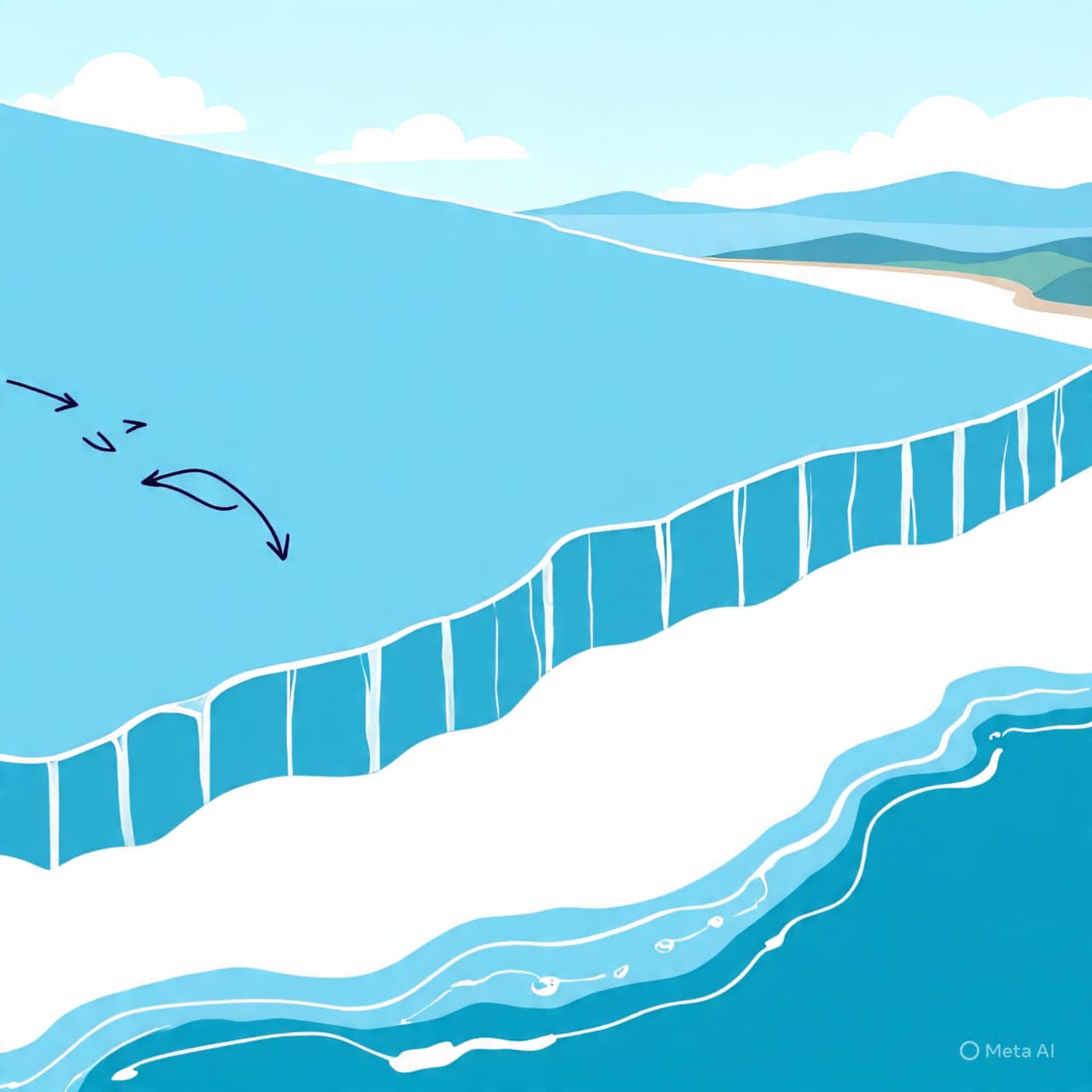
For decades, satellites have kept a gentle watch over the continent’s grounding lines — those invisible thresholds where land‑based ice meets the buoyant expanse of floating shelves. In much of this fringe, ice appeared stable, resisting the warmth that tugs at its rims. But beyond this façade of stillness, other places tell a different story: here, grounded ice has crept backward by tens of kilometers, and across three decades of observation nearly 5,000 square miles of grounded ice — an area larger than many small nations — has quietly slipped away into the Southern Ocean.
These shifts are not abrupt crashes but the slow unfolding of a narrative written in ice and water. Scientists mapping retreat on more than thirty ice shelves and glaciers have found a patchwork of response: while most of the coastline remains surprisingly unchanged, vulnerable sectors — particularly in West Antarctica and along the Antarctic Peninsula — retreat inward, like ink dissolving into a wash of warm currents beneath the ice.
The contrast between stability and change is a quiet tension. In some places, ice shelves that once held fast buttress vast inland glaciers, restraining their flow; where that buttressing thins or collapses, the inland ice more easily slips seaward, a process as gentle as a sigh yet with consequences written far beyond the polar expanse.
Looking across the continent’s great white surface, one senses that Antarctica itself speaks in long arcs of time. Its future ice loss — hinted at in these grounding line retreats — carries implications for global sea levels, ocean currents, and the rhythmic patterns of climates far from the poles. These insights, gathered from years of patient satellite observations, remind us of the glacial cadence with which the Earth’s coldest reaches respond to warmth, both at the surface and in the waters that lap against their foundations.
In the accumulating reticence of ice weakened at its edges, there is a clear conclusion: Antarctica’s ice is retreating in places once thought stable, and with that retreat comes a future in which the balance between ice and ocean will continue to evolve. This understanding tempers worry with clarity, offering scientists firm measurements even as the continent’s silent transformation persists.
AI Image Disclaimer: Visuals are AI‑generated and are conceptual representations.
Sources: Astrobiology.com, Space.com, European Space Agency reporting.
Published by Banx Network. This article is part of the Banx decentralized media programme, powered by the BXE token on the XRP Ledger.