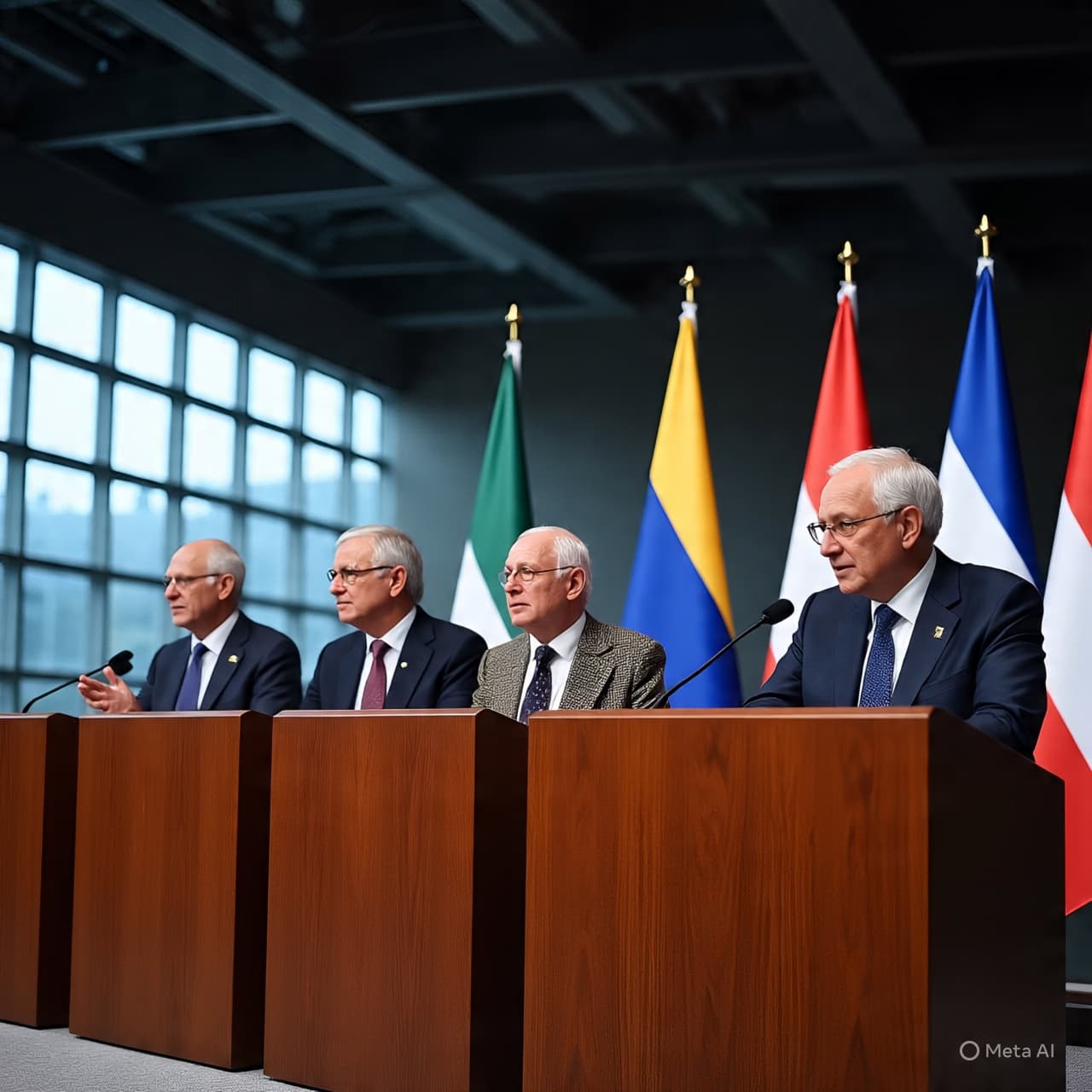
In a chilly Berlin afternoon, where architecture seems to listen as much as it stands, European leaders gathered at a nexus of history and hope. Behind the grand façades of the German capital, they forged a shared articulation of purpose — a declaration not merely of words but of collective intention. Their joint statement, released after days of negotiations, reads like a moment of reflection at a crossroads between past strife and a future yet unwritten.
At its core, the statement acknowledges “significant progress” toward peace talks aimed at bringing an end to the war in Ukraine, and underscores a profound commitment to preserving both Ukrainian sovereignty and broader European security. This is a weighty promise — one that binds together nations with distinct histories and priorities, yet united by the urgency of shared fate.
The leaders affirmed that ensuring the security, prosperity, and independence of Ukraine is integral not only to Kyiv but to the wider Euro-Atlantic alliance. In unity with the United States and Ukraine, they pledged to collaborate in pursuit of “a lasting peace” and underlined that peace cannot be extracted through force or coercion. Instead, borders and territorial decisions remain matters for the Ukrainian people themselves, contingent upon robust security guarantees.
A central element of the agreement is the proposal for a European-led multinational force, envisioned to buttress deterrence and support stabilization. This, alongside commitments to build Ukraine’s armed capacity and a U.S.-supported ceasefire monitoring mechanism, points toward a security architecture that the leaders hope will deter future aggression while enabling reconstruction and economic recovery.
Yet even as the statement resounds with optimism, it reflects the intricacies of diplomacy. Disagreements over territorial issues remain unresolved, and European leaders acknowledge that substantial work remains before any comprehensive peace deal can be finalized. This humility — to speak boldly of progress while admitting to gaps — is perhaps the most telling mark of their collective stance.
In the quiet that follows high-level meetings, the words of this joint declaration will accompany the long journey ahead. Europe’s leaders have placed their signatures not at the end of negotiation, but at the beginning of a concerted effort to shape security grounded in cooperation rather than conflict. Time and circumstances will test whether these intentions hold as firm as the winter air around them.
AI Image Disclaimer Images in this article are AI-generated illustrations, meant for concept only.
Sources (Credible Mainstream & Niche News)
• Euronews
• France24
• The Guardian
• Reuters
• Sky News
Published by Banx Network. This article is part of the Banx decentralized media programme, powered by the BXE token on the XRP Ledger.