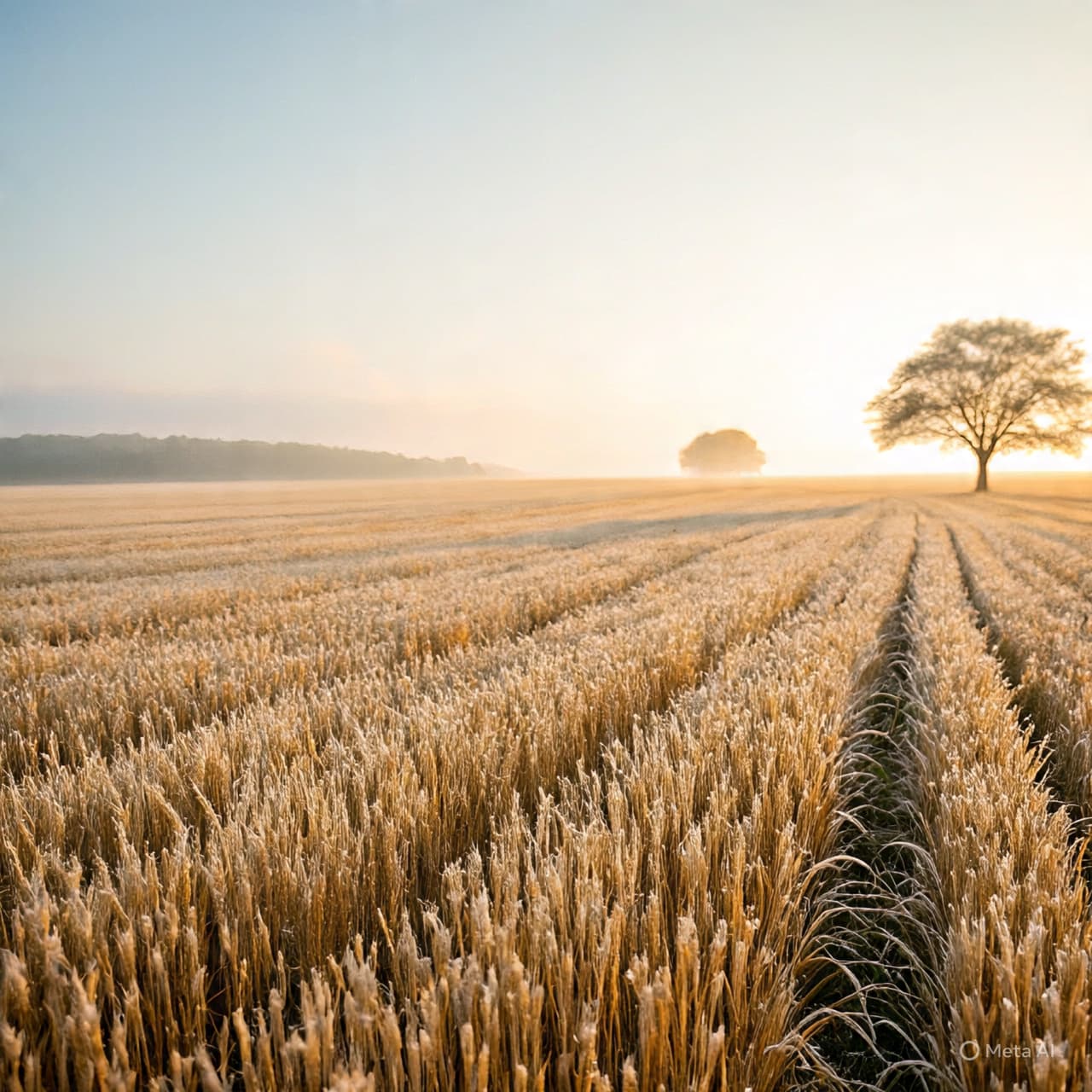
In the quiet geometry of farmland, where seasons write their patterns in soil and light, wheat has long followed a familiar script. It rises with warmth, leans into the sun, and falters when the cold arrives too soon or stays too long. For generations, farmers have learned to read these rhythms, adjusting their expectations to the delicate balance between resilience and yield.
Now, that balance is beginning to shift.
Researchers have developed a new form of durum wheat—long valued for its role in pasta—that carries an unusual dual strength: the ability to withstand freezing conditions while maintaining the grain quality required for traditional pasta-making. It is a modest breakthrough in appearance, perhaps, but one that quietly redraws the boundaries of where and how this crop can grow.
Durum wheat, the backbone of foods like semolina and pasta, has historically been sensitive to cold. Harsh frosts can damage young plants, limiting cultivation to regions with milder winters. Efforts to improve cold tolerance have often come at a cost, weakening the very qualities—protein content, gluten strength, texture—that define its culinary value. The result has been a long-standing trade-off: resilience or quality, but rarely both.
The new development suggests that this compromise may no longer be inevitable. By combining genetic traits associated with winter hardiness and high-end grain characteristics, researchers have produced lines of durum wheat capable of surviving freezing temperatures without sacrificing the structural properties needed for pasta production. Early trials indicate that these varieties can endure colder climates while still meeting industry standards for milling and processing.
The implications unfold gradually, like the crop itself. In regions where cold seasons once curtailed durum cultivation, farmers may find new opportunities. Extended growing zones could reduce reliance on imports in some areas, while offering greater flexibility in crop planning. In a world where climate variability increasingly disrupts established agricultural patterns, such adaptability carries quiet significance.
There is also a broader narrative embedded in this development. Agriculture, often perceived as rooted in tradition, has become a site of continuous adjustment—where science and environment meet in careful negotiation. Each improvement, however incremental, reflects an ongoing effort to align biological systems with changing conditions, without losing the qualities that give those systems their meaning.
Still, the path forward remains measured. New crop varieties require extensive testing across different climates and seasons before they become widely adopted. Farmers will weigh not only resilience and yield, but cost, reliability, and market acceptance. The grain must perform not just in fields, but in mills and kitchens, where expectations are as precise as any scientific metric.
For now, the development stands as a quiet marker of possibility. A grain once limited by cold may begin to move beyond its traditional boundaries, carried not by sudden change, but by steady refinement.
And as the seasons continue their familiar turning, the fields may look much the same. But beneath that surface, something subtle has shifted—a reminder that even in the most enduring cycles of nature, adaptation is always at work.
Published by Banx Network. This article is part of the Banx decentralized media programme, powered by the BXE token on the XRP Ledger.