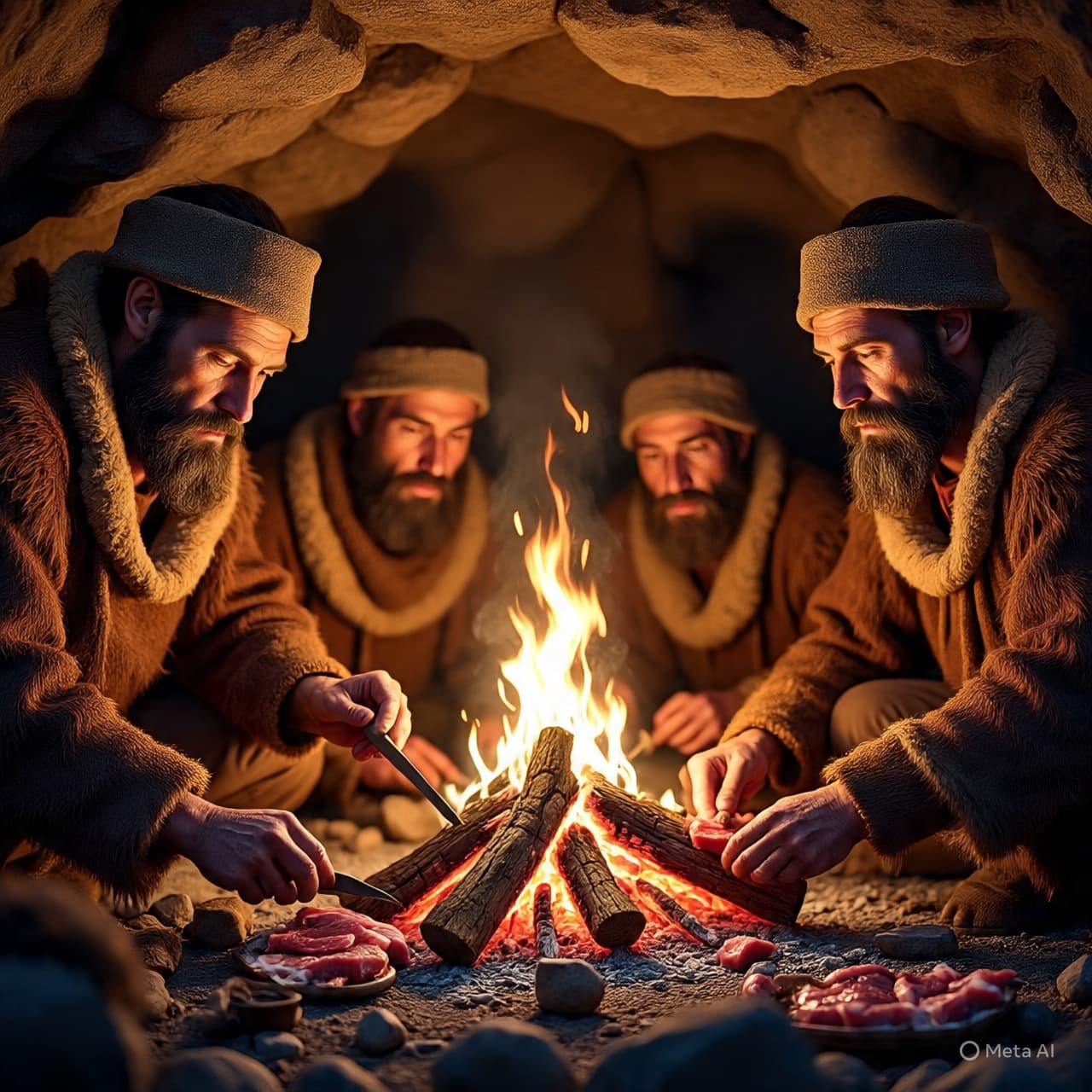
On a windswept ridge not far from the ancient shores of the Mediterranean, long before great cities or written recipes, a group of Neanderthals paused over a kill, their breath rising in the cool air as stone and fire came together in a ritual more subtle than survival alone. The spark of muscle and sinew meeting the edge of flint — and later the kiss of flame — was not just a means to eat, but, perhaps, a first whisper of preparation, an early craft emerging from the simple necessity of nourishment.
Recent research has revealed something quietly remarkable: between about 70,000 and 50,000 years ago, two neighbouring groups of Neanderthals living in the caves of Amud and Kebara in what is now northern Israel seem to have approached their meals in quite different ways, despite hunting the same animals and working with similar tools. The evidence lies, not in exotic cookware or written menus, but in the patterns of cut marks and burn traces on animal bones, subtle signatures of how these ancient cooks chose to break down and treat what they hunted.
At Amud, nearly half the bones bear signs of intense fragmentation and burning, a testament to an approach that may have involved breaking apart carcasses near the kill site or preparing cuts in a way that left them more shattered by fire and work. At Kebara, by contrast, bones show far less charring and fewer breaks, hinting at a different sequence of steps — perhaps carrying larger prey back to the shelter for processing or treating cuts with greater precision before cooking. These differences are not easily explained by resource scarcity or tool quality, but rather point to distinct cultural practices shared within each group.
In one sense, what we see here is reminiscent of the way modern chefs approach the same ingredients with different techniques, each shaped by preference, tradition, and perhaps learned from elders over many seasons. If butchery patterns can vary between nearby human communities today, might not the same have been true for our ancient cousins? The idea is not as fanciful as it might once have seemed. Anthropologists speculate that these variations reflect social learning and culturally transmitted habits, passed down from one generation to the next, much like recipes or cooking methods in later agricultural societies.
This emerging picture of Neanderthal foodways fits within a broader reevaluation of their culinary lives. We now know through dental remains and charred residues that Neanderthals consumed a varied diet that included both meat and plants, such as mushrooms, pine nuts, and wild legumes, and that they probably used fire and possibly even rudimentary boiling or roasting techniques to make food more palatable, easier to digest, or richer in calories.
Seen this way, their meals were not merely about getting fuel for the body but about shaping an experience around it — a blend of environment, knowledge, and shared practice that resonates with how we think about food today. In their own way, these early hunters were not just survivors but participants in a tradition of preparation and taste, ancestors in a much longer story of how humans have gathered, transformed, and passed on the ways of feeding the group.
Whether around an open flame or within the quiet recesses of a limestone cave, these moments of shared food preparation bind us across millennia. The cut marks on bones and the charred edges of ancient meals are, in a sense, silent recipes — hints of techniques and choices made long before pottery, written cookbooks, or kitchens. And yet, in them, we catch glimpse of something profoundly familiar: the human impulse to share not just life, but ritual, skill, and tradition through the meals we make.
AI Image Disclaimer
Visuals are AI-generated and serve as conceptual representations.
Sources (News Outlets Only)
Daily Galaxy Frontiers in Environmental Archaeology SciTechDaily
Published by Banx Network. This article is part of the Banx decentralized media programme, powered by the BXE token on the XRP Ledger.