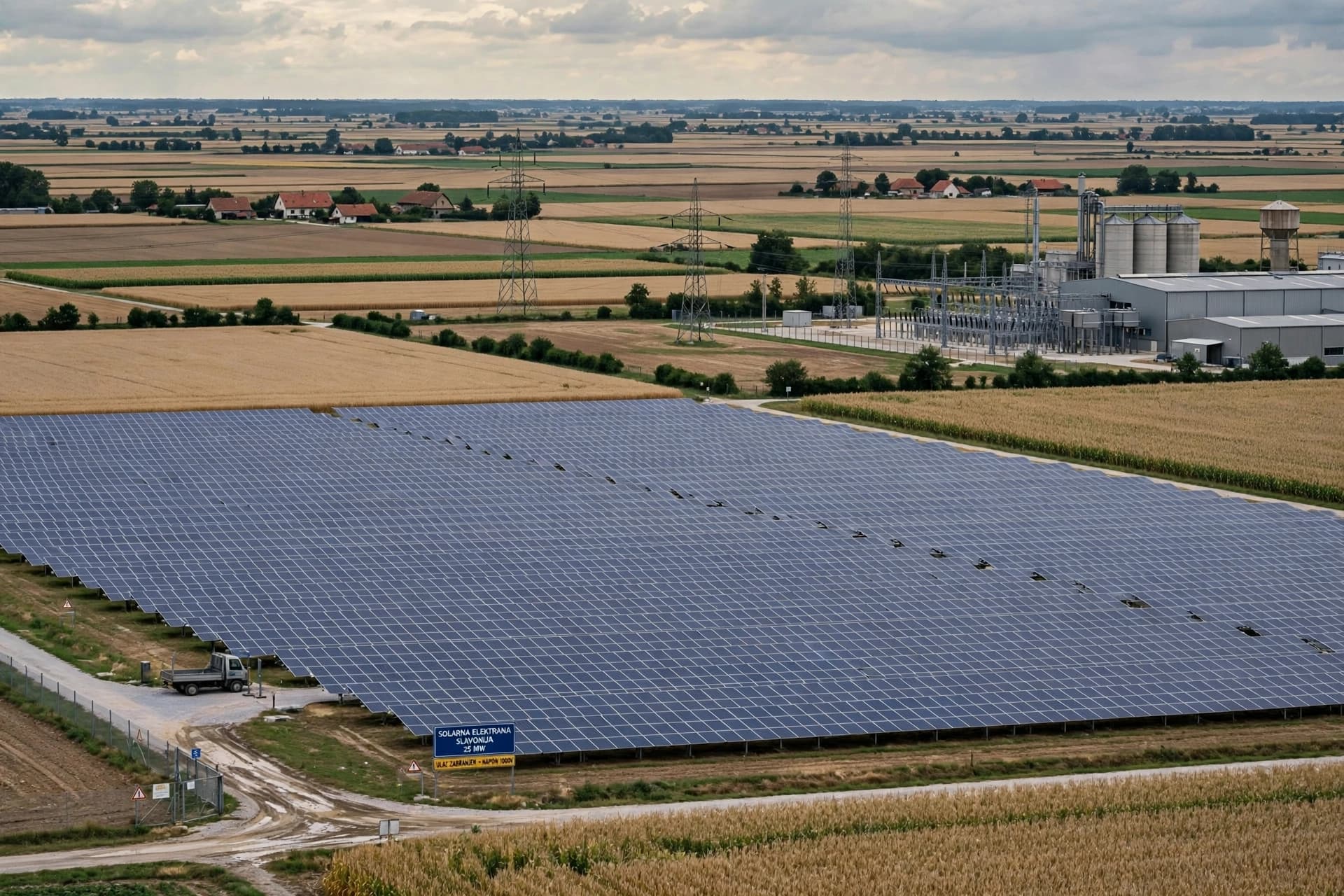
Across eastern Croatia, agriculture and energy increasingly share the same landscape. Fields stretch toward the horizon, while new infrastructure is gradually appearing alongside the roads, farms and industrial facilities that support the region’s economy.
That changing landscape has gained another point of reference with the launch of a photovoltaic power plant by Croatian agribusiness group Žito. The company has invested €3.9 million in the solar facility as part of its continuing effort to expand renewable-energy production.
The project connects two parts of Žito’s business that might initially seem separate: agriculture and energy. Large agricultural operations consume substantial amounts of electricity, while their land and industrial facilities can also provide opportunities for renewable-energy installations.
Solar power has become increasingly relevant to Croatian companies as electricity costs, energy security and European decarbonization efforts influence long-term investment decisions.
For an agricultural group, generating electricity from sunlight can also create another layer of energy resilience. Solar installations can provide electricity during periods of strong daytime production, potentially reducing reliance on electricity purchased from the wider grid.
The investment also reflects a broader trend across Croatia. Solar capacity has been expanding as companies, households and energy developers look toward photovoltaic technology as one of the more accessible forms of renewable generation.
The physical nature of a solar project is different from traditional agricultural infrastructure. Rows of photovoltaic panels stand relatively quietly across a site, converting sunlight into electricity without the movement of fuel or the mechanical rhythm associated with conventional power generation.
Yet the project still depends on the same infrastructure that connects other forms of electricity production: substations, cables, grid connections and carefully managed distribution systems.
For Žito, the new facility adds renewable generation to a business that already operates across agriculture and food production. The move reflects a wider industrial shift in which companies increasingly consider energy management part of their long-term operating strategy.
Croatia’s renewable-energy transition will ultimately be built from many projects of different sizes. Some will be large national installations, while others will emerge from companies seeking to produce part of their own electricity.
The Žito project belongs to that second story. Beneath the broad Slavonian sky, the panels now form another part of the agricultural landscape — a quiet intersection between food production, industrial investment and the continuing search for cleaner energy.
Image Disclaimer:
Visuals are AI-generated conceptual representations of Žito’s photovoltaic investment and are not photographs of the actual facility.
Sources:
SeeNews Žito Croatian Ministry of Economy Croatian Energy Regulatory Agency European Commission
Published by Banx Network. This article is part of the Banx decentralized media programme, powered by the BXE token on the XRP Ledger.