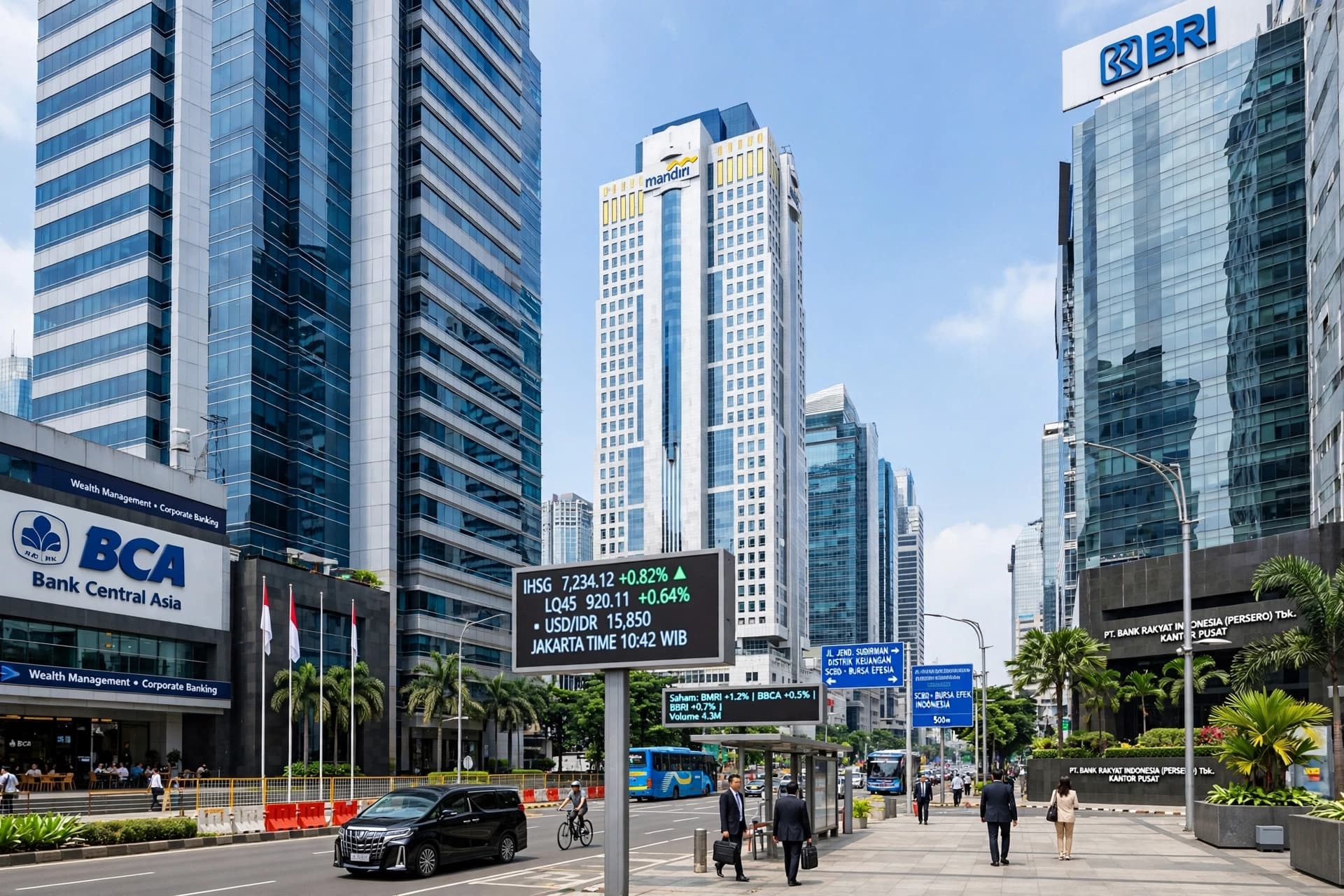
Money often moves quietly. It passes from one account to another, from government reserves into financial institutions, rarely visible to the people whose daily lives depend on the broader system it supports. In Indonesia, one such movement of public funds is set to continue through another year.
Indonesia’s Finance Ministry will maintain 200 trillion rupiah, roughly $11.27 billion, in reserve funds placed at state-owned commercial banks until July 2027. Deputy Finance Minister Juda Agung confirmed the continuation of the policy during a press conference on September 18.
The arrangement was originally introduced under former Finance Minister Purbaya Yudhi Sadewa. Despite the change in finance-ministry leadership, officials said the placement of the funds would continue, keeping a substantial pool of government liquidity within state-owned banking institutions.
The policy places government cash within the banking system rather than leaving the entire reserve position outside commercial institutions. For banks, the availability of additional liquidity can affect their capacity to manage funding and lending operations.
The scale of the placement is significant. Two hundred trillion rupiah represents a substantial pool of funds within Indonesia’s financial system, making its management relevant to banks, financial markets and the government’s broader cash-management practices.
For state-owned banks, the funds become part of a financial environment in which liquidity can support normal banking activity. The policy does not, by itself, determine how individual banks lend money or how customers behave, but it changes the amount of liquidity available within the institutions involved.
The continuation also arrives as Indonesian markets watch economic conditions closely. Reuters has reported renewed foreign interest in Asian equities in recent months, while investors continue monitoring interest rates, currencies, commodity prices and broader regional conditions.
Government cash placement is therefore one piece of a much larger financial picture. Banks must still manage credit demand, deposits, asset quality and market conditions, while policymakers monitor how liquidity interacts with economic activity.
The July 2027 deadline gives the current arrangement a defined horizon. Until then, the government’s reserve funds will remain part of the financial architecture of Indonesia’s state-owned banking sector.
In the language of financial markets, the policy is ultimately about liquidity and cash management. Behind those technical terms is a simple movement: public reserves remaining within the banking system, where officials say the arrangement will continue through July next year.
AI Image Disclaimer
The visuals are AI-generated conceptual representations of Indonesia’s banking and financial environment and are not photographs of actual events.
Sources
Reuters Bank Indonesia The Jakarta Post
Published by Banx Network. This article is part of the Banx decentralized media programme, powered by the BXE token on the XRP Ledger.