Economic growth can sometimes arrive from places that once seemed peripheral. In Britain, one of those places is increasingly found behind computer screens, data centers and software development offices. Artificial intelligence, once discussed mainly as a technological phenomenon, is beginning to leave a more visible footprint in the country's economic statistics.
Britain's economy expanded 0.4% in the second quarter of 2026, with almost half of that growth coming from the information and communications sector, according to data highlighted by Reuters. Output in industries associated with AI, including computer programming and consultancy, rose 3.7%.
The numbers offer an early indication that the global AI investment cycle is reaching beyond technology companies themselves. As businesses purchase computing equipment, develop software and build data infrastructure, the economic activity generated by those investments can spread into manufacturing, construction, professional services and telecommunications.
Investment in information and communications technology has been particularly notable. British capital spending on plant and machinery reached £22.1 billion in the second quarter, close to record levels, while demand for computing hardware has increased alongside the expansion of AI infrastructure.
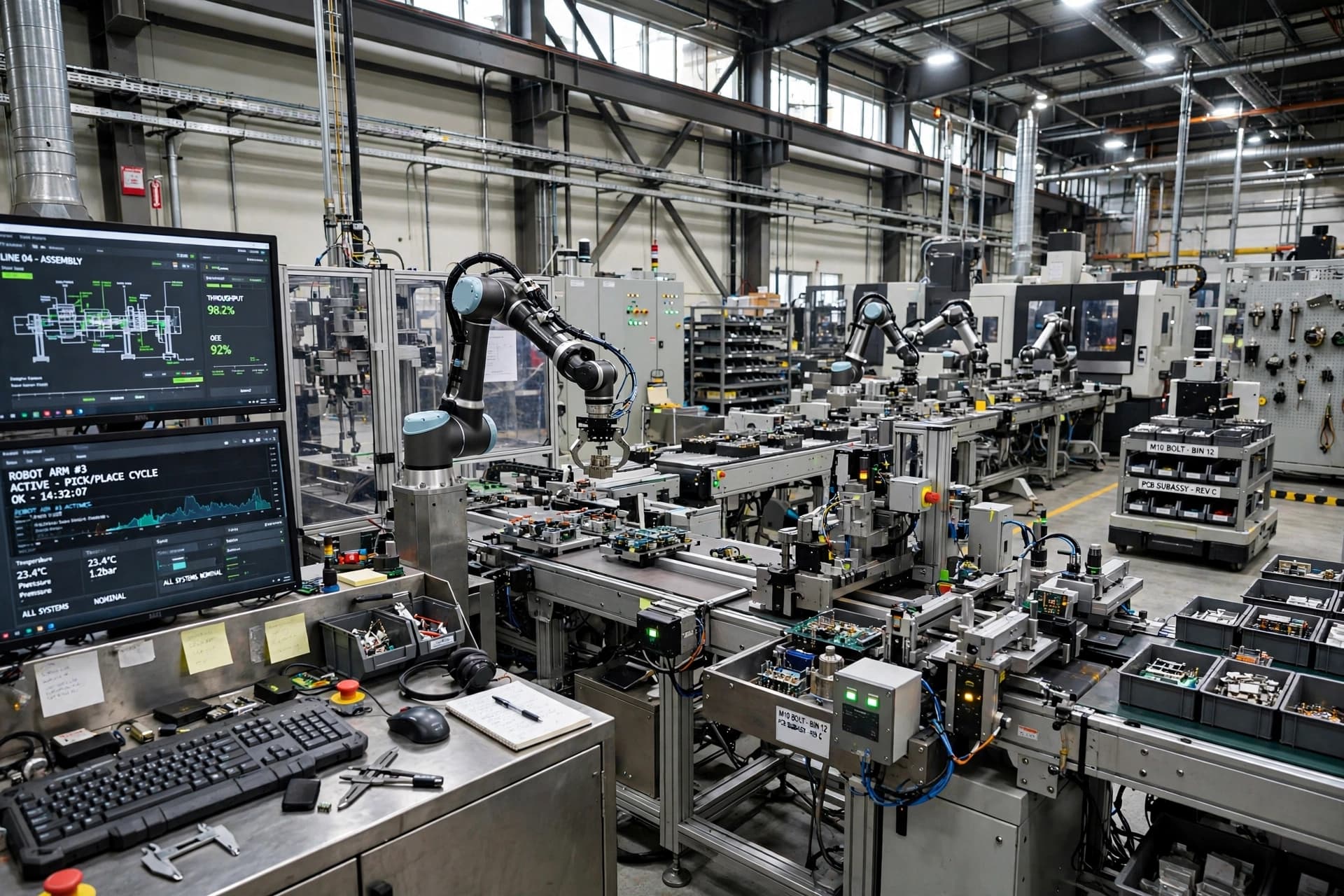
Manufacturing data provide another glimpse of the change. British producers of computing, electronics and optical products recorded their strongest annual growth since 2017, expanding 10.7% year over year. The figures suggest that the AI boom is affecting physical production as well as software and digital services.
The shift is significant because artificial intelligence requires a substantial physical foundation. Behind a chatbot or automated system are processors, servers, networking equipment, cooling systems, electricity and data centers. Each component creates economic activity that can appear in different parts of national statistics.
Britain has also been trying to strengthen its position as a technology center. London remains one of Europe's largest concentrations of AI companies, while British startups have attracted significant investment. Reuters reported that UK AI startups raised a record $12.6 billion during the first half of 2026, with several London-based companies securing more than $1 billion each.
The country's AI economy is not limited to large technology firms. Smaller companies are developing applications in areas such as financial services, healthcare, autonomous systems and data analysis. Their expansion creates demand for engineers, researchers, cloud infrastructure and specialized professional services.
At the same time, the economic benefits of AI remain uneven. Investment can rise rapidly while businesses and workers take longer to adapt. Productivity gains depend on how effectively companies integrate new systems into existing operations rather than simply purchasing the technology.
That distinction will become increasingly important as the AI cycle matures. Early investment can generate strong economic activity, but its longer-term significance will depend on whether those investments produce sustained productivity improvements, new businesses and higher-value employment.
For Britain, the latest figures suggest that AI is already becoming visible in the national economy rather than remaining confined to technology headlines. Information and communications, computing hardware and related investment are all contributing to the picture, providing a clearer connection between artificial intelligence and broader economic performance.
The coming quarters will show whether that connection deepens. For now, Britain's second-quarter figures provide evidence that the AI boom is beginning to move through the economy in tangible ways, from software offices and data centers to factories producing the hardware needed to keep the digital infrastructure running.
Image Disclaimer
The visuals accompanying this article are AI-generated conceptual representations of Britain's AI economy and are not real photographs of the companies or locations described.
Sources
Reuters Office for National Statistics UK Department for Science, Innovation and Technology Tech Nation Financial Times
Published by Banx Network. This article is part of the Banx decentralized media programme, powered by the BXE token on the XRP Ledger.