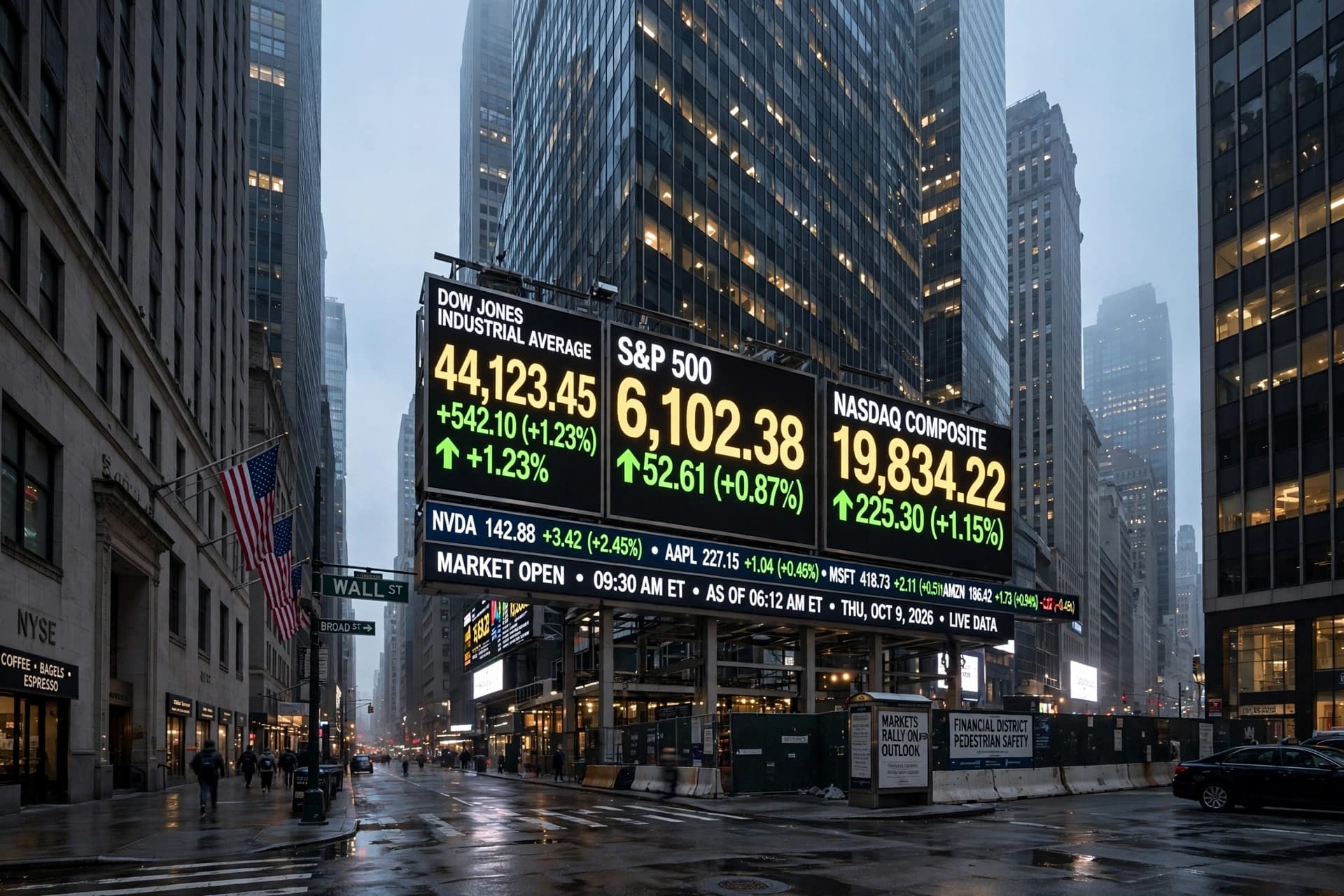
The S&P 500 gained 0.58% to finish at 7,818.95, while the Nasdaq Composite advanced 0.45% to 27,599.79. The Dow Jones Industrial Average also moved higher, gaining 0.49% to close at 51,521.04. Behind those numbers was a market continuing to absorb several competing signals about the American economy.
One of the more supportive developments came from the energy market. Oil prices steadied after recent volatility, easing some concern that higher energy costs could create another wave of inflationary pressure. For investors, that matters because energy prices can influence transportation, manufacturing, consumer spending and eventually corporate margins.
Treasury yields also moved lower, giving stocks another source of support. Higher yields can make bonds more attractive compared with equities while increasing borrowing costs for companies. When yields ease, some of that pressure can disappear, allowing investors to look again toward growth-oriented assets.
Technology remained an important part of the market's advance. Several major technology companies moved higher, while semiconductor shares benefited from continued expectations surrounding artificial intelligence. The enthusiasm reflects a broader belief that AI-related investment will continue to generate demand for chips, data centers and related technology.
Yet the market is gradually approaching a different test. The third-quarter earnings season is becoming the next major focus for investors. Analysts have been expecting strong earnings growth, particularly in sectors connected to technology and energy, but expectations can become demanding when stock prices are already near historic highs.
That creates a delicate moment. Markets can rise because investors believe corporate results will be strong, but eventually companies must provide evidence through revenue, profits and forward guidance. A record index is therefore not an ending point. It is simply a reflection of what investors currently believe about the months ahead.
The relationship between oil prices and financial markets will also remain important. Continued energy disruptions could revive inflation concerns, while stabilization could give companies and consumers more room to adjust. The direction of crude prices may therefore become one of the quieter forces influencing the broader investment landscape.
For now, Wall Street remains resilient. The S&P 500 and Nasdaq have demonstrated that investors are willing to look beyond immediate uncertainty and toward future corporate performance. Whether that confidence continues will depend increasingly on the earnings reports that are beginning to replace market speculation with measurable results.
AI Image Disclaimer: These visuals were generated using AI and are intended solely as conceptual representations of Wall Street, financial markets, and trading activity.
Sources: Reuters LSEG
Published by Banx Network. This article is part of the Banx decentralized media programme, powered by the BXE token on the XRP Ledger.