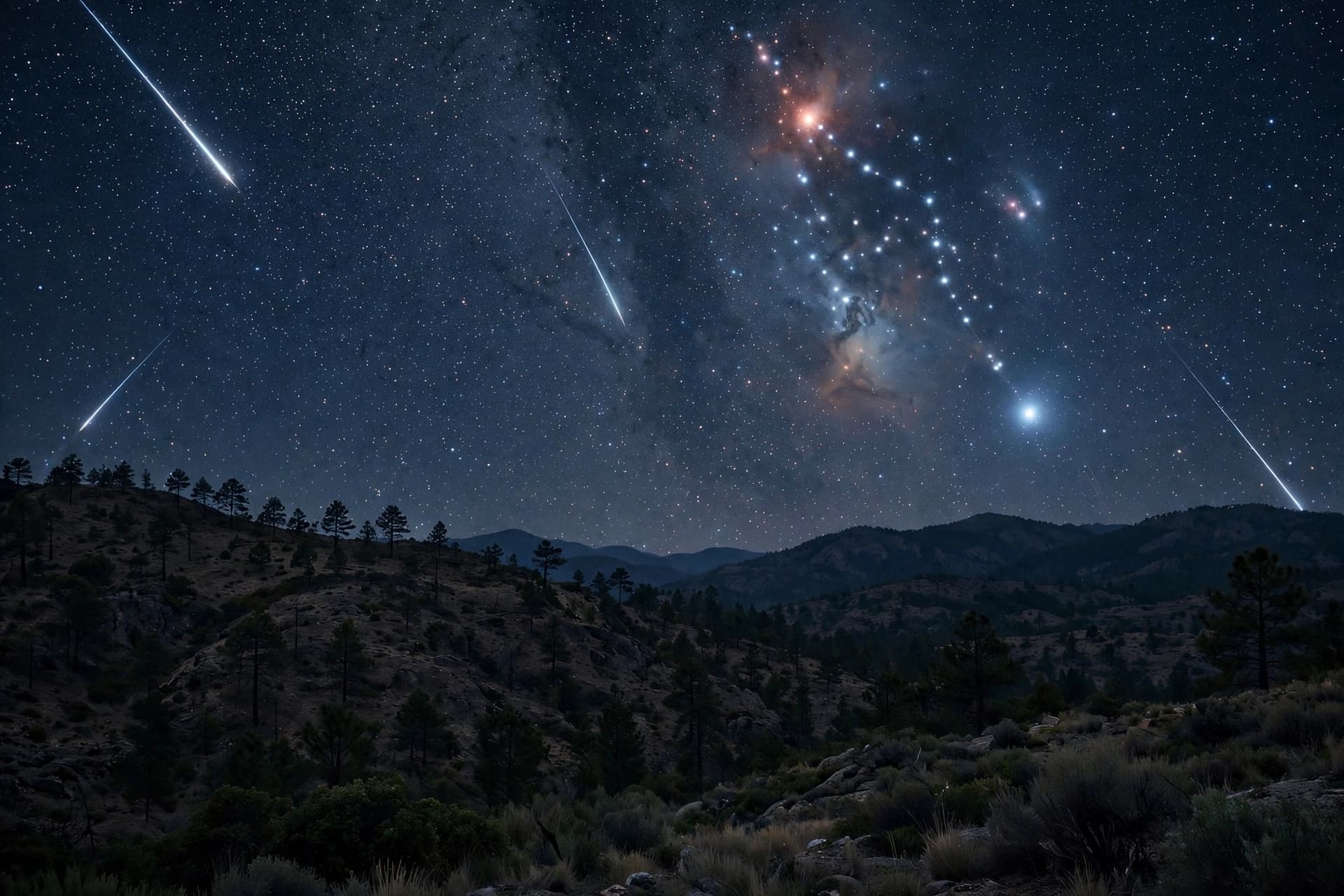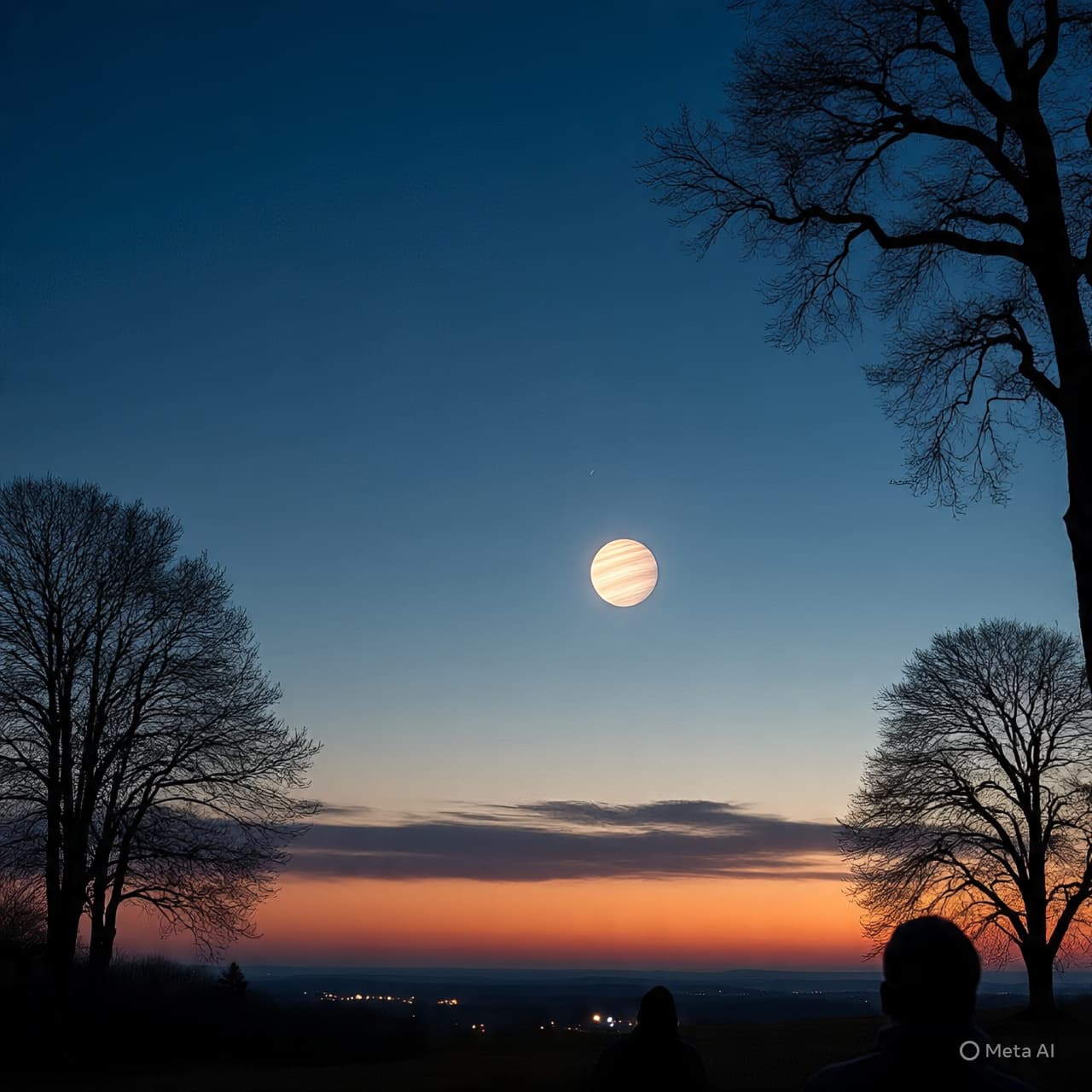
As the day slowly loosens its hold on the sky, evening often unfolds like a quiet stage. The colors soften, the air grows gentler, and the first stars step forward almost shyly. In that fleeting hour between daylight and darkness, the universe sometimes offers small moments of wonder—subtle alignments that remind us the sky is never truly still.
This Sunday night, such a moment is expected to appear above the western horizon. Two familiar travelers of the solar system—Venus and Saturn—will seem to drift unusually close together in what astronomers call a conjunction. For a brief window after sunset, the two planets will appear side by side in the twilight, forming one of the most accessible celestial pairings of the year.
Though these worlds are separated by vast distances in space, their paths across the sky occasionally align from Earth’s perspective. During this particular encounter, Venus and Saturn will appear separated by only about one degree—roughly the width of a finger held at arm’s length. The illusion is gentle but striking: two distant planets sharing the same small patch of sky, like neighbors pausing for a quiet conversation in the evening light.
Observers hoping to catch the sight will need little more than a clear western horizon and a bit of patience. The best viewing time typically arrives about 30 to 45 minutes after sunset, when the sky has dimmed enough for the planets to stand out but before they slip below the horizon. Because the pair sits low in the twilight, buildings, hills, or trees can easily block the view.
Venus will be easy to recognize. Often called the “Evening Star,” it shines with a steady brilliance that outshines nearly every other object in the night sky except the Moon. Saturn, by contrast, will appear as a softer, fainter point of light nearby. Through binoculars—or a small telescope—patient observers may even glimpse Saturn’s famous rings, though the planets themselves will still appear as tiny lights against the vast sky.
Astronomers note that such planetary conjunctions are not rare in the strict cosmic sense, yet each occurrence offers its own quiet charm. The orbits of planets constantly shift, meaning their apparent meetings in the sky are brief and ever-changing. This weekend’s pairing is particularly notable because Venus is climbing higher in the evening sky while Saturn is gradually slipping closer to the Sun’s glare, soon to disappear from evening view for a time.
Moments like this often pass unnoticed. City lights glow, people hurry home, and the sky above continues its silent choreography. Yet for those who pause—even briefly—the sight of two planets sharing the twilight can feel like a small invitation: a reminder that the movements of the cosmos unfold quietly above our everyday lives.
By the time the night deepens, Venus and Saturn will have already slipped below the horizon, their brief alignment complete. But for a short while this Sunday evening, the sky will hold a delicate pairing—two distant worlds appearing, if only for a moment, almost within reach.
AI Image Disclaimer Illustrations were produced with AI and serve as conceptual depictions rather than real photographs.
Source Check Credible coverage for this topic exists. Here are mainstream / niche media sources reporting on the event:
Space.com National Geographic The Guardian Forbes Fox News / Fox 32 Chicago
Published by Banx Network. This article is part of the Banx decentralized media programme, powered by the BXE token on the XRP Ledger.