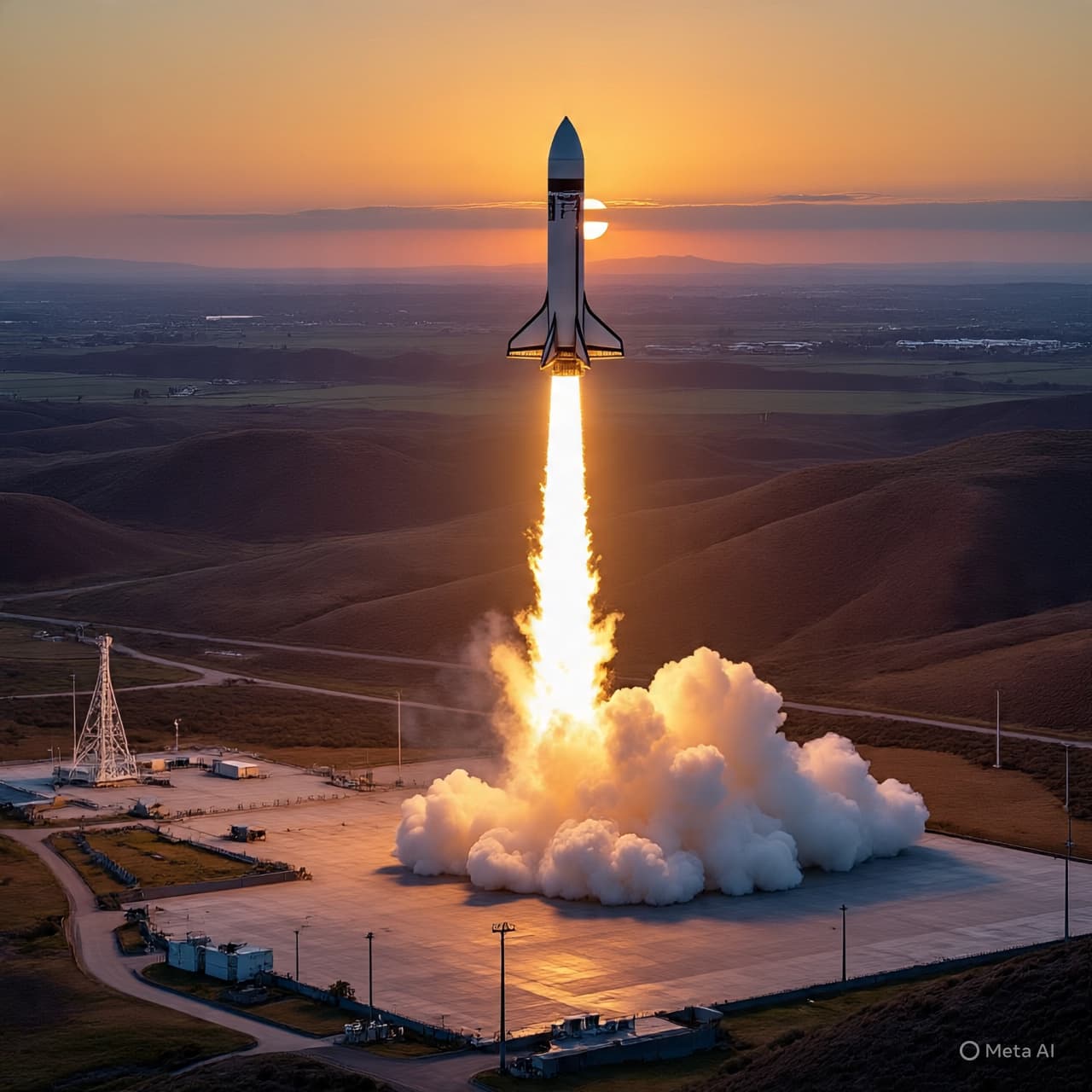
In the gentle early hours of March 1, two rockets climbed skyward from opposite edges of the continent, tracing silent arcs into the pale light. One rose from the Atlantic coast at Cape Canaveral, while its sister leapt skyward from the Pacific shore at Vandenberg. Though separated by thousands of miles of land and sea, these twin departures shared a common thread — a quiet but steady weaving of humanity’s growing web around the Earth.
For more than a decade, SpaceX’s Starlink constellation has expanded like strands of light around the planet, each satellite a note in a vast, ongoing orchestration of global connectivity. On this particular Sunday, that tapestry grew with two separate Falcon 9 launches, each carrying a fresh complement of satellites intended to strengthen the broadband network that now links people from bustling cities to rural outposts.
Just after dawn Pacific Time, the west coast mission lifted off from Space Launch Complex 4 East at Vandenberg Space Force Base in California. A Falcon 9 booster, designated B1082 and already seasoned with almost 20 flights, carried 25 Starlink V2 Mini satellites toward their quiet station in low Earth orbit. Eight minutes after liftoff, the first stage descended back toward Earth, touching down on SpaceX’s autonomous droneship “Of Course I Still Love You” in the Pacific waters, completing another maritime landing in its long life of service.
Hours later, as the sun began to set on the Atlantic horizon, another Falcon 9 thundered off its Florida launch pad at Space Launch Complex 40. This Starlink 10-41 mission bore 29 satellites, each one part of SpaceX’s effort to ensure that its internet constellation remains robust and capable of serving users worldwide. Following stage separation, the booster — B1078 — made a textbook landing on the droneship “Just Read the Instructions,” stationed in the Atlantic Ocean off the southeastern coast.
Across both coasts, the day’s launches represented not only progress in spaceflight cadence but also the quiet persistence of routine activity that once would have seemed extraordinary. What was once a remarkable splash of light on the horizon is now a carefully choreographed rhythm of engineering, weather forecasting, and operational precision that carries connectivity to more corners of the globe.
For observers on land, the sight of a Falcon 9 ascending can be fleeting but memorable — a glowing plume against blue sky or dusky twilight. In Connecticut, for example, residents watched the Florida launch paint a bright trail across the evening sky, prompting shared photos and local commentary on the spectacle.
Beyond the visual poetry, the deployments contribute to SpaceX’s broader objective of increasing the density and capability of its constellation. The freshly placed satellites will now begin their automated journey to operational orbits, where they will join thousands of others already circling Earth to provide broadband internet services, including to regions where terrestrial infrastructure remains limited.
This day’s dual launches underscore the evolving nature of spaceflight — one in which multiple missions can be executed on a single day, from separate geographic locales, with boosters that return to Earth to fly again. Such operations reflect both logistical maturity and an ongoing commitment to expanding the framework of global satellite communications.
SpaceX executed two Falcon 9 launches on March 1, deploying 54 Starlink satellites from both California and Florida. The missions, known as Starlink 17-23 and Starlink 10-41, launched 25 and 29 satellites respectively into low Earth orbit. Each booster stage made successful landings on autonomous offshore droneships, continuing the company’s frequent flight and reuse practices.
AI Image Disclaimer Graphics are AI-generated and intended for representation, not reality.
Sources NASA Spaceflight Now Space.com KeepTrack Space Brief WFSB local coverage SpaceLaunchNow data tracking.
Published by Banx Network. This article is part of the Banx decentralized media programme, powered by the BXE token on the XRP Ledger.