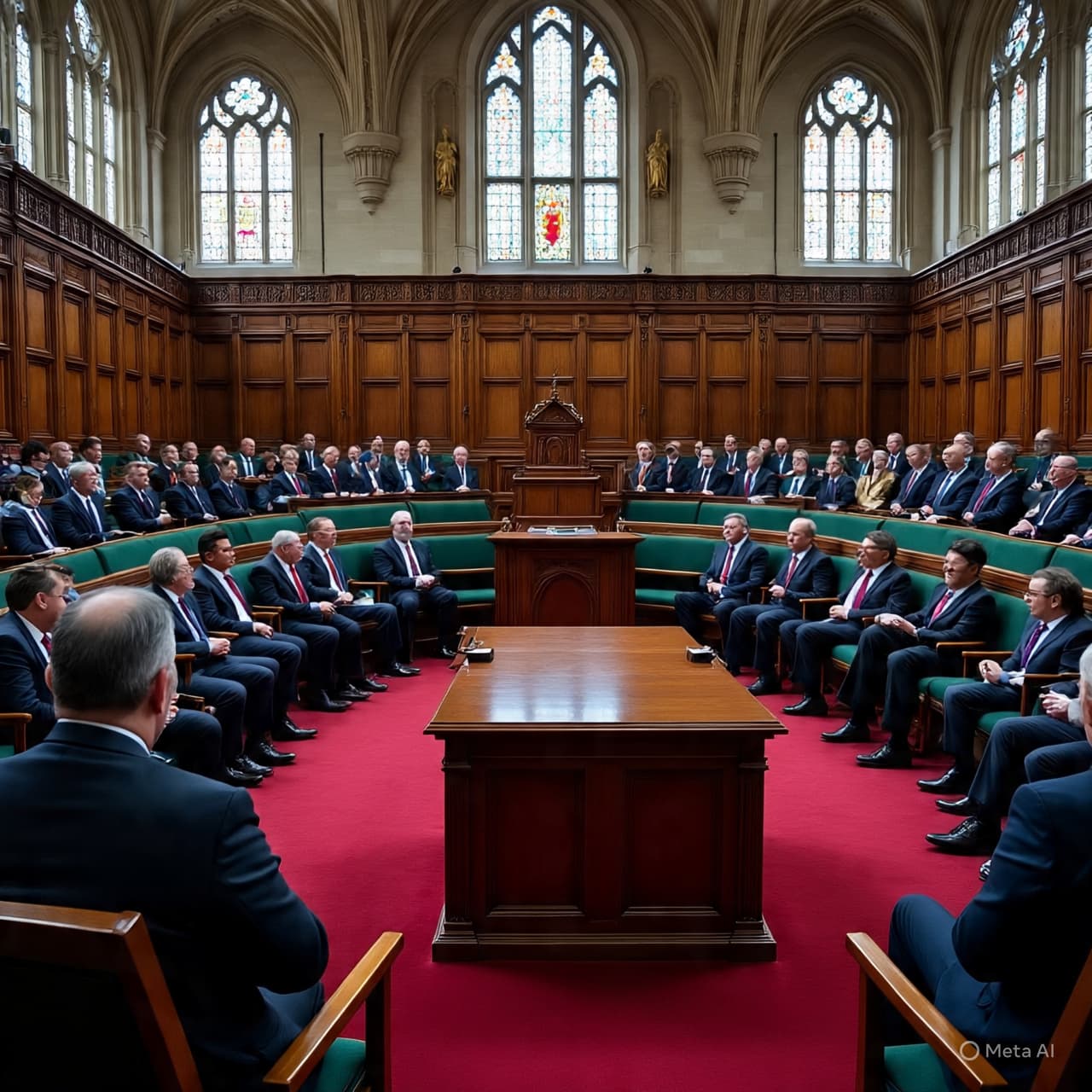
There are certain words that change the temperature of a room the moment they are spoken. In a parliamentary chamber built on tradition and memory, few carry more gravity than the word “election.” It is not merely a process, but a promise — one that holds the rhythm of democratic life together.
That promise came briefly into question when MPs used an urgent question tabled by former foreign secretary James Cleverly to press the government for clarity. The discussion did not arise from legislation or policy, but from unease — a ripple of concern that spread quickly once the idea was voiced aloud.
In the House of Commons, members sought reassurance that the fundamentals of British democracy remained untouched. Ministers responded by emphasizing that there were no plans to cancel elections, describing such suggestions as unfounded and inconsistent with constitutional norms.
The exchange highlighted how swiftly uncertainty can travel, especially at a time when political trust remains fragile. What began as a demand for explanation became a broader moment of reflection on how confidence in institutions is maintained.
Government representatives reiterated that elections are safeguarded by law and long-standing convention, and that any departure from this framework would require extraordinary circumstances and parliamentary consent. They stressed that no such conditions exist.
Opposition MPs welcomed the clarification, though some argued that the very need to ask the question underscored deeper anxieties within public discourse. In an age shaped by rumor, speculation, and international examples of democratic strain, reassurance itself has become a necessary act.
The urgent question served its purpose not by revealing intent, but by dispelling doubt. It reminded the chamber that democracy is not sustained only through ballots, but through transparency — the willingness to answer plainly when trust wavers.
Outside Parliament, the moment passed quickly. Yet its significance lingered, not as alarm, but as affirmation: that even hypothetical threats to democratic process deserve immediate and open response.
In the end, the Commons returned to its business, anchored by a familiar certainty. Elections, ministers said, remain not negotiable, not optional, but fundamental — a rhythm that continues, even when briefly questioned.
AI Image Disclaimer Visuals are created with AI tools and are not real photographs.
Sources BBC News Reuters Sky News The Guardian PA Media
Published by Banx Network. This article is part of the Banx decentralized media programme, powered by the BXE token on the XRP Ledger.