In the vast, velvet darkness of the universe, light does not merely travel — it remembers. It carries whispers from an age when galaxies were still learning to spin and stars were sketching their first luminous signatures across the void. Sometimes, those whispers arrive not as gentle glows, but as sharp, focused beams — cosmic lighthouses cutting through billions of years. This week, one such beam reached us, and with it, a quiet milestone in astronomy. The South African radio telescope array known as MeerKAT has detected what scientists describe as the most distant megamaser ever recorded. A maser — much like a laser, but operating at microwave frequencies — is produced when molecules such as hydroxyl amplify radio emissions in extreme cosmic environments. When these emissions originate from galaxies undergoing intense star formation or dramatic mergers, they can shine with astonishing intensity, earning the name “megamaser.” This newly detected signal began its journey billions of years ago, when the universe was significantly younger. By the time it reached Earth, it had traveled across a stretch of spacetime so immense that even describing it in numbers feels inadequate. Yet there it was — a precise, unmistakable signature embedded within the radio data captured by MeerKAT’s sensitive dishes. MeerKAT, located in South Africa’s Karoo region, is one of the most powerful radio telescope arrays in the world and serves as a precursor to the larger Square Kilometre Array project. Its ability to detect faint radio frequencies with extraordinary clarity has allowed astronomers to peer deeper into cosmic history than ever before. In this case, it revealed a megamaser formed in a galaxy experiencing a dramatic transformation — likely a merger event where gas clouds collide, compress, and ignite bursts of star formation. Megamasers are more than curiosities. They are cosmic markers, helping astronomers measure distances, map galactic dynamics, and understand the environments around supermassive black holes. Because they are so bright in radio wavelengths, they act as signposts that can be detected across vast expanses of space. Detecting one at such an extreme distance expands the frontier of what radio astronomy can achieve. The discovery also underscores the growing role of African-led astronomy on the global stage. Once considered peripheral to major astronomical infrastructure, the continent now hosts some of the world’s most advanced radio instruments. MeerKAT’s success signals not only scientific progress but also a shift in where and how humanity listens to the cosmos. In practical terms, the record-breaking detection pushes back the known boundary for observing megamasers, offering new data about how galaxies evolved in the early universe. Each such signal refines our understanding of cosmic history — how matter gathered, how stars formed, and how gravitational forces sculpted the structures we see today. Yet beyond the technical achievement lies something quieter and more poetic: the reminder that the universe is still speaking. Even after billions of years, its echoes continue to arrive, patient and persistent, waiting for instruments sensitive enough — and minds curious enough — to receive them. Scientists note that further analysis will determine more details about the host galaxy and the physical mechanisms driving the maser’s extraordinary brightness. Additional observations may follow, potentially revealing even more distant signals as MeerKAT continues its surveys. For now, the record stands as a testament to human curiosity and engineering — a beam of microwaves crossing cosmic time to greet a listening world.
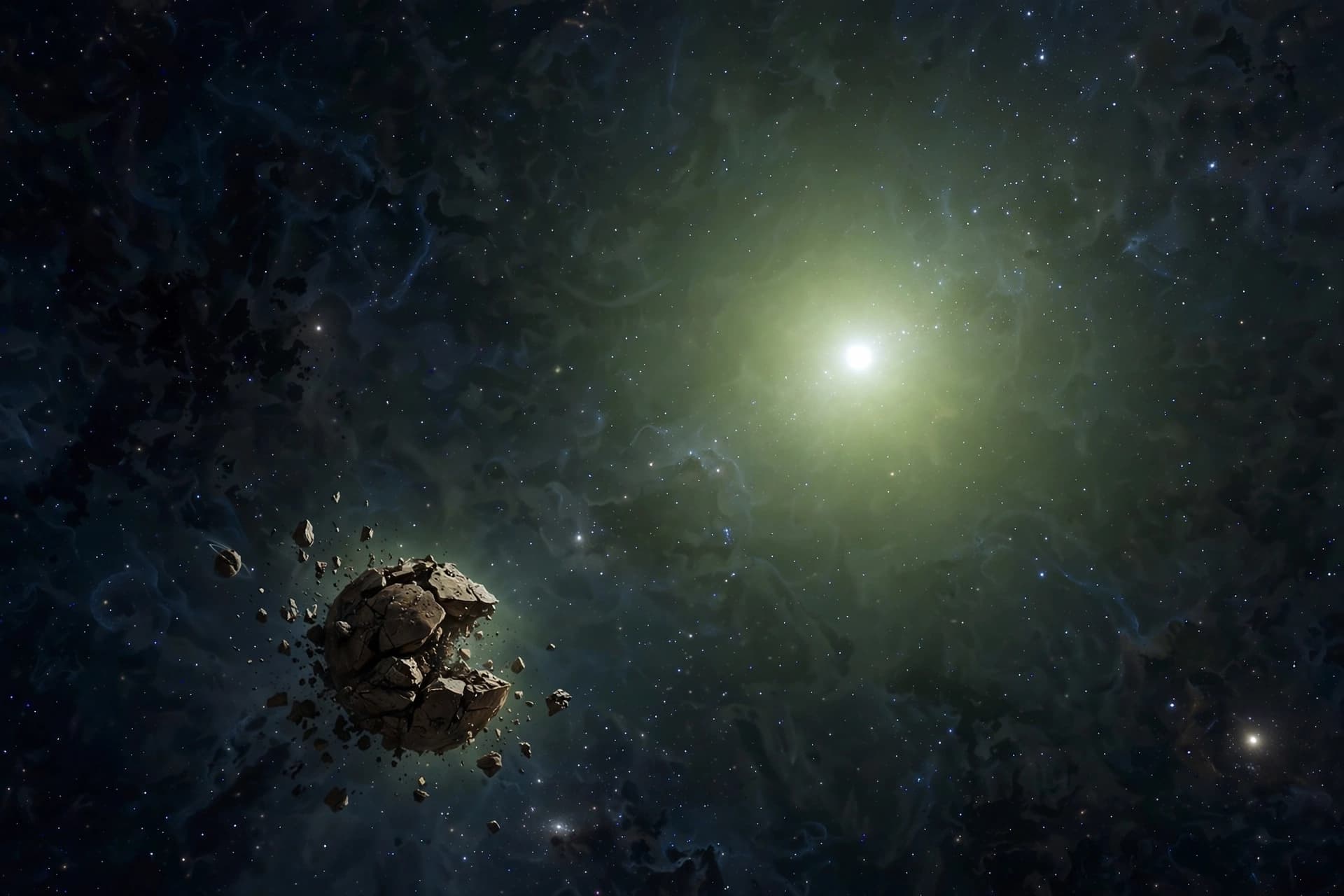
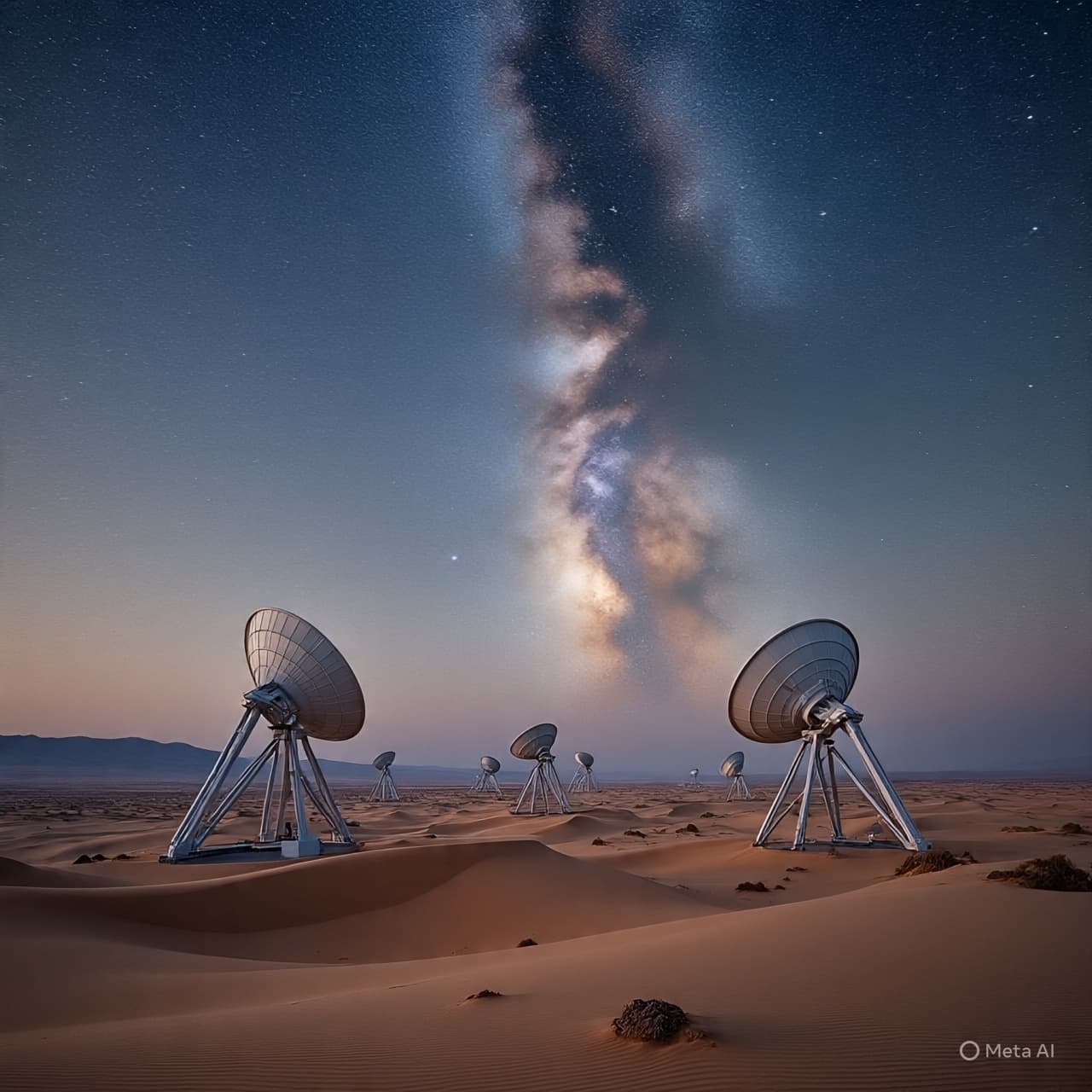
AI Image Disclaimer
Visuals are created with AI tools and are not real photographs.
---
Sources
Reuters BBC News Space.com Nature Astronomy The Guardian
Published by Banx Network. This article is part of the Banx decentralized media programme, powered by the BXE token on the XRP Ledger.