Some discoveries do not arrive with light, but with a tremor. They ripple quietly through the fabric of the universe, passing unnoticed by human senses, whispering across distances so vast they defy imagination. And yet, with patient instruments and careful listening, scientists have learned to hear these cosmic murmurs — echoes from events that unfolded billions of years ago.
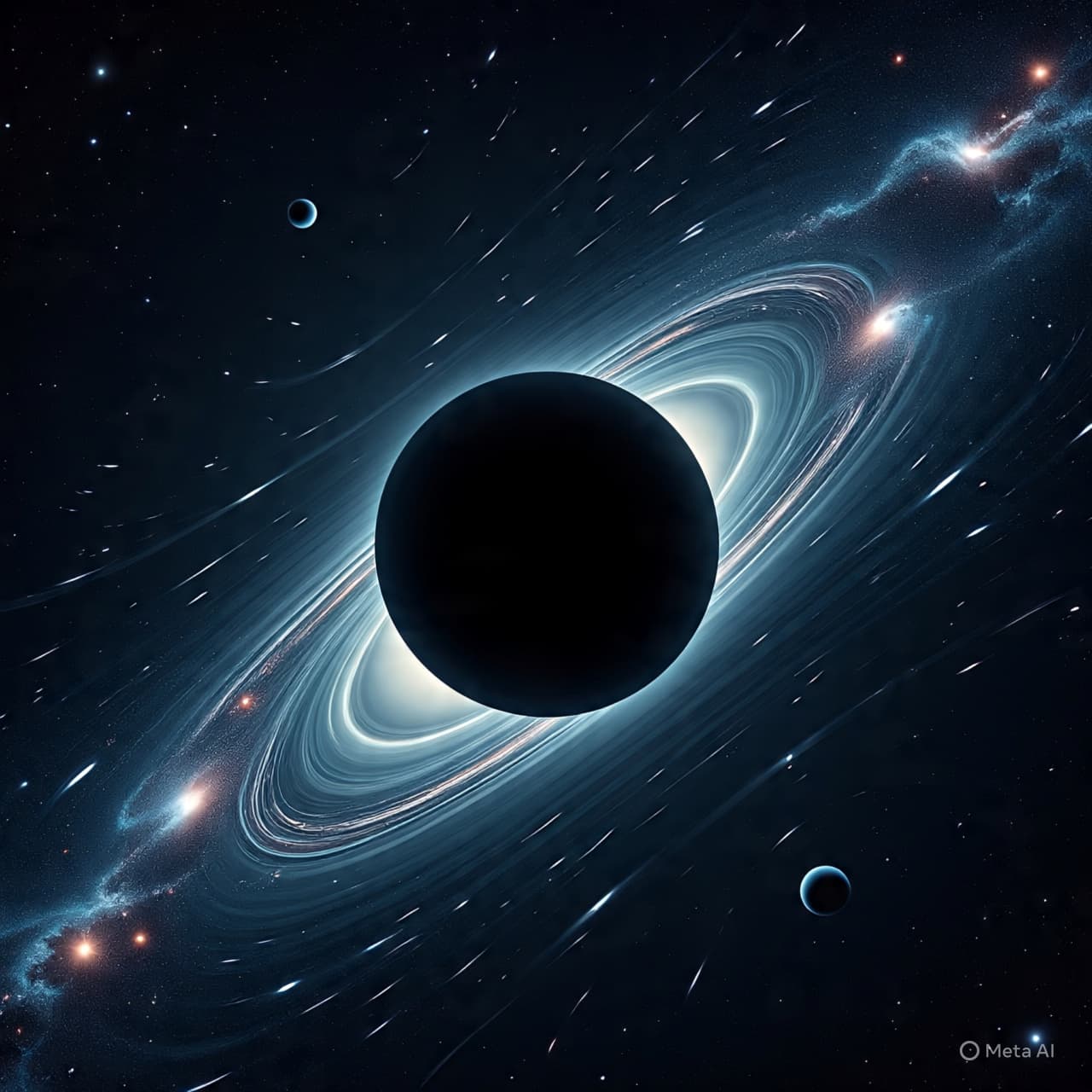
Researchers have now reported the loudest gravitational wave ever recorded, a signal so powerful it stands apart from previous detections. Observed by the and its European counterpart , the event is believed to have originated from the merger of two massive black holes. The collision, occurring far beyond our galaxy, sent ripples through spacetime that eventually reached Earth, subtly stretching and compressing space itself.
Gravitational waves were first predicted more than a century ago by as part of his general theory of relativity. For decades, they remained theoretical — mathematical consequences of equations that described gravity not as a force, but as a curvature of spacetime. It was not until 2015 that LIGO first confirmed their existence, opening a new window into the cosmos.
This latest detection stands out for its intensity. Scientists describe it as the most energetic gravitational-wave signal recorded to date, likely produced by black holes far more massive than those typically observed in earlier events. Such a merger challenges existing models of how black holes form and grow, prompting researchers to revisit assumptions about stellar evolution and cosmic history.
The signal’s strength does not mean it was loud in the traditional sense. Gravitational waves are extraordinarily subtle by the time they reach Earth, requiring laser-based detectors capable of measuring distortions thousands of times smaller than a proton. Yet in relative terms, this event produced a stronger imprint on the instruments than any before it.
Beyond its technical significance, the discovery carries philosophical weight. Each detection reinforces Einstein’s century-old insight that the universe is dynamic — that massive objects in motion can send ripples through spacetime itself. What was once a thought experiment scribbled in notebooks has become an observable phenomenon, captured by facilities spanning continents.
Scientists involved in the research emphasize that such findings deepen understanding of extreme cosmic environments. By studying gravitational waves, astronomers can observe black hole mergers that would otherwise remain invisible, since black holes emit no light. In this way, gravitational-wave astronomy complements traditional telescopes, offering a different sense with which to perceive the universe.
The unusually massive black holes involved in this event may also raise questions about how such giants come into existence. Some theories suggest repeated mergers over cosmic time; others point to primordial origins. The data from this signal will likely fuel further analysis and debate within the astrophysics community.
For now, researchers continue to sift through the information captured by LIGO and Virgo, refining measurements and testing models. The findings add another data point to a growing catalog of gravitational-wave detections. More broadly, they affirm that Einstein’s general relativity continues to withstand scrutiny, even under the most extreme conditions known.
In the quiet laboratories where lasers trace invisible lines, scientists are still listening. And from across the universe, spacetime continues to speak — softly, persistently, and in harmony with equations written more than a hundred years ago.
AI Image Disclaimer: Images in this article are AI-generated illustrations, meant for concept only.
Sources: Reuters BBC CNN The New York Times Politico
Published by Banx Network. This article is part of the Banx decentralized media programme, powered by the BXE token on the XRP Ledger.