The universe is known for its flashes — sudden, violent bursts of energy that appear and vanish in moments, leaving scientists to reconstruct what happened after the fact. For decades, that rhythm has guided how astronomers interpret cosmic explosions. Then came a signal that refused to follow the script.
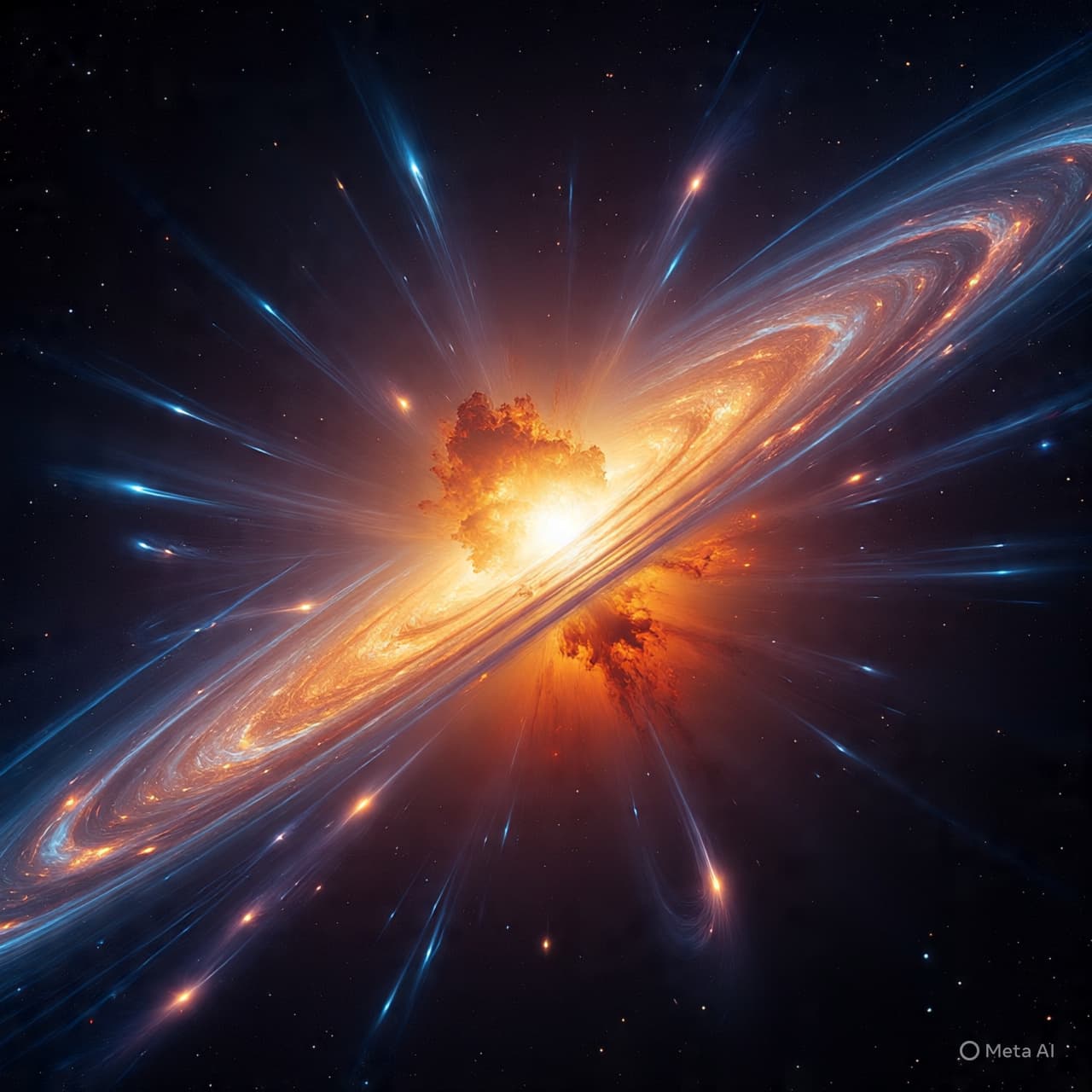
Astronomers have detected a strange explosion from deep space that lasted nearly seven hours, a duration unlike anything previously observed. It was not a flicker or a brief flare. It lingered, glowing steadily across time in a way that challenged existing categories of cosmic events.
At first, the signal seemed familiar enough. Instruments designed to catch high-energy bursts flagged it as unusual but not unprecedented. As minutes passed, however, the event did not fade. Hours later, it was still there, defying expectations and raising questions that grew louder with every passing moment.
Known cosmic explosions tend to fall into well-defined groups. Gamma-ray bursts are among the most powerful events in the universe, yet they typically last seconds. Supernovae unfold over weeks. This event sat uncomfortably between them, neither brief nor gradual, occupying a timescale that current models struggle to explain.
What makes the discovery especially puzzling is its energy profile. The explosion released enormous amounts of radiation without the rapid decline astronomers are accustomed to seeing. Its persistence suggests an engine capable of sustaining output far longer than any known mechanism of its kind.
Scientists are now exploring a range of possibilities. Some speculate about exotic interactions involving collapsed stars or extreme magnetic fields. Others consider whether this could represent an entirely new class of cosmic phenomenon, one that has gone unnoticed simply because no one expected it to last so long.
The detection itself underscores how astronomy is changing. Modern observatories no longer just catch momentary flashes; they watch the sky continuously, allowing strange, slow-burning events to reveal themselves. Without that patience and persistence, this explosion might have been dismissed as background noise or an instrument error.
Calling it the “space photo of the week” almost understates its significance. This was not just an image, but a prolonged conversation between the universe and those listening closely enough to notice something was wrong — or perhaps wonderfully new.
As researchers analyze the data, caution remains the dominant tone. One event does not rewrite astrophysics. But it can open a door. And this seven-hour glow, stretching across the darkness, suggests that the universe still holds behaviors we have yet to name.
Sometimes, discovery does not arrive with a bang. Sometimes, it arrives by refusing to stop.
Published by Banx Network. This article is part of the Banx decentralized media programme, powered by the BXE token on the XRP Ledger.