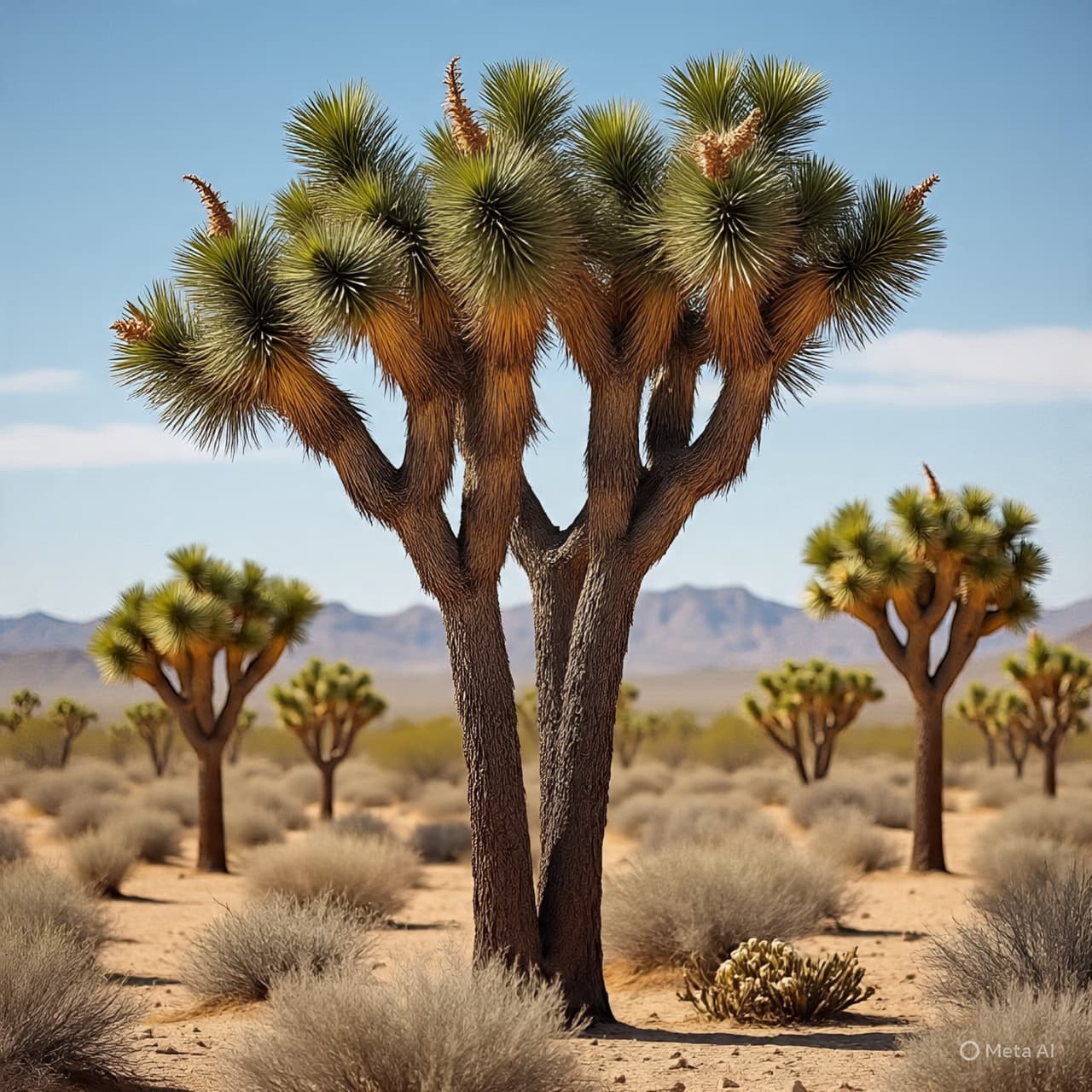
In the Mojave Desert’s vast sweep of ochre and sky, the sight of Joshua trees in bloom should be a welcome whisper of spring. But this year, flowers have appeared on these iconic desert giants at an unusual hour — not in their typical late‑winter to early‑spring window but well ahead of schedule, catching scientists and conservationists off guard. What at first seems like a charming spectacle turns out to be a signal of deeper stress in the desert ecosystem, one that reflects how climate change is nudging natural rhythms out of sync.
Joshua trees (Yucca brevifolia) decorate the Mojave with their sculptural silhouettes and are normally dormant through most of the year, peaking in reproductive activity when seasonal cues align. Yet observers have reported these trees flowering early — anomalous blooms captured by citizen scientists across Southern California. That odd timing isn’t just a botanical curiosity; it suggests that the cues these trees depend on — cold temperatures, rainfall patterns, or other environmental signals — are being disrupted by unusual weather conditions tied to climate variability.
Flowering at the wrong time can pose real challenges for reproductive success. Joshua trees rely on a tightly coordinated relationship with yucca moths, their sole natural pollinators. These moths emerge in synchrony with normal bloom seasons and are the only insects that effectively transfer pollen between flowers while laying their eggs within them — a remarkable example of obligate mutualism in nature. If the trees bloom early but the moths aren’t present or their emergence is misaligned, pollination may fail, resulting in few viable seeds and limited recruitment of new trees.
Scientists suspect that shifts in rainfall — such as unseasonal wet months — and warming temperatures are driving these off‑season blooms. Research has shown that Joshua trees are more likely to produce flowers during years with atypical weather patterns, including unusual precipitation events. But while a wet season might seem beneficial at first glance, it’s a symptom of larger climatic swings that place stress on long‑lived species adapted to historically stable desert rhythms.
This misalignment matters because reproduction — not just survival — determines the future of a species. Adult Joshua trees can persist for decades, but without successful seed production and seedling establishment, populations cannot regenerate over time. Rising temperatures, increased drought stress, and wildfires fueled by invasive grasses all compound the challenge for young trees attempting to establish themselves across their native range.
The timing of flowering is a small window into a larger problem. Joshua trees are already facing heightened threats from climate change, habitat loss, and altered disturbance regimes, and their future hangs in the balance as environmental conditions shift faster than the species can adapt. Early or erratic blooms, then, are not just botanical curiosities but indicators of a landscape struggling to maintain its ecological balance in a warming world.
Joshua trees in parts of the California desert have begun flowering earlier than usual, with reports of blooms outside their typical late winter to early spring season. Scientists say this out‑of‑season flowering may be linked to unusual weather patterns, including off‑normal rainfall and warming temperatures, and could disrupt the synchronized relationship between the trees and their exclusive yucca moth pollinators. Conservationists note that failed pollination could limit seed production and pose additional challenges for the long‑term reproduction of the species amid ongoing climate stress.
AI Image Disclaimer Visuals are created with AI tools and are not real photographs.
Sources SFGate — Joshua trees are flowering in the Calif. desert. That’s bad news. Yoder Lab citizen science report on unusual Joshua tree flowering patterns. Xerces Society explanation of Joshua tree–yucca moth mutualism. Mongabay report — wildfire burns climate‑vulnerable Joshua trees. USGS research on Joshua tree population structure.
Published by Banx Network. This article is part of the Banx decentralized media programme, powered by the BXE token on the XRP Ledger.