The Sun is usually a quiet companion, constant in its glow, steady in its rhythm. But every so often it reminds us that behind its warmth lies a restless engine. A powerful solar flare erupted recently from an active region on its surface — an X-class burst, the strongest category — sending a plume of magnetic plasma sweeping through space. That eruption has now triggered a geomagnetic storm watch for Earth, renewing concern about the vulnerability of our modern systems to the moods of the star we orbit.
The flare was accompanied by a coronal mass ejection, a vast cloud of electrically charged material that can disturb Earth’s magnetic field when it arrives. Depending on the direction of its magnetic orientation, the arriving plasma can interact with the planet’s magnetosphere and temporarily distort the delicate balance that protects satellites, power grids, communication lines, and navigation signals.
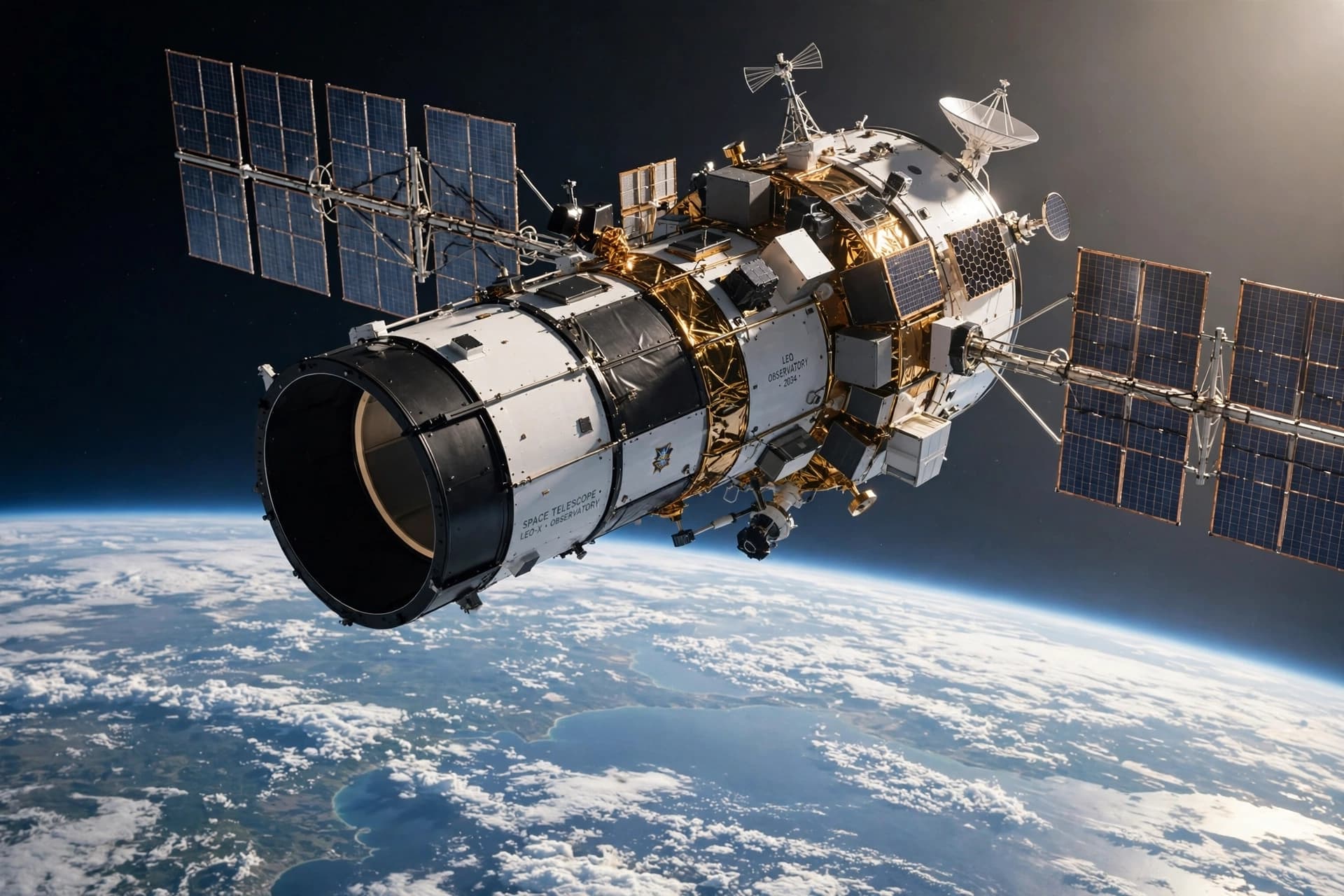
Forecasters emphasize that the effects may be moderate, but the timing matters. Even a glancing impact from a CME can cause radio blackouts at higher latitudes, degrade GPS accuracy, or force satellites to perform protective maneuvers. Airlines may reroute polar flights. Power operators may adjust loads to reduce strain. In a world connected by invisible networks, space weather becomes less an abstract curiosity and more a practical concern.
Yet amid the technical warnings is a reminder of the Sun’s beauty. A geomagnetic disturbance often brings one of nature’s most spectacular gifts: auroras. If conditions align, skies at northern and southern latitudes may shimmer with sheets of green and red, the result of energetic particles colliding with atmospheric gases. What begins as a violent solar eruption ends as color on the horizon — a quiet merging of physics and wonder.
Scientists continue to monitor the solar wind’s speed, density, and magnetic direction, the factors that will determine the severity of the storm. The Sun is entering a more active phase of its cycle, and events like this one serve both as warnings and as previews of what future peaks may bring.
For now, Earth waits — shielded by its magnetic field, reliant on technologies sensitive to the Sun’s touch, and reminded once more that even in the digital age, our world still dances in step with a star.
Published by Banx Network. This article is part of the Banx decentralized media programme, powered by the BXE token on the XRP Ledger.