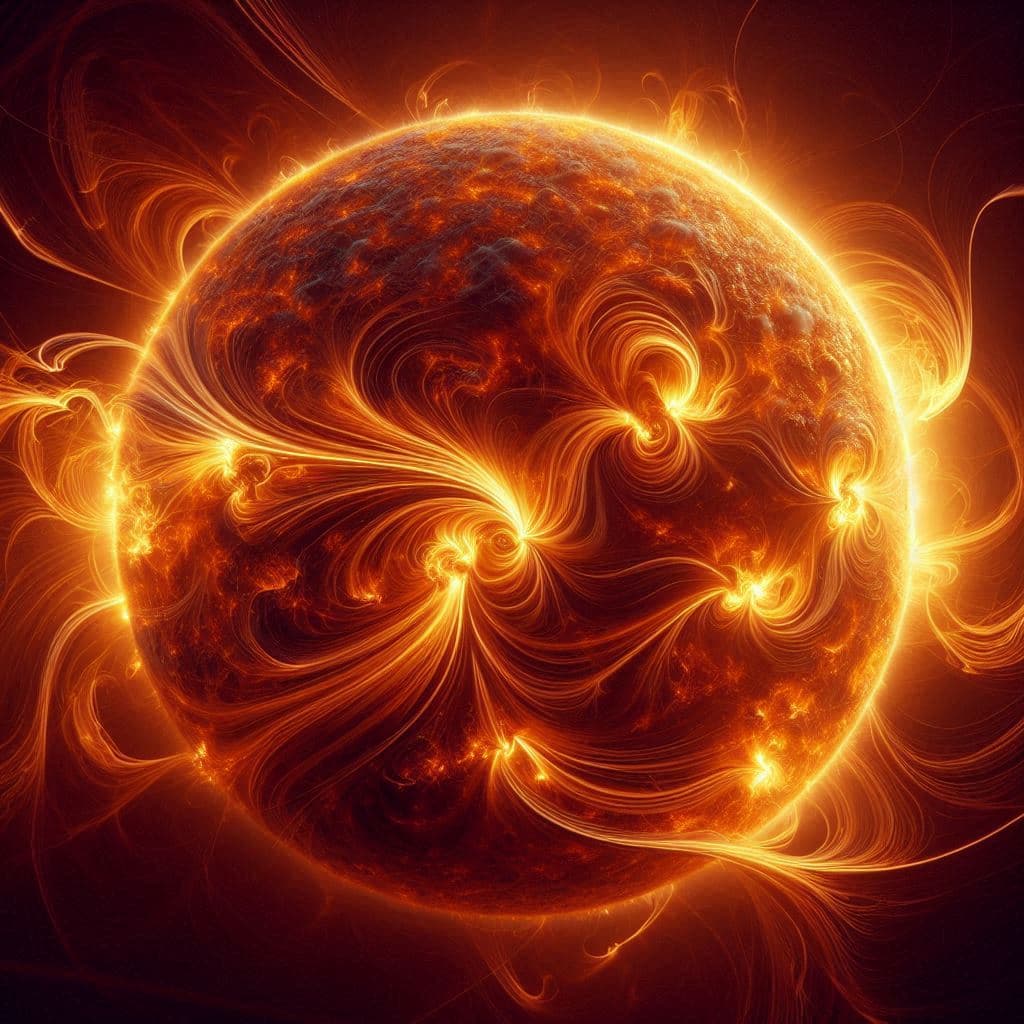
The Sun often appears constant from a distance, a steady presence marking the passage of days. Yet beneath that calm glow lies a restless surface, where energy gathers, twists, and sometimes breaks free. Solar flares are among the most dramatic expressions of that hidden motion, sudden bursts of light and radiation that remind us the star at the center of our system is anything but still.
New observations from the European Space Agency’s Solar Orbiter are offering a closer look at how these flares begin. Instead of forming from a single, orderly buildup of energy, the data suggest a far more tangled origin. Magnetic fields on the Sun’s surface appear to braid and collide in complex ways, creating pockets of instability that can erupt without a simple warning sign. The process looks less like a switch being flipped and more like a gradual crowding of forces until release becomes unavoidable.
Solar Orbiter’s unique vantage point allows scientists to observe the Sun at angles and distances not previously possible. By combining high-resolution images with measurements of magnetic fields and energetic particles, researchers can follow the early moments of flare formation in greater detail. These observations reveal that small-scale magnetic disturbances may play a larger role than once thought, quietly shaping the conditions for much larger events.
The findings suggest solar flares may not always originate from a single dominant region. Instead, multiple small interactions can contribute, weaving together across the solar surface. This chaotic behavior helps explain why flares are so difficult to predict. Even when the Sun appears relatively calm, its magnetic environment may be quietly reorganizing itself below the surface.
Understanding these origins matters beyond scientific curiosity. Solar flares can affect satellite operations, radio communications, and power systems on Earth. A clearer picture of how they form could eventually improve space weather forecasting, giving operators more time to prepare for disruptions. The goal is not certainty, but better awareness of the Sun’s changing moods.
ESA scientists emphasize that these results are part of an ongoing investigation. Solar Orbiter continues to collect data as it moves into new phases of its mission, gradually building a more complete view of solar activity. Each observation adds another piece to a picture that remains dynamic and unfinished.
According to ESA, the latest Solar Orbiter measurements show that solar flares often emerge from complex, chaotic magnetic interactions rather than simple, isolated events. Researchers say continued observations will help refine models of flare formation and improve understanding of space weather risks.
AI Image Disclaimer Visuals are created with AI tools and are not real photographs.
Source Check European Space Agency Nature Astronomy Science NASA Space.com
Published by Banx Network. This article is part of the Banx decentralized media programme, powered by the BXE token on the XRP Ledger.