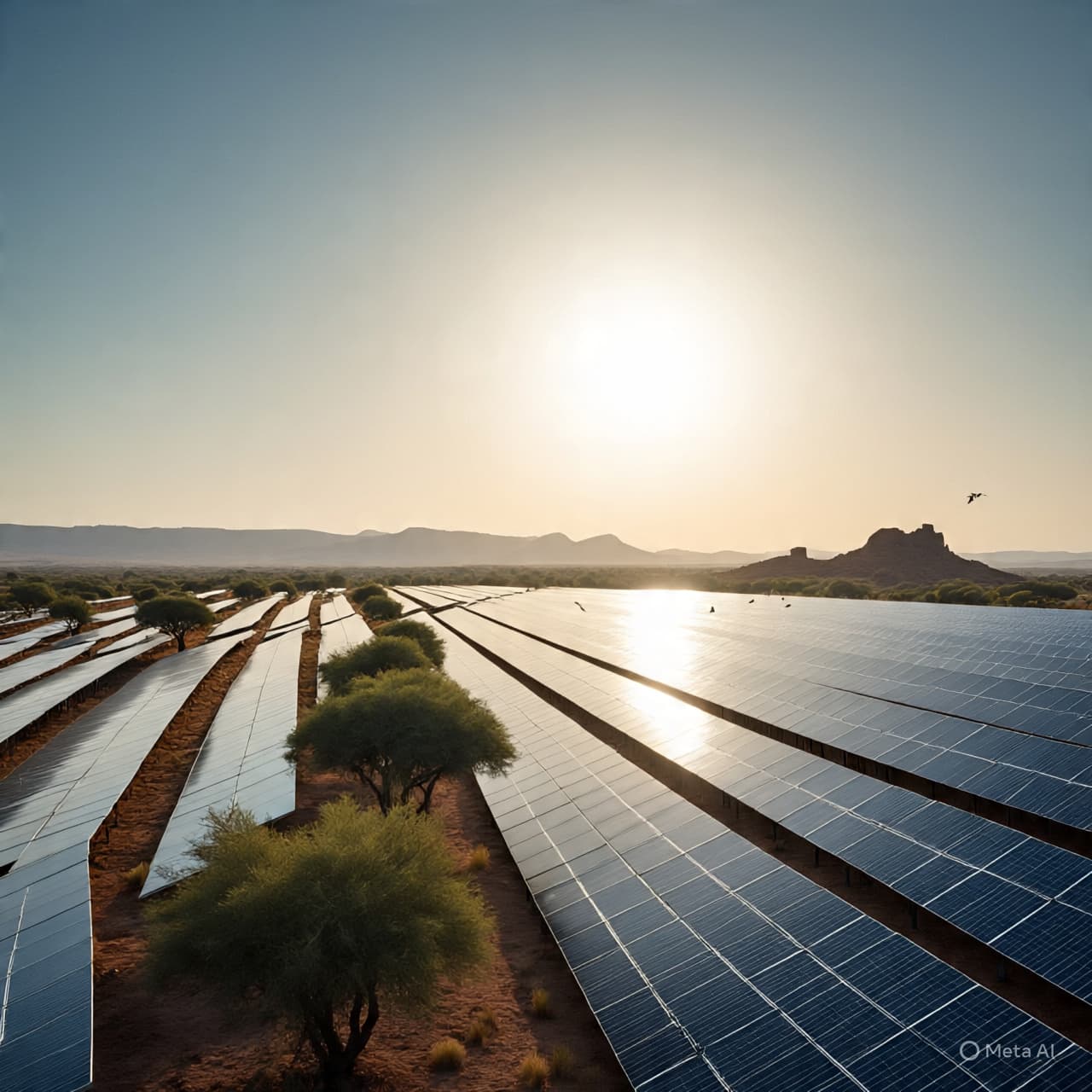
There are places where the sun feels less like a visitor and more like a constant companion. Across vast deserts, savannas, and coastal plains, sunlight pours generously over Africa each day — steady, unhurried, and abundant. For generations, that light has shaped agriculture, architecture, and daily life. Now, it is shaping something more structural: the continent’s energy future.
Following a year of record solar capacity growth, Africa appears poised for what many analysts describe as a breakthrough moment in renewable energy deployment. Large-scale projects, utility investments, and decentralized installations have contributed to a significant increase in installed solar power across multiple countries.
The growth reflects both necessity and opportunity. Many African nations continue to face energy access gaps, with rural communities particularly underserved. At the same time, electricity demand is rising due to urbanization, industrial expansion, and population growth. Solar power, with its relatively rapid deployment timeline and scalability, has emerged as a practical solution to complement traditional generation sources.
Record capacity additions have been driven by a combination of public policy incentives, private sector investment, and international climate financing. Governments across the continent are increasingly integrating renewable targets into national development plans. Independent power producers and global investors have also shown heightened interest, encouraged by improving regulatory frameworks and falling technology costs.
Utility-scale solar farms have expanded in countries such as South Africa, Egypt, and Morocco, where grid infrastructure supports larger installations. Meanwhile, distributed solar systems — including mini-grids and rooftop panels — are gaining traction in East and West Africa, offering localized solutions for communities distant from national grids.
The economic implications extend beyond electricity generation. Solar expansion can stimulate job creation in installation, maintenance, manufacturing, and grid integration. It may also reduce reliance on imported fossil fuels, improving energy security and trade balances. In regions vulnerable to climate variability, renewable energy presents a pathway aligned with long-term sustainability goals.
However, challenges remain. Grid stability, storage capacity, and financing structures continue to influence the pace of deployment. Energy storage solutions, particularly battery systems, are increasingly recognized as essential to manage intermittency. Infrastructure upgrades and cross-border energy cooperation may also determine how effectively solar capacity translates into reliable supply.
Yet momentum appears tangible. The combination of declining photovoltaic costs and rising global climate commitments has created a favorable environment for renewable growth. Africa’s solar potential — often described as among the highest in the world — now meets accelerating implementation.
The narrative is not solely about megawatts installed. It is about access — about classrooms illuminated after sunset, clinics powered consistently, and businesses operating with fewer interruptions. Solar energy, in this context, becomes not only a technical resource but a developmental instrument.
Africa’s recent record in solar capacity growth positions the continent for further expansion in renewable energy. Continued policy support, infrastructure investment, and technological integration are expected to shape the next phase of development.
AI Image Disclaimer Graphics are AI-generated and intended for representation, not reality.
Sources (Media Names Only) Reuters Bloomberg Financial Times CNBC Africa African Business
Published by Banx Network. This article is part of the Banx decentralized media programme, powered by the BXE token on the XRP Ledger.