
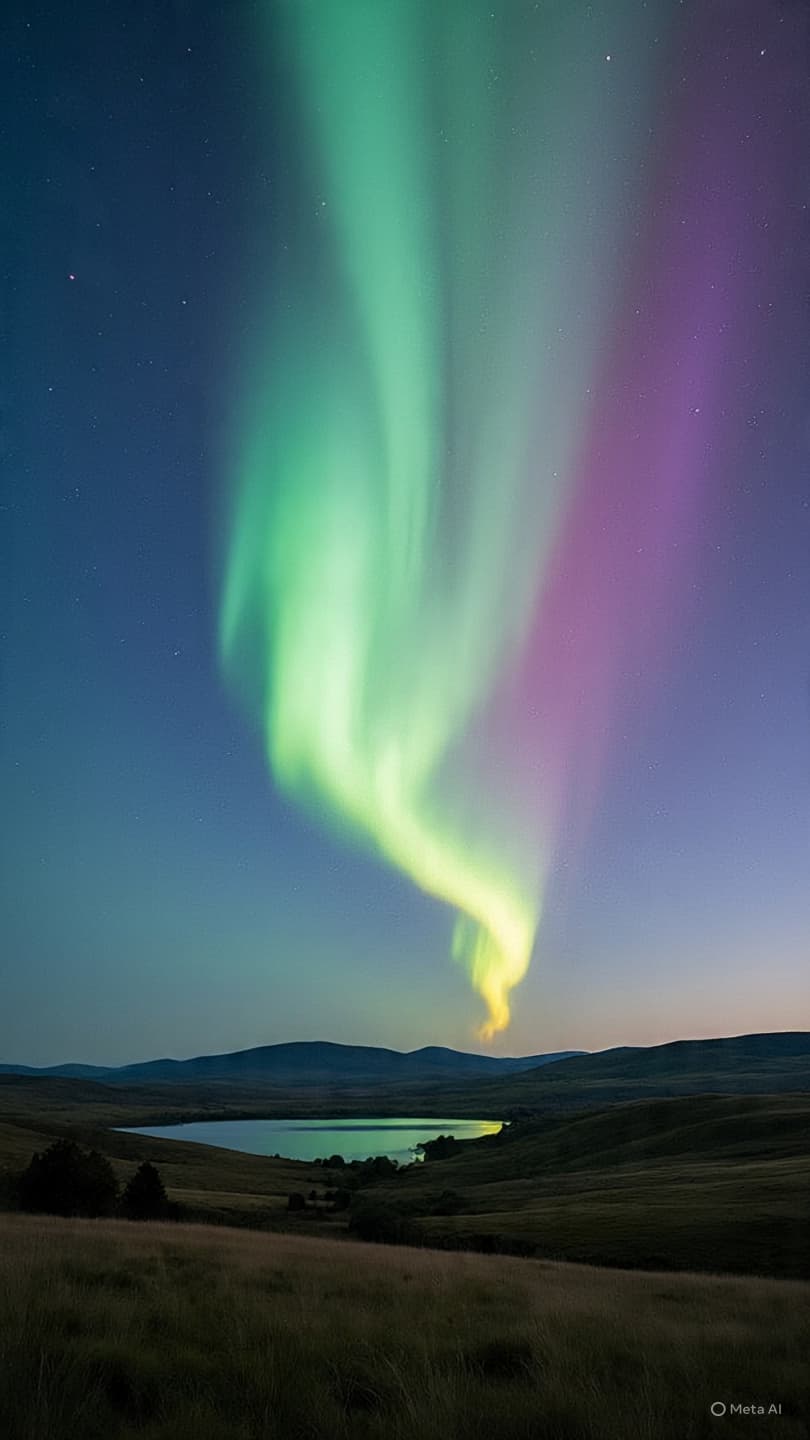
Key Highlights
- Solar Activity:A coronal hole on the Sun is releasing solar wind toward Earth.
- Visibility:Northern lights may be seen as far south as Idaho and New York.
- Viewing Conditions:Optimal viewing expected between 10 p.m. and 2 a.m. local time.
This weekend, skywatchers across the United States may be treated to a spectacular display of the northern lights, also known as the aurora borealis. A large coronal hole has formed in the Sun's atmosphere, sending streams of fast-moving solar wind toward Earth. This phenomenon creates the potential for the aurora to be visible in areas that typically do not experience such celestial displays.
Forecasts indicate that the northern lights could stretch across several northern states, with the possibility of visibility extending as far south as Idaho and New York under ideal conditions. In total, space weather models suggest that up to 20 states may catch glimpses of the aurora during peak activity, making this a rare opportunity for many.
The unique aspect of this event lies not only in its visibility but also in the scientific processes behind it. Coronal holes are regions in the Sun's outer atmosphere where magnetic fields open outward, allowing solar wind to escape at higher speeds. When these charged particles reach Earth, they interact with the planet's magnetic field, disturbing the magnetosphere and expanding the usual aurora zone toward lower latitudes. This results in a stunning display of colors that can illuminate the night sky.
Timing is crucial for those hoping to witness the northern lights. The most favorable viewing window is expected between 10 p.m. and 2 a.m. local time, coinciding with peak geomagnetic activity and the darkest hours of the night. Additionally, this weekend's lunar phase will be minimal, reducing natural light interference and allowing the aurora's subtler hues to emerge more clearly.
However, visibility is contingent upon several factors. Clear skies, a location away from city lights, and a view toward the northern horizon are essential for optimal viewing conditions. Even with the right predictions, the display may remain elusive for some, depending on local weather conditions.
At its essence, the aurora borealis represents a dynamic interaction between the Sun and Earth. Charged particles collide with gases in the upper atmosphere, energizing oxygen and nitrogen molecules until they emit light in vibrant greens, reds, and purples. This interplay of science and nature creates a breathtaking spectacle that captivates observers, transforming the night sky into a canvas of color.
As the weekend approaches, enthusiasts and casual observers alike are encouraged to keep an eye on the forecast and prepare for a potential celestial show that could light up the skies across the nation.
Published by Banx Network. This article is part of the Banx decentralized media programme, powered by the BXE token on the XRP Ledger.



