There are moments when the sky seems to hold its breath — a hush before a long‑anticipated exhale. In dusty launch complexes and control rooms tuned to the hum of electrical loops, engineers and enthusiasts alike understand this feeling well. They watch winds and clouds with as much care as countdown clocks, because the smallest shift in the atmosphere can delay a dream from rising Earthward. Recently, that gentle tension played out on the Californian coast, where teams waited through days of unsettled weather, watching signals on screens and hoping for a quiet window in the sky. Finally, in the early hours of a February morning, the stillness broke and the quiet countdown gave way to liftoff.
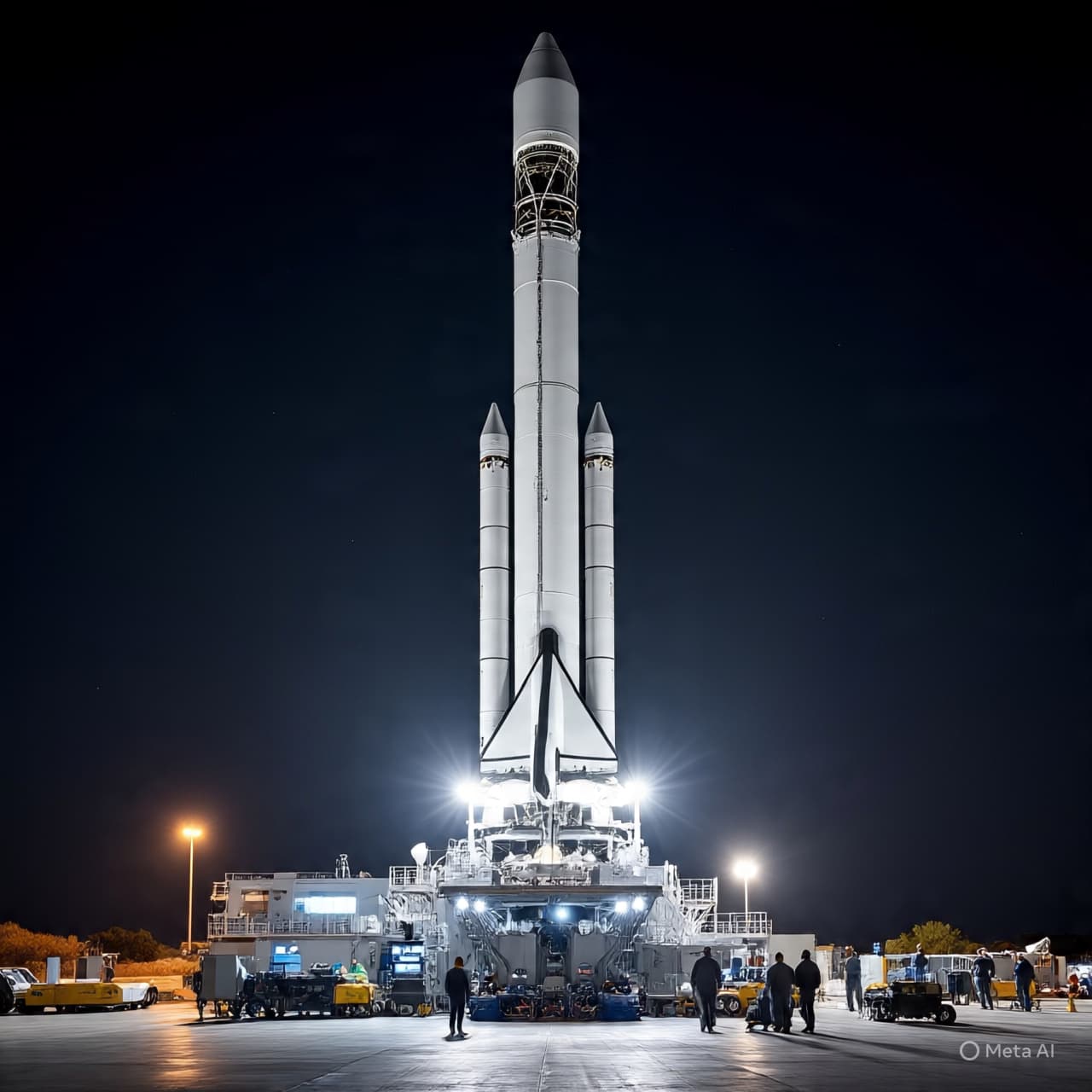
For SpaceX, each Falcon 9 launch is both a technical exchange of precision and a testament to patience. From Vandenberg Space Force Base in central California, a slender rocket — tall and gleaming under artificial lights — stood ready to carry another group of satellites skyward. But weather, that ungovernable partner to all flight, had other plans at first. Rain and high winds nudged schedules again and again, reminding those who watch the skies that the frontier above us sometimes insists on its own timetable.
In the early hours — precisely scheduled to align with orbital mechanics and atmospheric calm — a Falcon 9 rocket finally climbed skyward, its engines carving a glow through the slumbering sky. Its destination: low Earth orbit, where 25 satellites of SpaceX’s Starlink constellation would find their places in a growing network designed to help connect people around the globe.
The mission came after several weather‑related delays that pushed the liftoff from its original date. Engineers stood firm amid shifts in wind and cloud cover, waiting for the moment when conditions would allow a safe and successful launch. When that window finally opened, the rocket ascended cleanly on a southerly trajectory from Space Launch Complex 4 East, its quiet yet powerful roar marking the culmination of careful preparation and adaptable planning.
This particular Falcon 9 booster — designated B1063 — is no stranger to flight. It has served in many missions before, a veteran of multiple deployments that include satellite launches, military payloads, and scientific missions. Each flight adds to a legacy of reuse that has become a hallmark of SpaceX’s approach to space access — where boosters return to Earth, land on drone ships, and prepare for life in space again. On this mission, after the satellites were deployed, the booster aimed for a soft landing on the SpaceX vessel Of Course I Still Love You in the Pacific, closing the loop on another chapter of reusability.
For Starlink, each batch of satellites contributes to a rapidly expanding constellation that now stretches across much of low Earth orbit. These broadband transmitters work in concert to provide internet coverage in places where infrastructure is limited or hard to build, offering signals that can bridge oceans and deserts alike. In this way, a single launch becomes more than a technical event; it becomes part of a broader narrative about connectivity and global reach.
While weather delays can be a source of quiet frustration, they also allow teams to approach these complex missions with extra care. Launching a rocket is an orchestration of physics, engineering, and timing — and sometimes that means waiting, adjusting, and watching the sky until it yields the right moment. Here, in the stillness of a predawn hour, that moment finally arrived.
SpaceX successfully launched a Falcon 9 rocket carrying 25 Starlink satellites from Vandenberg Space Force Base after several weather‑related delays. The mission’s booster, B1063, aimed for a landing on the drone ship Of Course I Still Love You following satellite deployment, consistent with the company’s reusable launch strategy. Teams carefully monitored conditions before final liftoff, adapting schedules until acceptable weather allowed the mission to proceed. This launch adds to the expanding Starlink constellation, supporting the broader effort to enhance global internet access from orbit.
AI Image Disclaimer “Visuals are created with AI tools and are not real photographs.”
Sources Spaceflight Now; Space Launch Schedule.
Published by Banx Network. This article is part of the Banx decentralized media programme, powered by the BXE token on the XRP Ledger.