There are evenings when the sky feels like an open stage, quiet yet full of possibility. Long after sunset, when the last trace of daylight fades and the stars begin to settle into their familiar patterns, the atmosphere sometimes prepares a performance that no theater could ever rival. It begins invisibly, far beyond the clouds, in the restless breath of the Sun.
Tonight may be one of those nights.
Scientists monitoring the Sun’s activity say conditions are aligning for the aurora borealis—the northern lights—to become visible across parts of the United States. Normally, this luminous phenomenon prefers the high latitudes near the Arctic Circle, where it drifts across the skies of Alaska, Canada, and northern Scandinavia. Yet when the Sun grows particularly energetic, the lights can travel much farther south.
That possibility appears to be unfolding now.
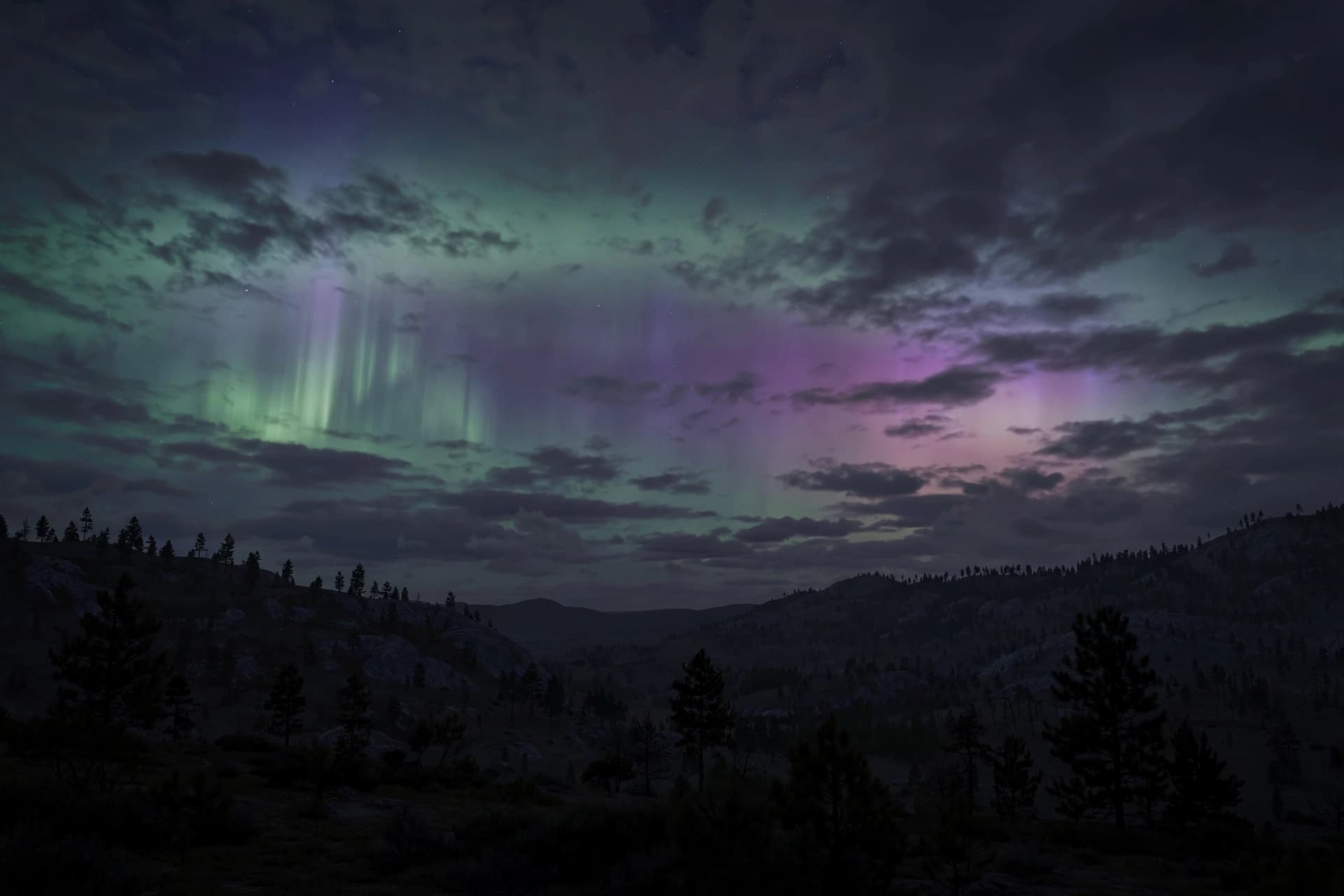
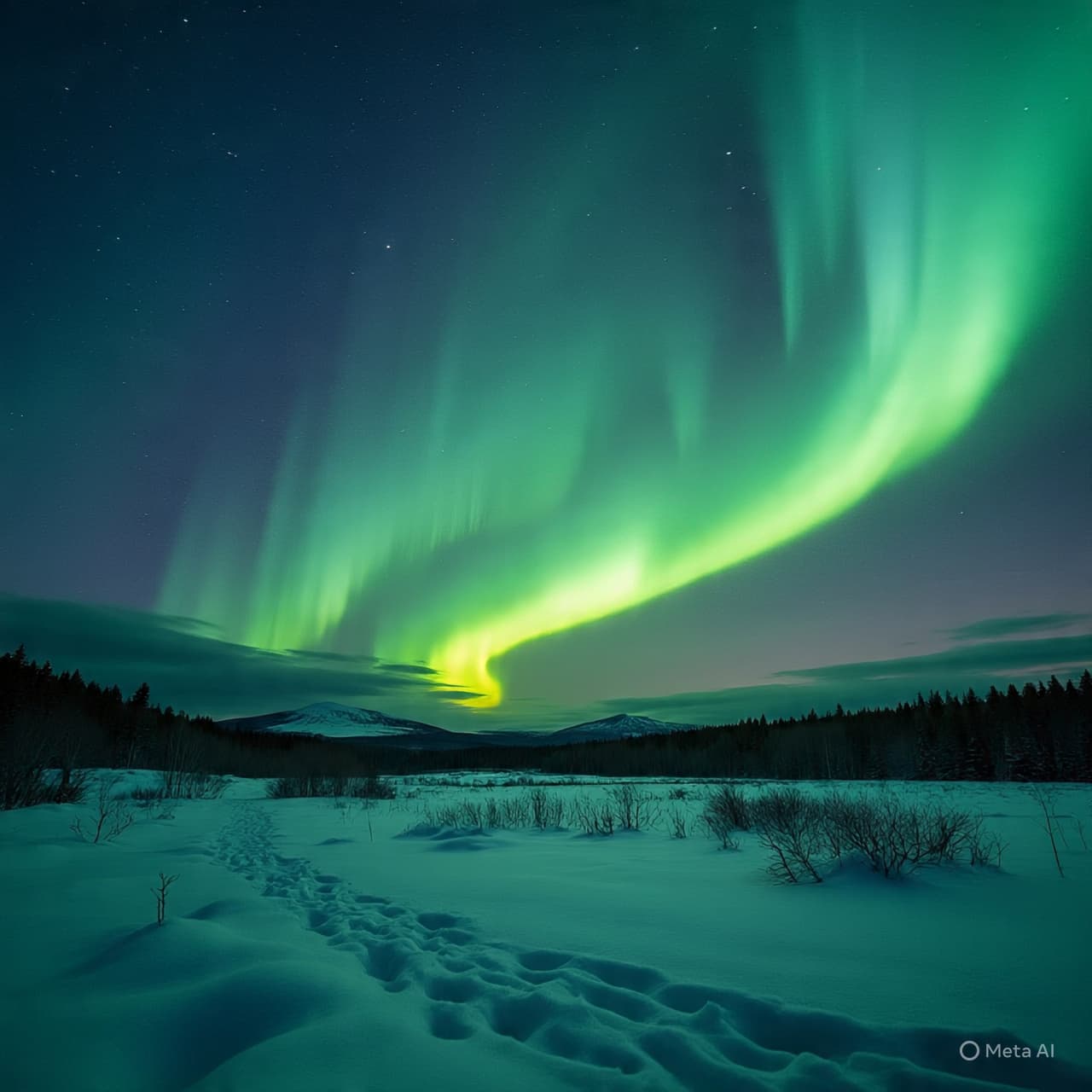
Recent solar activity has sent streams of charged particles toward Earth, carried along by the solar wind. When these particles reach our planet, they encounter Earth’s magnetic field, which guides them toward the polar regions. There, high above the surface, the particles collide with atoms of oxygen and nitrogen in the upper atmosphere. The result is the familiar glow of the aurora—green arcs, shimmering ribbons, and sometimes flashes of red or violet drifting silently across the sky.
Space weather forecasters suggest that tonight’s geomagnetic activity could make the aurora visible in as many as ten U.S. states, particularly those along the northern tier of the country. Regions such as Minnesota, North Dakota, Montana, Wisconsin, and Michigan may have some of the best chances of witnessing the display. Under favorable conditions, the glow could extend even farther south into parts of states like Idaho, South Dakota, New York, and Maine.
But like all natural spectacles, the aurora rarely follows a strict schedule.
Visibility depends on several quiet factors working together. Clear skies are essential, and darkness far from city lights offers the best view. Observers are often encouraged to look toward the northern horizon, where faint green bands sometimes appear first before growing into broader waves of light.
Timing also plays a role. Auroras frequently intensify in the hours around midnight, when Earth’s magnetic field aligns more directly with incoming solar particles. For patient skywatchers, the experience may begin as a subtle glow—almost easy to mistake for distant clouds—before slowly transforming into something unmistakably alive.
The science behind the aurora is rooted in magnetism and solar physics, yet the experience itself remains deeply human. For centuries, people have watched these lights with curiosity and imagination, interpreting them as omens, spirits, or celestial fires. Today we understand the physics behind their creation, but the sense of wonder they inspire has not diminished.
Even a faint aurora carries a quiet magic. It moves slowly, without sound, like light breathing across the upper atmosphere.
Forecasters say tonight’s display will depend on the strength of ongoing geomagnetic activity. If solar conditions remain favorable and skies stay clear, observers in several northern states may glimpse the aurora’s soft glow along the horizon, with brighter displays possible in darker rural areas.
For those willing to step outside and look northward tonight, the sky may offer a reminder that Earth’s atmosphere is not merely a protective shell. It is also a canvas—one that the Sun occasionally paints with light.
AI Image Disclaimer Images in this article are AI-generated illustrations, meant for concept only.
Source Check Credible coverage exists for this topic. Key sources include:
Space.com USA Today Forbes The Weather Channel NOAA Space Weather Prediction Center
Published by Banx Network. This article is part of the Banx decentralized media programme, powered by the BXE token on the XRP Ledger.