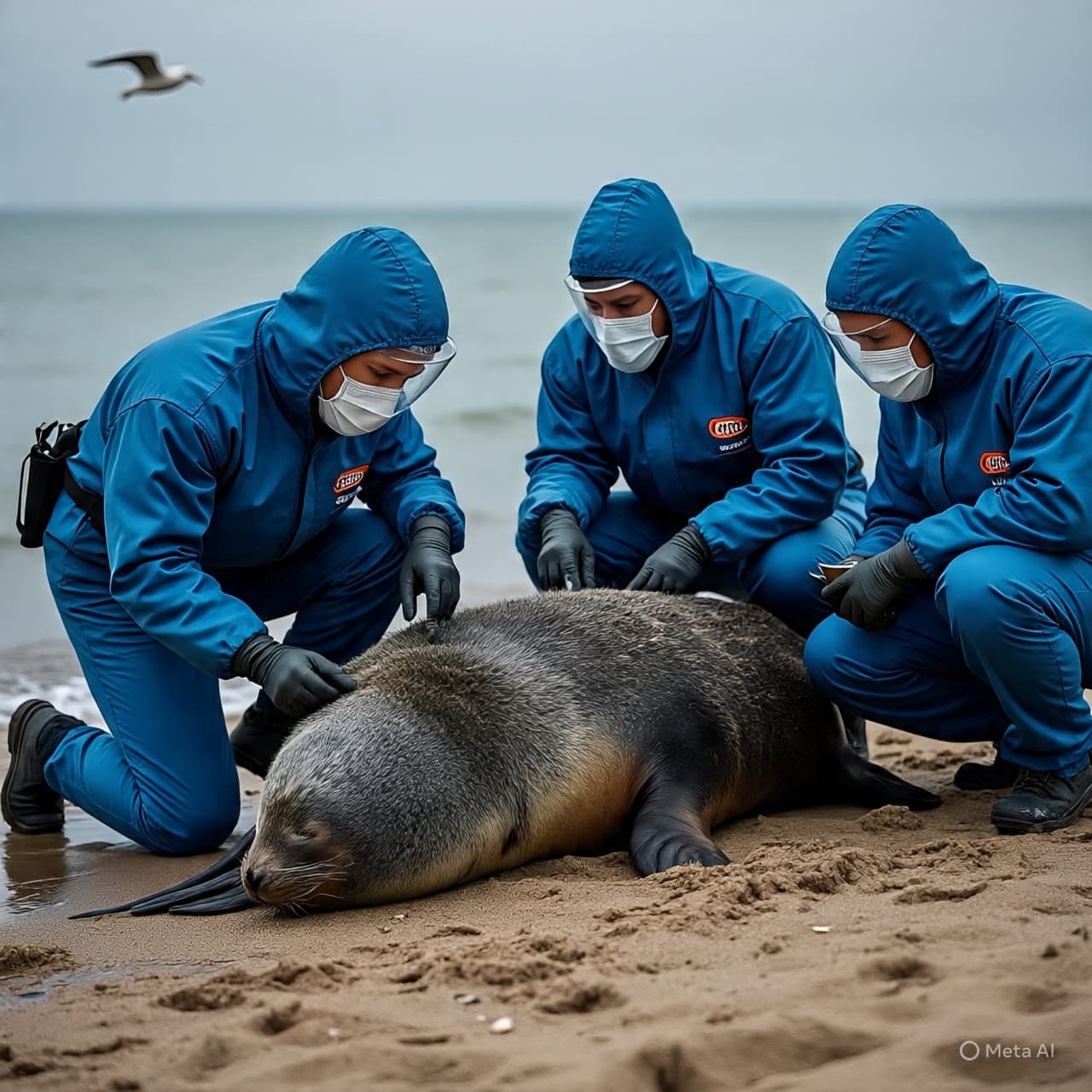
The shoreline at dawn often feels like a place outside of urgency. The Pacific rolls in without haste, and the elephant seals lie in quiet clusters, their great bodies rising and falling with the rhythm of breath and tide. It is a scene shaped by patience. Yet even here, where wind and water seem to smooth away human noise, the wider currents of the world arrive unannounced.
Seven northern elephant seals have tested positive for highly pathogenic avian influenza at a California beach, marking another moment in the virus’s steady expansion across species. reported that laboratory confirmation followed observations of neurological symptoms among stranded animals, including tremors and disorientation. The diagnosis links these cases to the H5N1 strain that has circulated widely among wild birds and, more recently, certain marine mammals.
According to , wildlife officials began investigating after rescue teams noted unusual behavior in the seals. Testing confirmed infection in seven animals, prompting increased monitoring along affected stretches of coastline. While bird flu has been present in seabird populations for months, its appearance in elephant seals adds a new layer to an already complex ecological picture.
Coverage from emphasized that California’s beaches, especially during pupping season, become dense gathering grounds for seals. In such shared environments, seabirds and marine mammals often rest in close proximity. Experts suggest that contact with infected birds or contaminated sand may provide pathways for transmission, though research is ongoing to better understand the dynamics.
has noted that highly pathogenic avian influenza has crossed into several mammal species in recent years, including sea lions and foxes. Scientists continue to stress that while cross-species transmission is concerning, sustained mammal-to-mammal spread remains limited in documented cases. Each confirmed infection becomes part of a broader effort to map how the virus behaves beyond avian hosts.
Meanwhile, reported that public health authorities consider the risk to the general public low. Officials advise beachgoers not to approach stranded wildlife and to report sightings to local agencies trained in marine mammal response. The focus remains on containment, surveillance, and safeguarding both wildlife and human communities.
The seals still gather along the California coast, as they have for generations. Their presence is a reminder of resilience, of migrations that span thousands of miles and centuries of survival. Yet resilience does not mean isolation. In a world where ecosystems overlap more visibly than ever, the health of birds, mammals, and people can converge along a single stretch of sand.
Authorities continue testing, monitoring, and coordinating across state and federal levels. For now, officials say vigilance and public cooperation are key. The tide will continue its steady motion, but scientists will be watching closely, listening for what the shoreline may quietly reveal next.
AI Image Disclaimer: Illustrations were produced with AI and serve as conceptual depictions.
Source Check:
Reuters
Associated Press
Los Angeles Times
The New York Times
CNN
Published by Banx Network. This article is part of the Banx decentralized media programme, powered by the BXE token on the XRP Ledger.