The historic capital of Moroni, built along a jagged coastline of dark volcanic rock, has negotiated its relationship with the Mozambique Channel for centuries. The old harbor district, anchored by the iconic white Friday Mosque, sits directly on the water’s edge, where traditional dhows lay moored adjacent to modern seaside promenades. Under normal conditions, the massive basalt foundations and concrete sea walls successfully deflect the energy of the tides, allowing daily urban life and commerce to move uninterrupted along the waterfront.
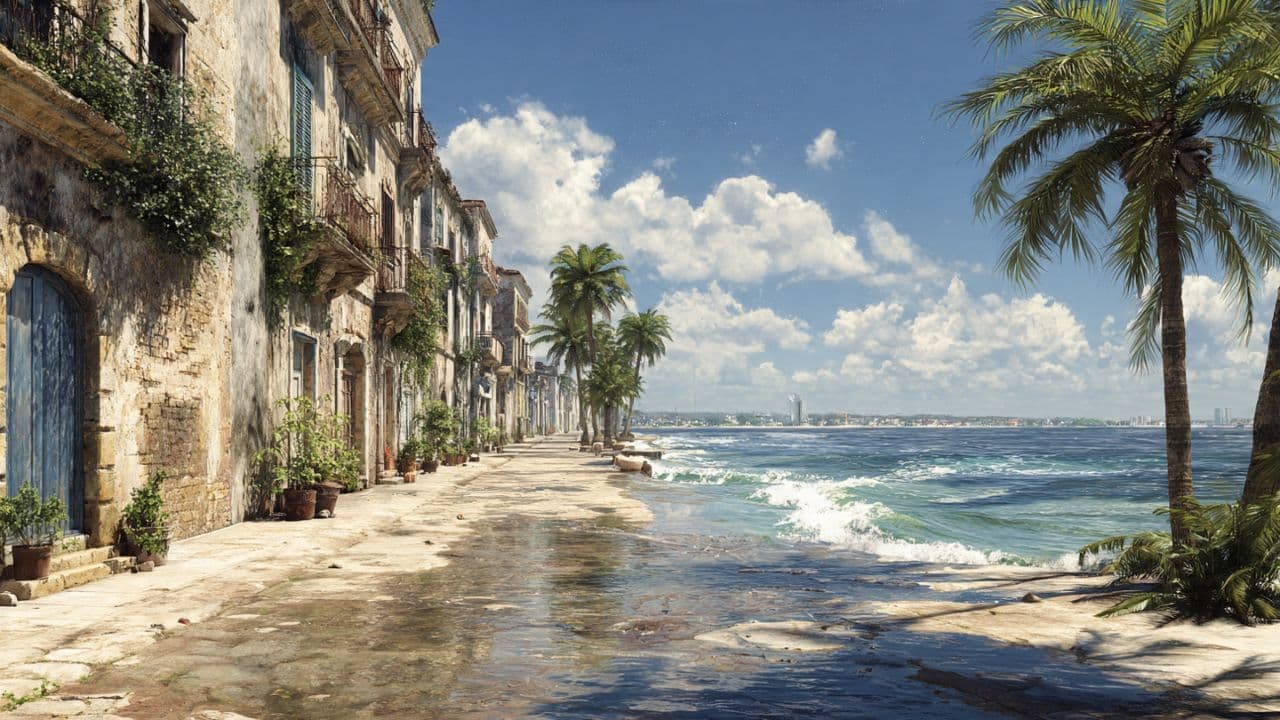
Yet, when the monthly spring tide aligns with a strong seasonal low-pressure system out at sea, the ocean can surge over its standard parameters. The resulting tidal surge drives heavy, salt-laden waves directly against the harbor walls, forcing water up the drainage outlets and over the lip of the pedestrian paths. The sea spills steadily onto the low-lying coastal boulevard, creating a shallow, moving wash of seawater that temporarily transforms parts of the primary urban artery into a shallow lagoon.
For the motorists, municipal workers, and waterfront merchants present during the midday surge, the rising water required immediate, practical adjustments. Drivers slowed their vehicles to a crawl to avoid throwing salt spray onto pedestrians, while cafe owners along the harbor front quickly moved outdoor seating away from the advancing splash zone. Port workers kept a close watch on smaller vessels, adjusting their mooring lines to accommodate the unusually high water level.
The response from the municipal clean-up crews was prompt, focusing on keeping the main storm drains clear of marine debris. Large tangles of seaweed, driftwood, and urban litter brought in by the heavy waves had to be cleared continuously to allow the water to drain away as the tide turned. The disciplined work of the crews minimized the impact on traffic, ensuring that the primary coastal road remained passable under caution throughout the peak of the tide.
By the time the tide reached its maximum height in the early afternoon, the Moroni waterfront presented a dramatic display of marine reach. The primary harbor lane was covered in several inches of clear seawater that reflected the coastal architecture, while waves striking the outer breakwaters sent impressive plumes of white foam into the air. The old mosque stood firm against the damp horizon, its ancient foundations once again proving their structural durability.
The work of restoring order to the promenade began as soon as the tide began its predictable retreat toward the outer channel. Shop owners used brooms and fresh water to wash the salt residue and sand from their entrances, protecting their fixtures from the highly corrosive effects of the sea air. It is a brief, routine cleanup that underscores the constant upkeep required to maintain a capital city on the front lines of a dynamic marine ecosystem.
To watch the normal flow of traffic and trade return to the Moroni harbor is to appreciate the deep adaptability of island communities. The tidal flooding is not met with panic, but as a regular reminder of the natural cycles that govern the geography of the archipelago. The historic stone walls remain solid, ready for the next shift of the wind.
By late evening, the ocean had receded completely back to its proper boundaries, leaving the paved stones of the boulevard dark and glistening under the streetlamps. The cool sea breeze carried the familiar scent of salt and damp earth through the quiet streets, marking the end of the afternoon's brief disruption. The harbor rested, the slow, rhythmic lapping of the waves against the fishing boats indicating the return of the familiar night peace.
The Moroni Municipal Council confirmed that all primary public infrastructure remained structurally sound during the spring tide event, with no permanent damage reported to the coastal highway or harbor walls. Clean-up crews successfully removed all accumulated marine debris from the main driving lanes within two hours, allowing normal traffic flow to resume before the evening rush. The meteorological office advises that subsequent tides will decrease in height over the next forty-eight hours.
Published by Banx Network. This article is part of the Banx decentralized media programme, powered by the BXE token on the XRP Ledger.