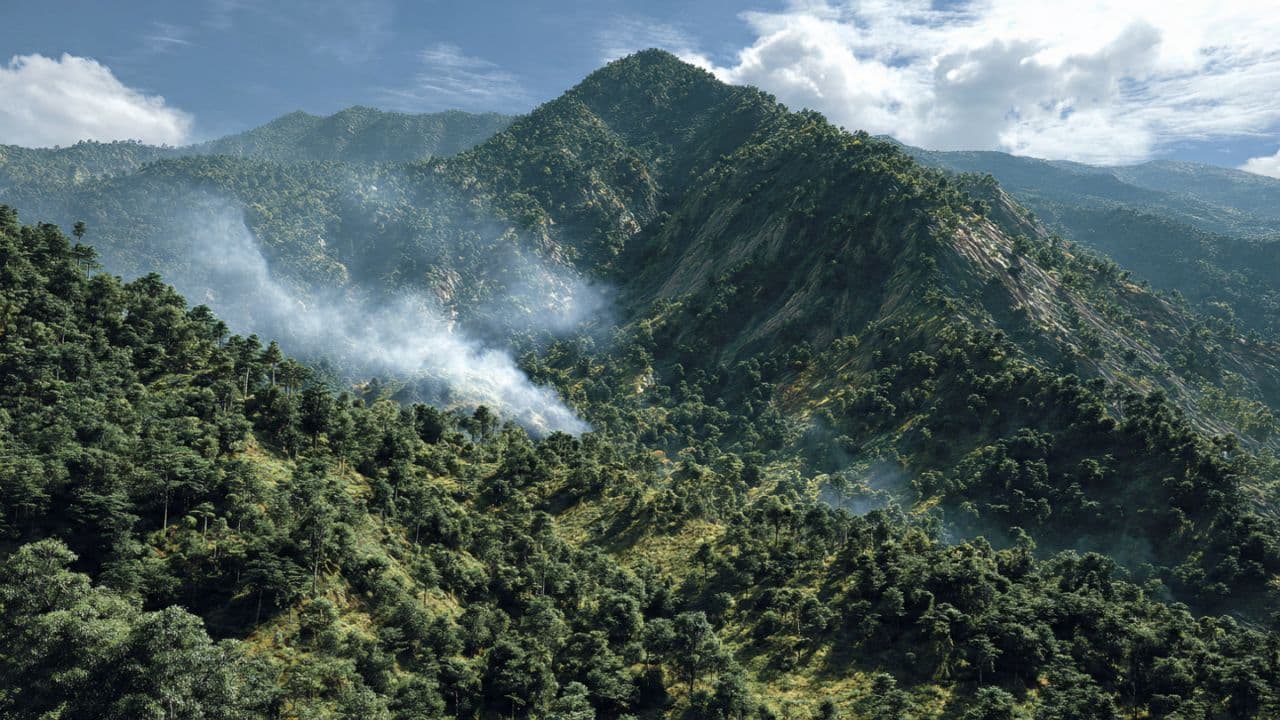
The coastal fringes of Fomboni are characterized by fertile alluvial flats where the island's most valuable crops—vanilla vines, clove trees, and sweet bananas—thrive in the rich volcanic soil. These agricultural plots, tended by generations of smallholders, extend almost to the edge of the high-water mark, separated from the open sea only by narrow strips of sandy beach and scattered clusters of mangrove trees. The proximity to the ocean ensures a humid atmosphere that favors tropical agriculture, provided the sea remains within its natural boundaries.
Yet, when the monthly spring tide aligns with sustained onshore winds, the ocean can break through the thin coastal defenses. The resulting saline surge drives the heavy saltwater up the shallow drainage channels and directly into the root zones of the low-lying fields. The water spreads quietly across the flat ground, creating shallow pools of brine that pose an immediate chemical threat to the sensitive root systems of the cash crops, which have zero tolerance for salinity.
For the farmers who arrived at their fields the morning after the surge, the sight of standing saltwater among their crops was a cause for immediate action. Vanilla vines, which take years to mature and require precise moisture conditions, can quickly rot if their roots remain submerged in brine for more than a few hours. Working rapidly under a warm sky, farming families used hoes and shovels to dig emergency trenches, attempting to drain the stagnant saltwater away from the crop rows and back into the main sea channels.
The response from the local agricultural cooperative was defined by immediate, practical cooperation as neighbors shared tools and labor to protect the vulnerable fields. In these coastal communities, a threat to one farm is viewed as a threat to the local economy, prompting a collective effort to minimize the long-term damage. Volunteers focused on building temporary earth dikes along the lowest points of the beach ridge to prevent subsequent high tides from repeating the inundation.
By the second afternoon, as the spring tide began to wane, the water levels in the fields dropped significantly, leaving a fine crust of white salt on the surface of the soil. The farmers turned their attention to the critical task of flushing the earth, utilizing freshwater carried from nearby mountain streams to dilute the salt concentration around the roots of the most valuable plants. It is a meticulous, labor-intensive process carried out under the hot sun, where the survival of the harvest depends on the speed of the intervention.
The incident underscores the growing vulnerability of low-lying tropical agriculture to atmospheric and marine volatility, highlighting the need for more robust coastal management strategies. Traditional methods of land clearing that remove native beach vegetation and mangroves leave the inland plots exposed to the direct impact of high tides. The agricultural department faces the long-term task of encouraging farmers to restore these natural barriers while developing salt-tolerant crop varieties for the front lines of the coast.
Beneath the immediate logistical challenge of saving the vanilla rows lies a deeper reflection on the delicate balance that governs island life. The sea is the source of the island's connection to the wider world, yet it remains a constant, unpredictable neighbor capable of reclaiming the land at short notice. The resilience of the community is found in their intimate knowledge of the soil and their readiness to adapt their farming practices to the changing realities of the coast.
The white salt stains on the dark volcanic earth will eventually be washed deep into the subsoil by the returning seasonal rains, allowing the land to recover its natural balance. The farmers will continue to tend their vines along the coastal fringe, keeping a watchful eye on the moon phases and the direction of the wind. The groves stand quiet once more, their green leaves rustling in the sea breeze as the community works to secure the next harvest.
The Mohéli Agricultural Extension Office confirmed that approximately four hectares of mixed-use coastal farmland near Fomboni experienced minor saltwater intrusion during the peak tide event. Field officers are currently conducting soil salinity tests to advise farmers on remediation techniques and to assess potential yield impacts on the current vanilla crop cycle. No permanent structural damage to farming infrastructure was reported.
Published by Banx Network. This article is part of the Banx decentralized media programme, powered by the BXE token on the XRP Ledger.