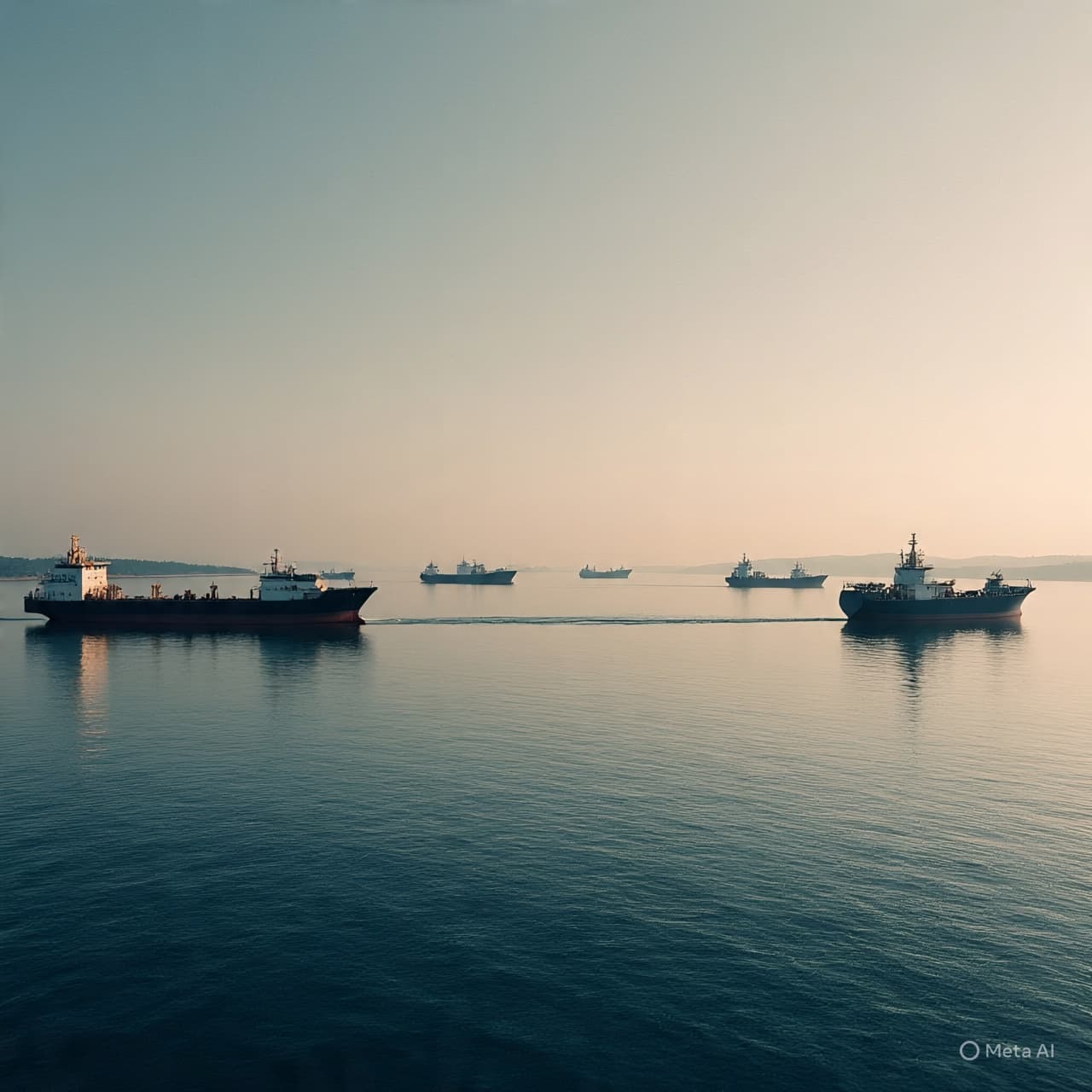
Out on open water, where tankers usually move with the quiet confidence of global purpose, a different picture is emerging. The amount of Iranian crude held at sea has swelled to its highest level in two and a half years, turning parts of the ocean into a slow-moving storage ground. For an industry built on motion, stillness can be its own kind of message.
The buildup reflects a subtle but telling shift: demand from China, the largest buyer of Iranian crude, has eased. For months, exports from the OPEC member have remained elevated, feeding a trade line shaped by discounts, long-term ties, and the flexibility of maritime logistics. But even abundant supply cannot outrun changing refinery needs, fluctuating margins, or the ebb and flow of industrial activity.
When barrels pause on the water, the market notices. Tankers are not meant to linger. They are built for routes—Persian Gulf to Asia, storage to refinery, supply to consumption. So when dozens of ships wait instead of sail, it becomes a visual register of imbalance. The world’s energy maps are drawn not only in pipelines and terminals, but in the subtle choreography of vessels that keep the system in motion.
Floating storage tends to rise in moments of hesitation. Sometimes the hesitation is commercial: buyers waiting for better prices or assessing weaker fuel demand. Sometimes it reflects congestion, policy shifts, or refinery maintenance cycles. Whatever the mix, the result is the same—oil that should be part of economic current becomes a quiet inventory drifting between destinations.
Iran’s elevated exports add another layer of complexity. Even with strong volumes leaving its ports, the market cannot absorb supply at the same pace when appetite slows, particularly from a major consumer. The tankers holding crude become a temporary bridge between supply ambition and demand reality, a reminder that the energy trade is as much about timing as it is about volume.
For the broader oil market, the buildup represents a gentle pressure point rather than an alarm. Prices often respond less to the presence of oil than to the movement of it; immobile barrels suggest a world adjusting, recalibrating, waiting for its next burst of activity. The ocean, for now, carries the weight of that pause.
In time, the tankers will move again. Flows will realign, refiners will resume full runs, and demand will find its rhythm. But this moment—where energy floats in suspension—offers a rare glimpse of how global systems breathe. Even in an industry defined by speed and scale, the story sometimes unfolds in the stillness.
Published by Banx Network. This article is part of the Banx decentralized media programme, powered by the BXE token on the XRP Ledger.