In the mountains of southwestern Colombia, the roads wind like old scars.
They cut through green ridges and mist-covered valleys, threading together villages where mornings begin with market stalls, school buses, and coffee steaming in roadside kitchens. Along the Pan-American Highway, life usually moves in practical rhythms—trucks carrying produce, families traveling between cities, workers heading toward long days beneath a warm and uncertain sun.
Then, in an instant, the road opened.
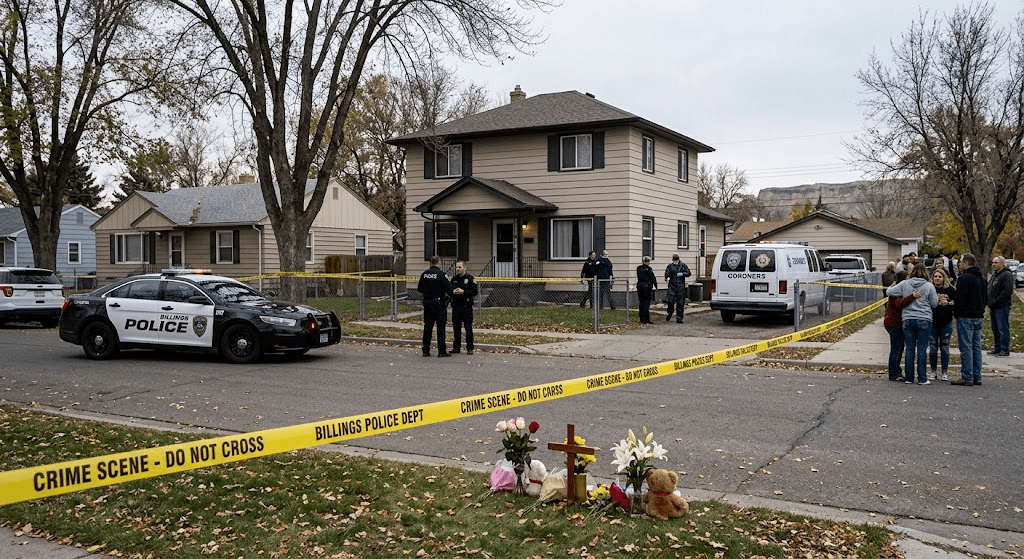
The earth broke apart in Cauca this weekend with a violence that seemed to split not only asphalt, but memory. A bomb attack on the Pan-American Highway killed 21 people and injured dozens more, leaving behind twisted buses, shattered vehicles, and a crater so large it seemed to swallow the familiar shape of the road itself.
Now, as smoke clears over the hills, the Colombian government is searching for a man it says ordered the attack.
Authorities have announced a record reward of 5 billion pesos—about $1.4 million—for information leading to the capture of Iván Jacob Idrobo Arredondo, known by the alias “Marlon.” Defense Minister Pedro Sánchez accused him of orchestrating the bombing, along with a wave of other coordinated attacks across Cauca and Valle del Cauca in recent days.
The figure is the largest bounty in the country’s history.
And perhaps that, too, tells its own story.
In Colombia, rewards are often measured not only in money, but in fear—in the scale of violence, in the urgency of the state, in the shadows cast by names spoken quietly. “Marlon” is believed to be part of an armed group under the command of Iván Mordisco, one of Colombia’s most wanted men and the leader of a dissident faction of the former Revolutionary Armed Forces of Colombia, or FARC.
The old war, it seems, never entirely ended.
When Colombia signed its historic peace accord with FARC in 2016, many imagined the country stepping slowly toward a quieter future. Around 7,000 fighters laid down their weapons. But not all did. Some factions refused the agreement, retreating deeper into jungles and mountains, reshaping themselves around drug trafficking, illegal mining, and extortion.
Now, in the weeks before Colombia’s presidential election on May 31, the old fractures are widening again.
Saturday’s bombing was one of at least 26 attacks targeting public infrastructure and security forces over two days, according to military officials. The explosion came after attackers reportedly blocked traffic with a bus and another vehicle before detonating explosives on the crowded roadway.
Many of the dead were women traveling from a nearby village.
Some were mothers.
Some were daughters.
Some were simply on their way home.
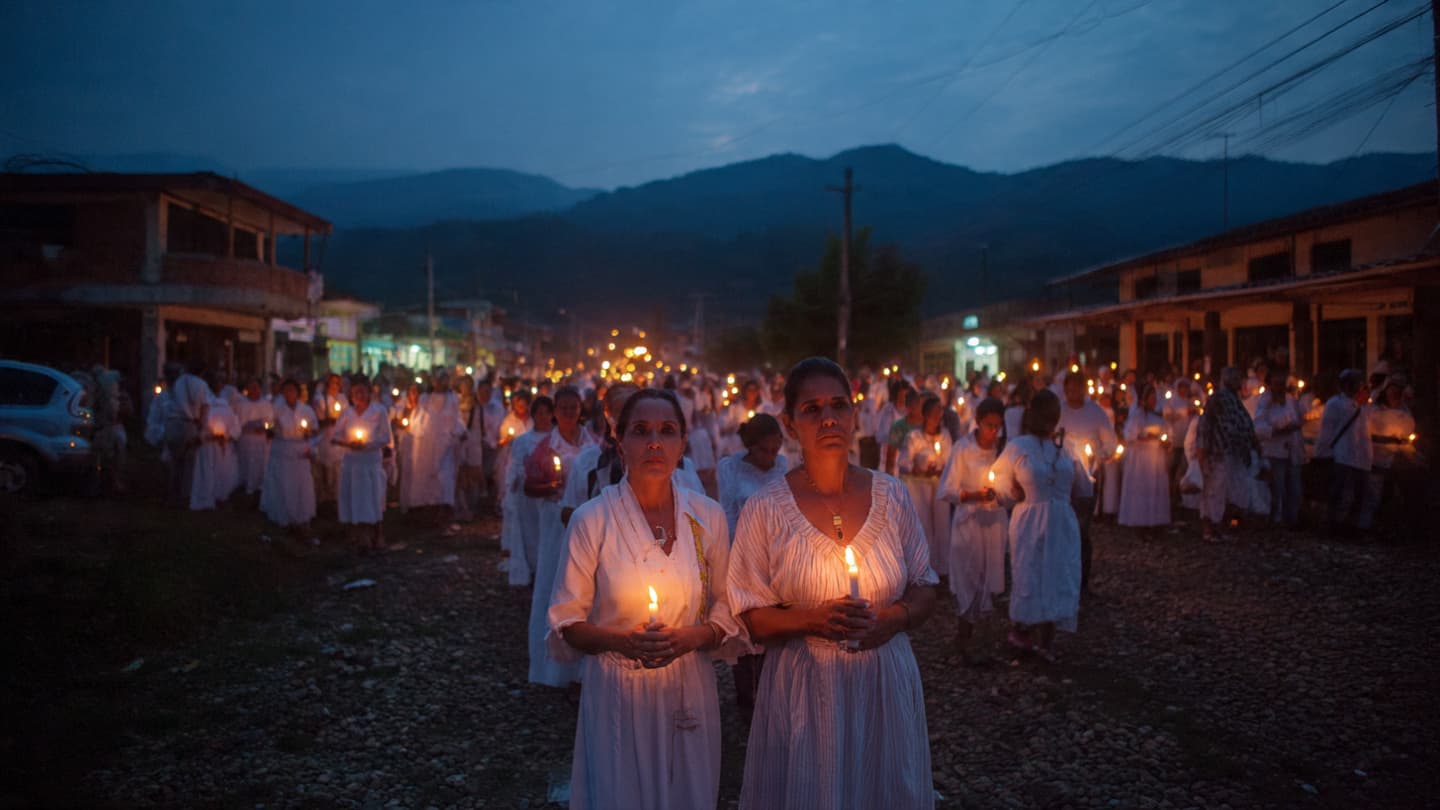
In Cajibío, where grief has settled like fog over the hills, mourners gathered in white to hold candles and photographs beneath a darkening sky. The governor of Cauca called it the most brutal attack against civilians in the region in decades.
President Gustavo Petro condemned those responsible as terrorists and ordered additional troops into the area. From helicopters overhead and checkpoints below, the state now moves with visible force.
But force, in Colombia, has always had limits.
Violence here is layered into the geography—woven through coca fields, mountain passes, forgotten roads, and decades of ideology turned into commerce. Armed groups adapt. Governments change. The names shift. The fear often remains.
The timing of the attack has sharpened political tension across the country. Security has become the central issue of the election campaign, with candidates divided between promises of renewed peace talks and calls for a harder military response. Polls suggest left-wing candidate Iván Cepeda remains ahead, while right-wing rivals argue that negotiations have only emboldened armed factions.
And so the country waits.
It waits for arrests.
It waits for elections.
It waits for roads to reopen and for funerals to end.
In the green mountains of Cauca, the rain will come again, softening the edges of the crater. Trucks will one day return to the highway. Markets will reopen. Children will ride buses along repaired pavement.
But for now, the road remains broken.
And in its silence, Colombia hears the echo of an old war speaking once more.
AI Image Disclaimer Illustrations were created using AI tools and are not real photographs.
Sources CBS News Reuters The Guardian AFP BBC News
Published by Banx Network. This article is part of the Banx decentralized media programme, powered by the BXE token on the XRP Ledger.