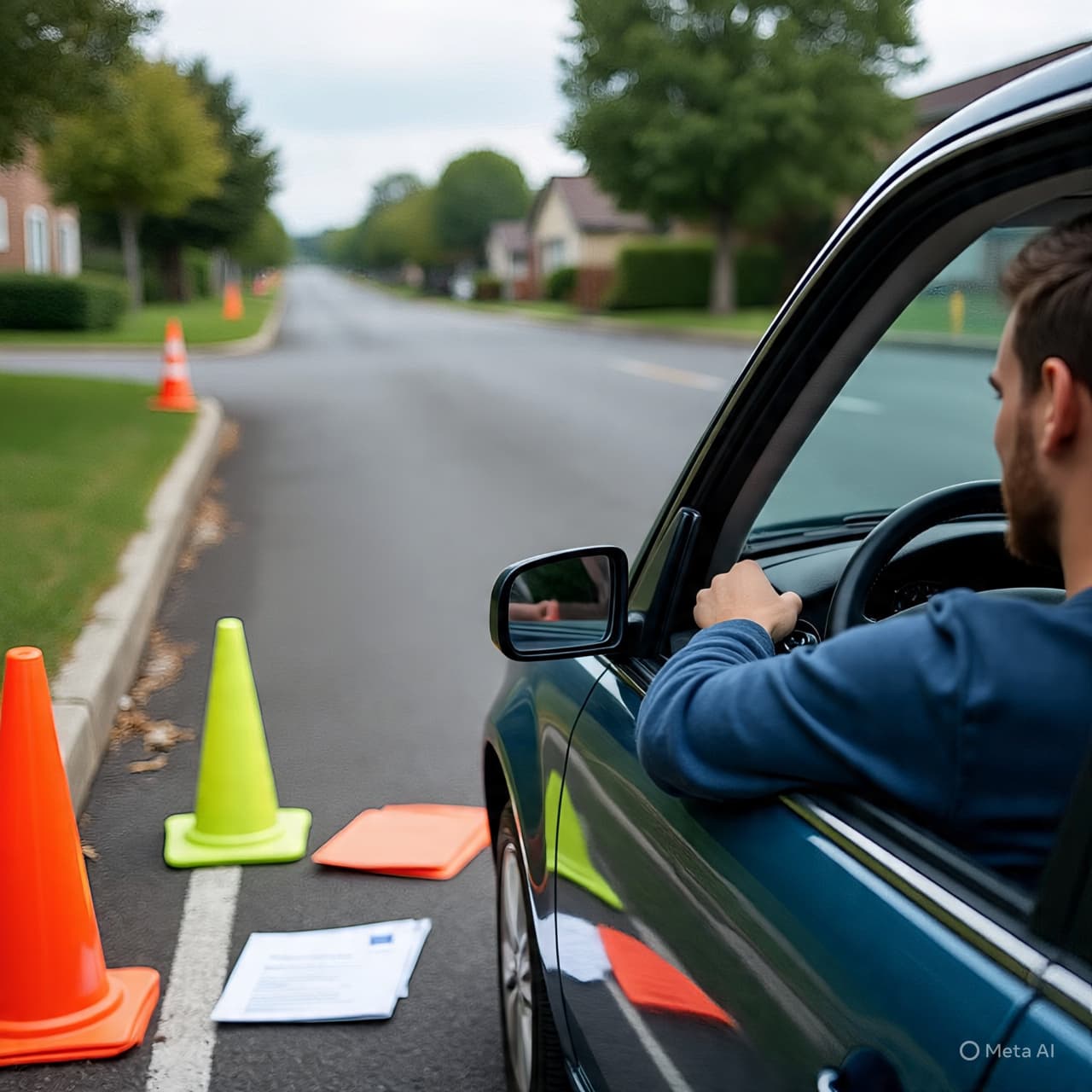
In the hush before a journey begins, there is often a moment when a young person stands at the doorway of the world, key in hand, eyes on the open road. It is a moment of promise — the first tentative steps of freedom and responsibility woven together like threads in a tapestry. In Northern Ireland, this symbolic crossing of threshold is now set to take on a new, more deliberate rhythm. The region is preparing to become the first part of the United Kingdom to introduce graduated driving licences, a change that invites us to reflect not merely on how we drive but on how we learn, grow, and navigate the spaces between youth and adulthood.
For decades, driving in the UK has been a rite of passage for many young people. Yet statistics and road safety experts have long noted that newly qualified drivers, especially those under 24, are disproportionately represented in road collisions — a reality that evokes both sorrow and sober reflection. The graduated system, which has been widely used in places like Australia, Canada, and the Republic of Ireland, aims to ease new drivers into full responsibility with staged conditions that are lifted gradually as experience and competence grow.
Under the new rules, due to be introduced in October, learner drivers will be required to complete a minimum six-month period between gaining a provisional licence and taking a practical test. During this time, learners will work through a structured training programme of at least 14 modules that must be signed off by an approved instructor or supervising driver — often a parent or guardian. This measured approach makes visible the belief that learning to drive well is less like flipping a switch and more like learning a craft.
Once the test is passed, new drivers will enter an extended 24-month restricted period — twice as long as previously — where distinctive plates signal their novice status on the road. Within the first six months of full qualification, further limits on nighttime driving and the number of young passengers permitted in the vehicle will apply. Restrictions like these, while requiring adjustment, are rooted in an aim that resonates beyond strict regulation: to give fledgling drivers the calm space to grow, to see the road not as a race but as a shared environment demanding respect and care.
In a landscape where roads thread winding through both rural hills and city streets, every journey is stitched together by countless choices made in moments imperceptible to the untrained eye. Advocates of the new system suggest that by spacing out a learner’s path — first into controlled experience and then into incremental freedoms — drivers can develop a deeper sense of hazard awareness and judgment before facing the full breadth of traffic’s unpredictabilities.
Not all reactions have been uniform. Some young people have greeted the changes with mixed feelings, noting concerns about cost, access, and the social rhythms of youth. Others see in the measures a thoughtful attempt to reduce the likelihood of tragedy on roads that carry all sorts of stories: a commuter’s early morning drive, a student’s late-night return, a family’s weekend pilgrimage.
As Ireland’s neighbour looks to its own traditions and those of distant jurisdictions, the decision by Northern Ireland’s Department for Infrastructure and local authorities reflects a blend of caution and care. It is an invitation to rethink how society surfaces skill and confidence in young drivers — not with abrupt leaps but with purposeful steps, much as a river carves its course through stone over time.
In straight news terms, the graduated driving licence programme in Northern Ireland will take effect in October, introducing mandatory learning periods, structured training, extended restricted licences, and conditions on night driving and passenger numbers for new drivers aged roughly 17 to 23. Officials say the reforms are intended to reduce serious and fatal crashes involving novice motorists.
AI Image Disclaimer (Rotated) Graphics are AI-generated and intended for representation, not reality.
Sources BBC News AOL News Wikipedia (2026 in Northern Ireland timeline) RAC Drive Government policy and consultation context
Published by Banx Network. This article is part of the Banx decentralized media programme, powered by the BXE token on the XRP Ledger.