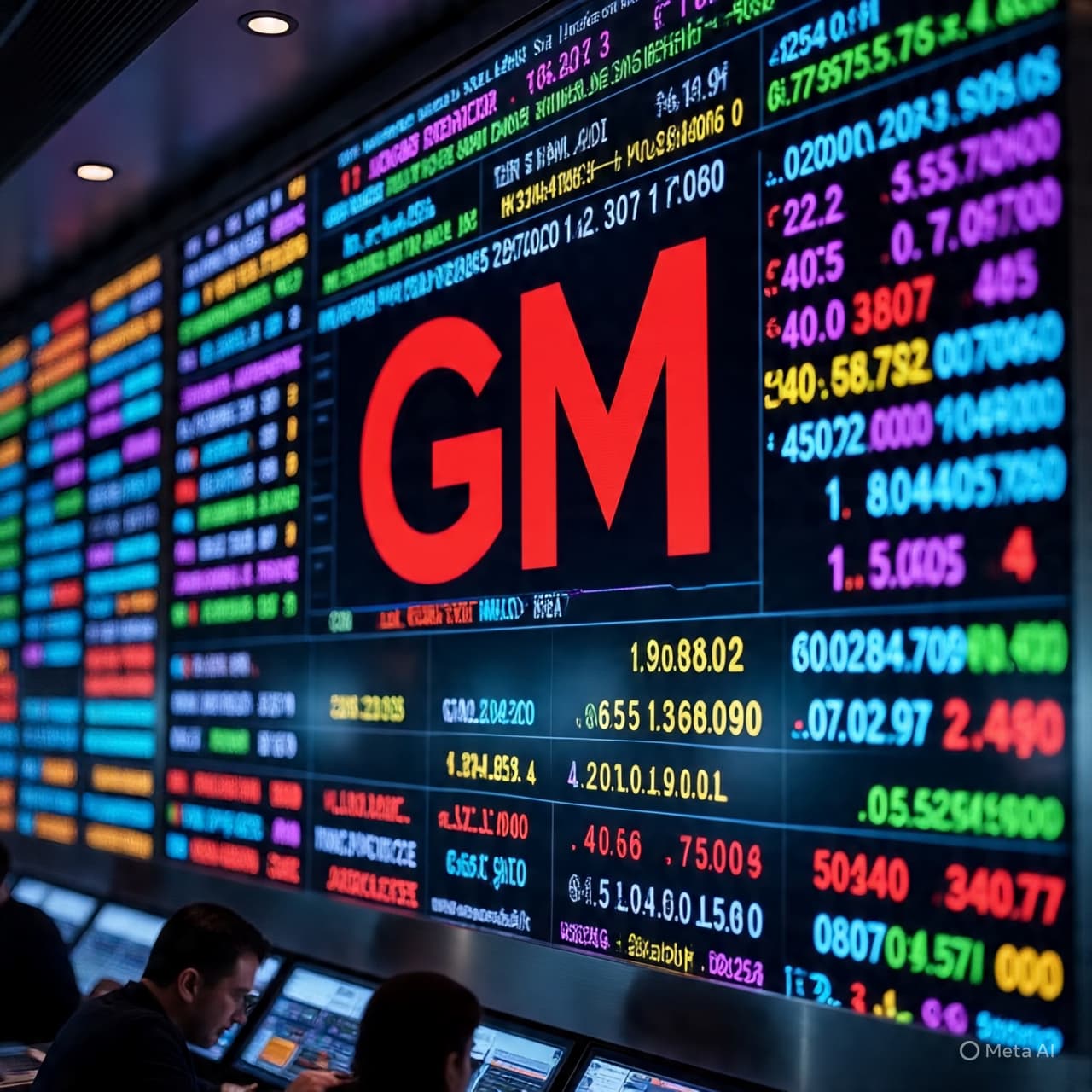
In the quiet moments before markets open each day, there is a sense of calm — a pause that holds the collective breath of investors, analysts, and those whose livelihoods turn on numbers soon to be unveiled. It is in this space, poised between yesterday’s close and tomorrow’s truth, that General Motors prepares to report its quarterly earnings, a ritual as familiar to Wall Street as the turning of seasons, yet rich with its own shifting shadows and sunlight.
This year, that moment carries more weight than usual. GM — a titan whose history is bound up with the rise of the automobile itself — stands at a crossroads where long-planned electric aspirations intersect with the realities of changing demand and cost pressures. The company has taken major write-downs in its electric vehicle business, reflecting softer-than-expected demand after the disappearance of federal tax incentives and a broader industry slowdown in battery-powered models. These impairments — totaling billions of dollars — will be tallied as special items in the company’s quarterly report.
Analysts on Wall Street have woven these developments into their forecasts, expecting GM to show adjusted earnings in line with a still-resilient performance in traditional segments even as electric ambitions temper financial results. Sales of pickup trucks, large SUVs, and other conventional vehicles, long the bedrock of GM’s profitability, have continued to undergird the company’s overall results.
Yet the specter of EV write-downs invites reflection on a broader transition. Just as a river does not change its course overnight, the migration from internal combustion to electrification in mobility is marked by currents and eddies that can slow momentum and reshape plans. GM’s leadership has acknowledged these tides, taking strategic steps — from reshaping production footprints to focusing on cost efficiencies — even while reassessing the pace and scale of investments.
For investors, the narrative is layered. Some view the recent challenges as growing pains on a long road to EV profitability and leaner operations. Others watch more cautiously, wondering whether the costs of adaptation might weigh on future earnings and strategic clarity. Wall Street’s expectations are thus a mosaic of optimism tempered by realism, where projected revenues and adjusted profits sit alongside questions about guidance for the coming year.
In this landscape, GM’s earnings report is not simply a set of figures but a moment of understanding — a chance to see how a historic company is finding its bearings amid shifting demand and evolving industry expectations.
When the numbers ring out before the trading day truly begins, they will be received not with clamoring demands but with thoughtful listening. In markets as in life, it is often not only what is said but how it is said — and what remains to be spoken tomorrow — that matters.
AI Image Disclaimer
*Visuals are created with AI tools and are not real photographs, intended for representation only.*
Source Check
Credible recent business news sources confirm this topic and allow the article to move forward:
Reuters
Yahoo Finance
Benzinga
Barron’s
Nasdaq
Published by Banx Network. This article is part of the Banx decentralized media programme, powered by the BXE token on the XRP Ledger.