In the high country of southern Colorado, where the air is usually thin and dry and the rivers run modest and clear, water has become a source of dread rather than renewal. Pagosa Springs, a small town known for its hot springs and its proximity to ski slopes, has spent the past several days watching the San Juan River rise with a kind of patient anxiety that only those who live close to water can understand. The forecasts have not been gentle.
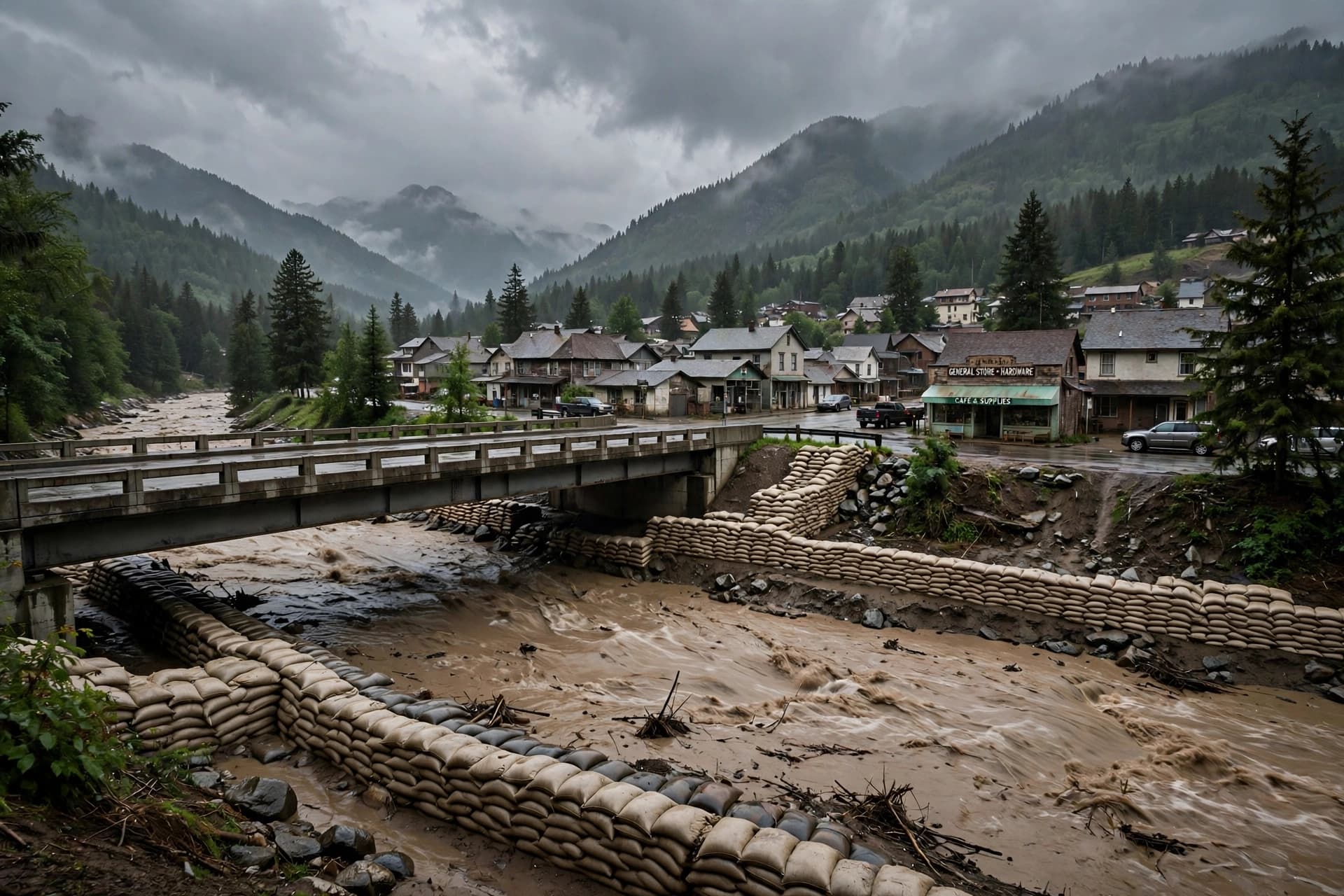
Over the weekend, officials in Archuleta County warned that the San Juan could crest at more than twenty feet—a level that would surpass the devastating flood of 1911, which destroyed much of the town as it existed then. The sheriff’s office did not mince words, calling it a “potentially catastrophic flood event” . By Sunday evening, the river had reached about fourteen feet, and roads in and out of the town were closed. Residents in low-lying areas were told to leave, and those who remained were urged to stay home .
The situation in Pagosa Springs is part of a broader pattern of extreme precipitation across the Southwest, a region more accustomed to drought than to deluge. Mandatory evacuations were also ordered in parts of Arizona and New Mexico, where flash flooding has already damaged homes and infrastructure. In New Mexico, at least ten thousand homes remained underwater following flooding along the San Juan and Animas rivers, and flood gauges in some places broke under the force of the water . The National Weather Service has warned of more rain to come, prolonging a crisis that has already stretched emergency crews thin.
For the people of Pagosa Springs, the past week has carried a particular cruelty. An evacuation order had just been lifted after earlier flooding, only to be reimposed on Saturday as the forecast worsened . Katie German, who owns a coffee shop in town, told reporters that downtown had been evacuated and that she was most worried about the single bridge into town washing out—the one artery that carries food, fuel, and supplies . “This town, we’re a very, very tight community,” she said. “We all help each other out.”
That mutual aid is likely to be tested in the days ahead. Colorado’s Division of Homeland Security and Emergency Management has warned residents that they may not be able to return home for several days, and officials have advised people not to wait to leave, as emergency crews may be limited during the worst of the storm . The water is expected to recede eventually, as water always does. But the questions that remain—about the bridge, about the businesses, about what the river will leave behind—will linger long after the last rain cloud moves east.
The county has asked residents to avoid contact with the San Juan River due to concerns about sewage discharge, and shelters have been opened at local churches. Further updates are expected as the river crests and the extent of the damage becomes clearer.
Image Disclaimer: The photographs in this article were created using artificial intelligence and do not depict the actual locations or events described.
Sources: The Guardian, The Washington Post, Daily Mail, KUNM, The Gazette
Published by Banx Network. This article is part of the Banx decentralized media programme, powered by the BXE token on the XRP Ledger.