There is a quiet poetry to the vastness of space, where worlds circle and sway in a cosmic choreography that has played out for billions of years. Earth, spinning in her familiar rhythm, seems to keep a resolute beat — day to night, summer to winter. Yet, as in every dance of life and time, there are subtle influences from beyond the immediate partner. In the solar system’s intricate ballet, scientists are now discovering that even a seemingly distant neighbor, like Mars, may contribute its own gentle whispers to Earth’s climate cycles, shaping patterns that stretch over the vast tapestry of deep time.
For decades, scientists have known that Earth’s climate ebbs and flows in response to slow, celestial rhythms called Milankovitch cycles — long, subtle variations in the shape of Earth’s orbit, its tilt, and the direction it points in space. These orbital “heartbeats” help pace the advance and retreat of ice ages, nodding to the gravitational influences of other planets in our solar neighborhood. Traditionally, the gravitational pulls of massive planets like Jupiter and Venus have been seen as principal arrangers of these rhythms. Yet more recent research has brought Mars into this contemplative circle of influence, suggesting that the red planet — though smaller and more distant — still plays a discernible role in modulating Earth’s long‑term climate dance.
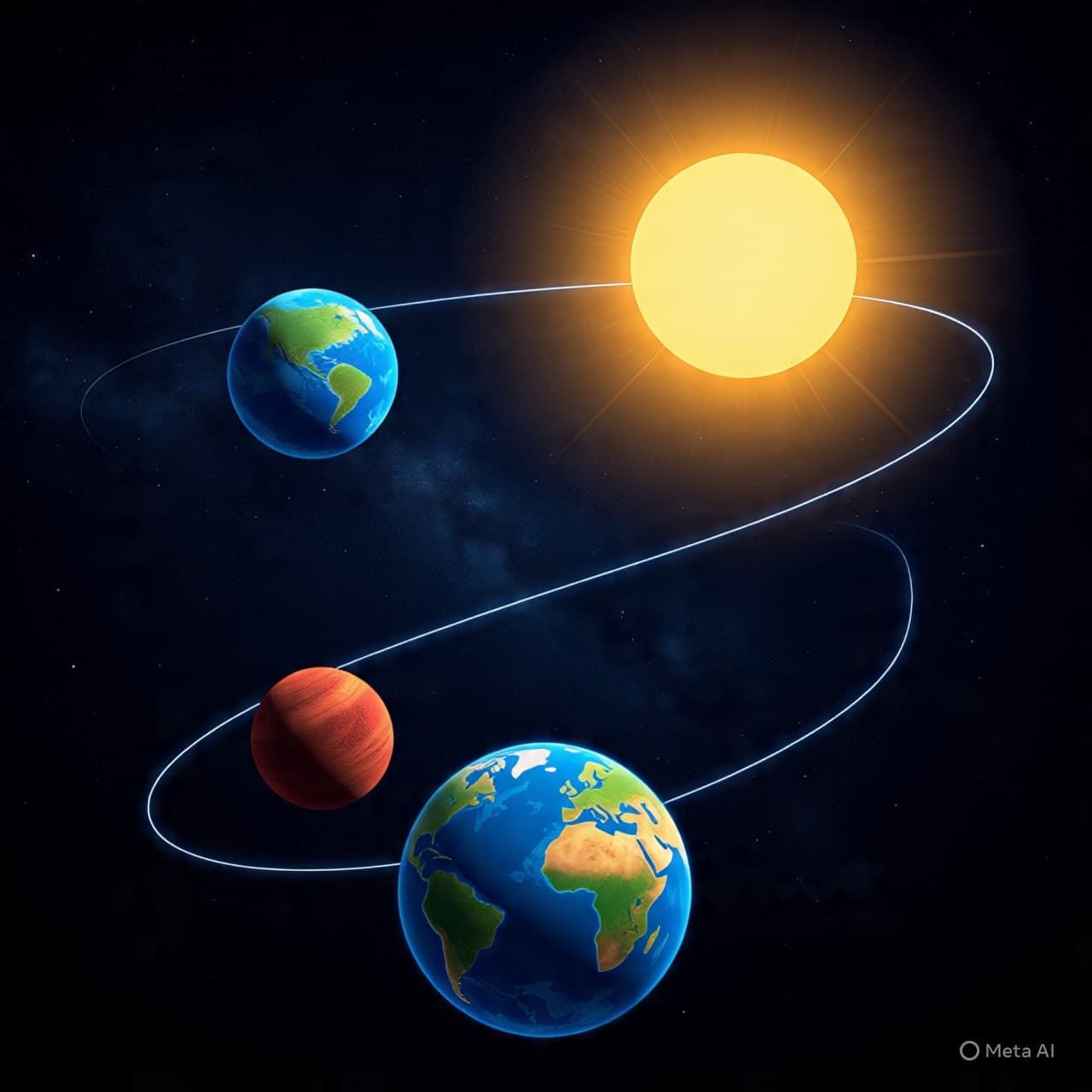
This emerging picture arose from simulations and geological evidence that trace how Earth’s orbit and tilt adjust over millions of years. Mars’ gravity, while fragile compared with the might of Jupiter or the Sun, adds a delicate but persistent tug that can alter the timing and character of these very long orbital cycles. In computer models where Mars’ mass was hypothetically varied or removed, key climate cycles — those long periods of orbital shape and tilt that resonate with ice age rhythms on Earth — changed or vanished altogether, implying that Mars helps stabilize certain patterns that are woven into Earth’s climate story.
Some studies, including deep‑sea sediment records spanning tens of millions of years, hint that the interactions between Earth and Mars’ orbits may correlate with changes in ocean behavior and climate markers preserved in the geological record. These findings do not suggest that Mars “causes” climate change in any rapid or dramatic way — particularly not the modern warming driven by increasing greenhouse gases — but they do invite us to reflect on how the interplanetary gravitational web subtly shapes the ancient rhythms of our planet’s environment.
In this context, Earth is not an isolated world but a participant in a broader cosmic ensemble, where long‑term climate patterns emerge from the delicate gravitational interplay of all its neighbors. Mars, with its rusty hue and quiet orbit, may seem a remote observer of Earth’s unfolding story, but the research reminds us that our planet’s stability and variability are woven into the solar system’s larger narrative.
As scientists explore further, these insights help deepen our appreciation for the complexity of planetary systems and the many subtle forces that can shape a world’s climate over deep time.
AI Image Disclaimer (Rotated Wording) “Illustrations were produced with AI and serve as conceptual depictions.”
Sources (Credible Media) SciTechDaily ScienceAlert Universe Today Smithsonian Magazine Wikipedia (Milankovitch cycles)
Published by Banx Network. This article is part of the Banx decentralized media programme, powered by the BXE token on the XRP Ledger.