Rain, in its gentler forms, is often absorbed into the rhythm of island life—falling, passing, and leaving behind the scent of renewal. But there are times when it does not move on, when it gathers instead, layer upon layer, until the land can no longer receive it quietly.
Across Hawaii, that threshold has been crossed.
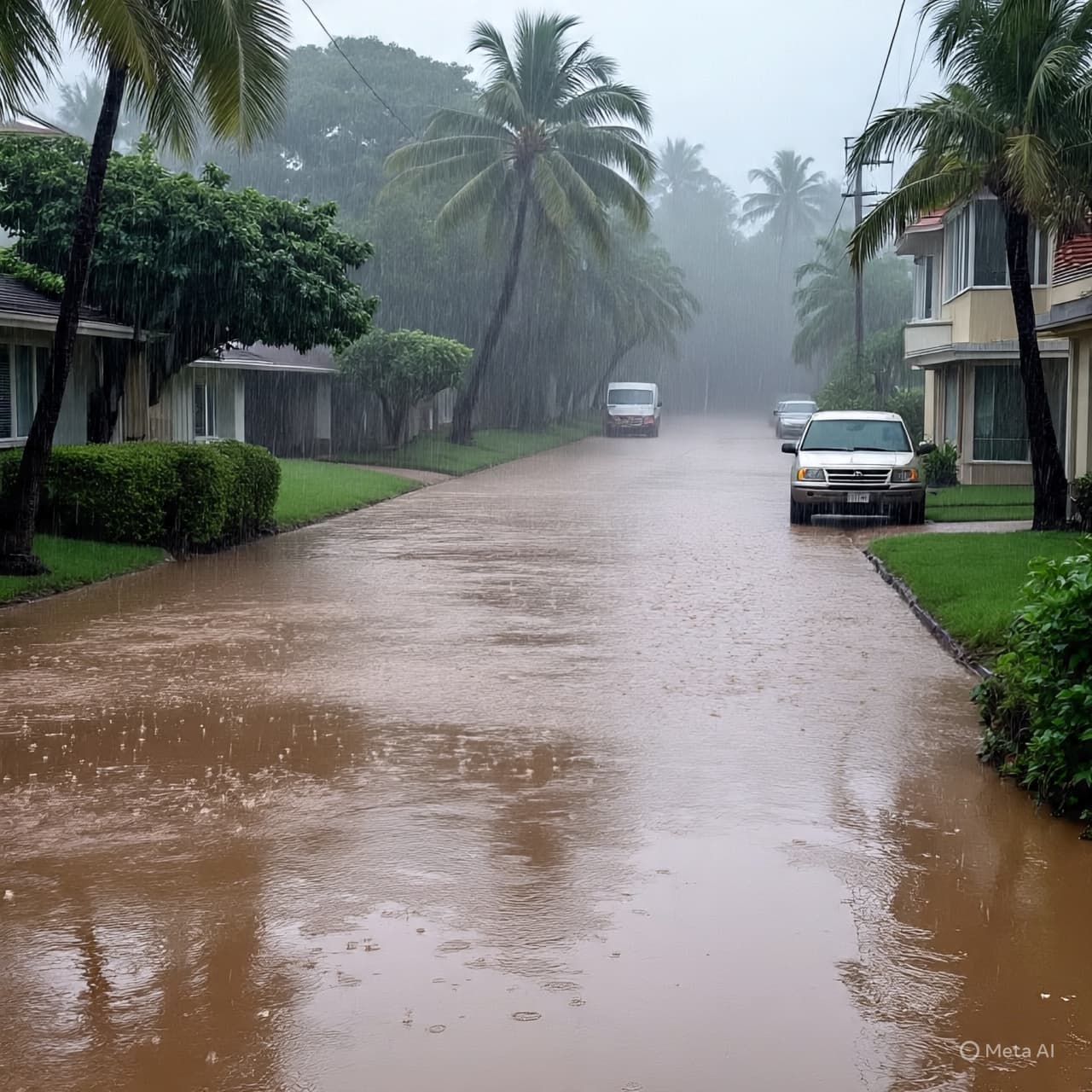
Flooding described as the worst in two decades has swept through parts of the islands, overwhelming roads, homes, and waterways that once held their boundaries. Water has moved beyond its usual paths, filling streets and low-lying areas with a steady, unyielding presence. What was once navigable has become uncertain, and what was familiar now carries risk.
Authorities have issued urgent evacuation orders, their message stark in its clarity: leave now. Such words, rarely used without necessity, carry a weight shaped by both experience and immediacy. They are not calls for preparation, but for movement—for distance from places where water continues to rise.
Emergency services have been working across affected areas, assisting residents, managing road closures, and responding to calls for help as conditions evolve. The scale of the flooding has stretched resources, with crews moving from one location to another, following the flow of water as it reshapes the landscape.
In many places, the rain has not relented. Rivers and streams, already swollen, have continued to push beyond their banks. Drainage systems, designed for more moderate conditions, struggle under the volume. The result is a landscape temporarily redefined—one where the distinction between land and water becomes blurred.
For residents, the experience unfolds in layers. There is the immediate urgency of safety, the decision to leave or remain, the gathering of essentials. Then there is the longer horizon—the awareness of what may be lost, and what will need to be rebuilt once the water recedes.
Yet even within the disruption, there is a quiet order to the response. Warnings are issued, shelters prepared, and communities adjust as best they can to the changing conditions. The storm does not pause, but neither does the effort to move through it.
Officials have confirmed that Hawaii is experiencing its worst flooding in 20 years, with evacuations ordered in multiple areas as heavy rain continues. Residents are urged to follow emergency guidance as conditions remain dangerous.
AI Image Disclaimer
These visuals are AI-generated and intended to illustrate the scene conceptually.
Sources
CNN BBC News The New York Times Reuters Associated Press
Published by Banx Network. This article is part of the Banx decentralized media programme, powered by the BXE token on the XRP Ledger.