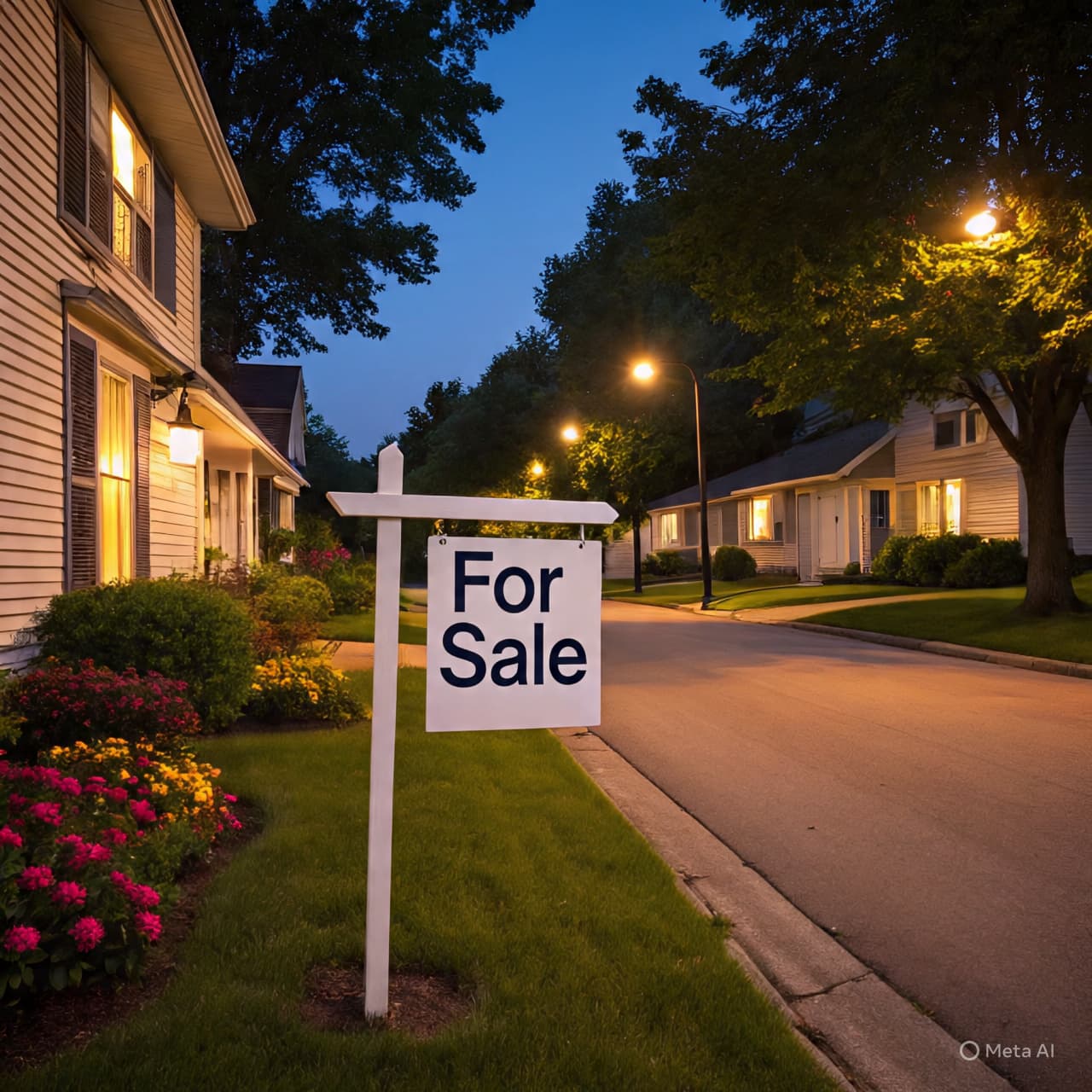
In neighborhoods where lawns mingle quietly with sidewalks and front porches catch the evening light, the idea of “home” has long carried a particular promise — comfort, stability, a place of one’s own. But in the measured rhythms of daily life across much of the United States, that promise feels at once familiar and, for many, increasingly distant. Behind the scenes of broader market statistics, a subtle shift is underway: mortgage stress is rising not with dramatic headlines but in the slow tightening of budgets in places already stretched thin.
For households with modest means, the weight of a mortgage has become more pronounced in recent months. Serious delinquency rates — loans more than 90 days behind — have climbed noticeably among the lowest‑income borrowers in the past few years. Whereas just a handful of homeowners struggled with overdue payments in 2021, by the end of 2025, levels of extended delinquency in lower‑income communities had risen severalfold, outpacing those of wealthier borrowers whose access to assets and savings has acted as a buffer.
This divergence emerges against a backdrop of broader credit pressures. Nationally, the overall rate of serious mortgage delinquency remains relatively low by long‑term standards, and some indices show housing affordability improving modestly in recent months as borrowing costs ease slightly. Yet the underlying picture is uneven: in regions where job opportunities have softened or housing prices have flattened or dipped, lower‑income homeowners are feeling the strain more acutely. Analyses show that mortgages in low‑income areas are slipping behind more often than in prosperous ZIP codes, even as the aggregate mortgage landscape seems stable.
For many involved, affordability is not an abstract concept but a daily balancing act. Mortgage rates, while ebbing slightly in early 2026 after months near six percent, remain well above the ultra‑low levels seen earlier in the decade, a reality that has both squeezed new buyers and kept existing homeowners “locked in” to legacy loans with lower payments. The “lock‑in” effect — where homeowners hesitate to sell or refinance because doing so would mean surrendering a comparatively favorable rate — further constrains inventory, pushing prices and cost burdens in ways that make stability elusive for those already on the margins.
Even beyond interest rates, the landscape challenges first‑time buyers and those with limited savings. Rising home prices over recent years mean many aspiring owners find themselves priced out entirely, requiring larger down payments or higher‑monthly costs that can leave little room for disruptions — a lost job, an unexpected repair, or rising insurance costs — before payments fall into arrears.
Yet the story unfolding now is not one of dramatic collapse. On national scales, mortgage performance remains within norms and declines in borrowing costs have provided some modest relief. Still, the uneven increases in hardship among the least affluent reveal how the broader economic tapestry can conceal quiet stress under its measured patterns: where the average might hold steady, the experiences of those with the fewest resources have already shifted.
In direct terms: U.S. data from late 2025 and early 2026 indicate that mortgage delinquency rates have risen significantly among lower‑income households, even as overall mortgage performance remains relatively healthy. Elevated borrowing costs, constrained housing inventory and sluggish regional labor markets have contributed to growing affordability pressures, particularly for first‑time buyers and economically vulnerable homeowners.
AI Image Disclaimer
Visuals are AI-generated and serve as conceptual representations.
Sources (Media Names Only)
Reuters Bloomberg BBC News The Washington Post Financial Times
Published by Banx Network. This article is part of the Banx decentralized media programme, powered by the BXE token on the XRP Ledger.