
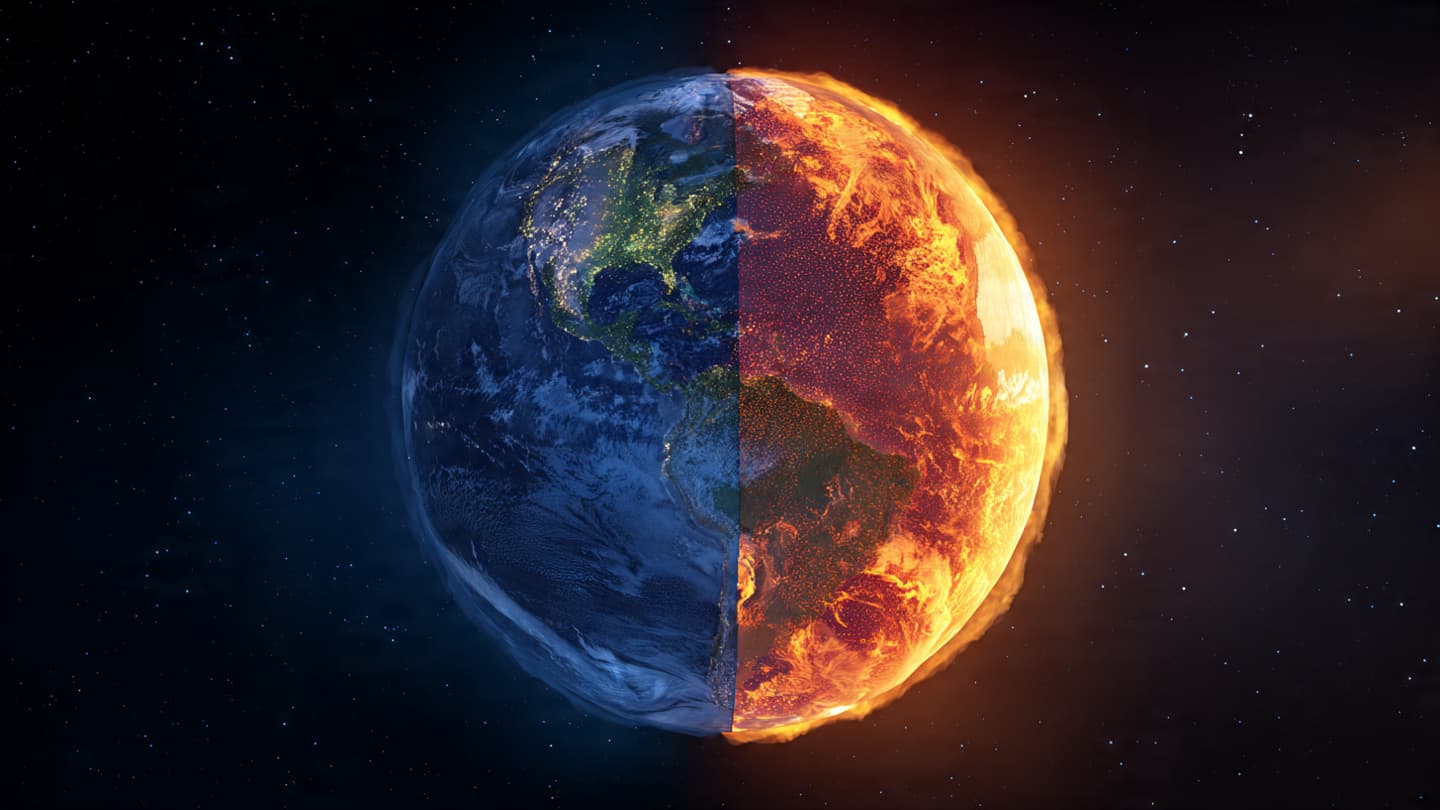
The idea of a global temperature threshold has long served as a reference point for climate policy and scientific forecasting. It represents not just a number, but a symbolic boundary between manageable change and more disruptive environmental conditions.
Recent climate assessments suggest that the 1.5°C warming limit may be reached sooner than earlier projections indicated. This development has prompted renewed attention from researchers studying long-term atmospheric and oceanic patterns.
The Earth’s climate system is shaped by interconnected factors, including greenhouse gas emissions, ocean heat absorption, and land-use changes. These elements do not operate in isolation, but instead reinforce or counterbalance one another in complex ways.
Scientists observing current trends note that rising emissions and slower-than-expected mitigation efforts contribute to a faster approach toward critical thresholds. However, they also emphasize that the exact timeline remains dependent on future human decisions.
The significance of the 1.5°C marker lies not only in the number itself, but in the cascading effects associated with it. These include more frequent heatwaves, changes in rainfall distribution, and increased stress on ecosystems.
Some regions are expected to experience these impacts earlier and more intensely than others, reflecting the uneven nature of global climate change. Vulnerability is often shaped by geography, infrastructure, and economic resilience.
Despite the concern, researchers continue to highlight that climate trajectories are not fixed. Policy changes, technological advancements, and global cooperation can still influence long-term outcomes, even if near-term challenges persist.
In closing, the updated projections serve as a reminder that climate change is not a distant scenario but an evolving process, where timing and response are closely intertwined.
AI Image Disclaimer: Images in this article are AI-generated conceptual visuals.
Sources: IPCC reports, Nature Climate, BBC Environment
Published by Banx Network. This article is part of the Banx decentralized media programme, powered by the BXE token on the XRP Ledger.



