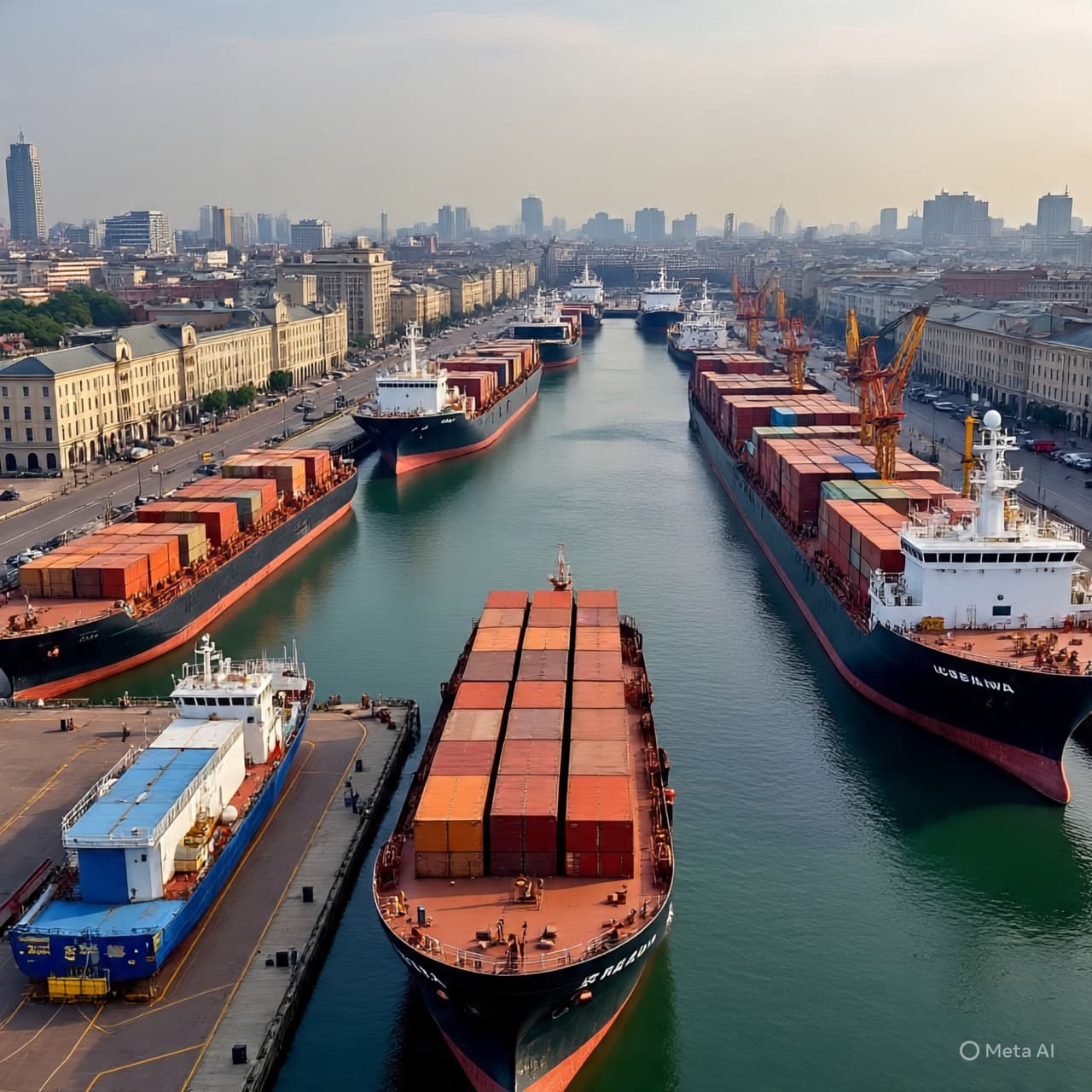
At the edge of the South Atlantic, Argentina often appears like a country listening to two distant conversations at once, each carried by a different wind. One voice arrives from the north, familiar and long-established, shaped by decades of financial ties and diplomatic habits. The other comes from across the Pacific, newer, steadier, and increasingly present in the everyday language of trade, infrastructure, and development. Between these currents, Argentine foreign policy has evolved less as a declaration and more as a careful act of navigation.
For much of its modern history, Argentina’s development model has been shaped by cycles of openness and retreat, by moments of global embrace followed by inward reflection. In this sense, the current Sino–US rivalry does not introduce an entirely new dilemma, but rather reframes an old one: how to pursue growth, stability, and autonomy in a world where power is once again concentrating. The country’s external relations reflect this inherited caution, favoring flexibility over alignment and pragmatism over proclamation.
China’s expanding role in Argentina has followed the quiet logic of roads, railways, currency swaps, and commodity flows. Soybeans, lithium, and beef have become more than exports; they are threads binding Argentina to a development pathway that emphasizes physical infrastructure and long-term financing. Chinese engagement often presents itself without overt political conditions, appealing to a nation sensitive to the memory of external prescriptions. Yet this relationship also raises questions about dependency, transparency, and the long horizon of repayment, questions that tend to surface softly rather than loudly in official discourse.
The United States, by contrast, remains embedded in Argentina’s institutional landscape. Its influence is visible in multilateral lending structures, financial norms, and the broader architecture of global markets. Washington’s approach increasingly frames Latin America within strategic competition, but Argentina’s response has been measured. Rather than echoing rivalry, policymakers have tended to emphasize cooperation, shared values, and economic normalization, even as negotiations with international creditors reveal underlying tensions.
Argentina’s development model sits at the center of this balancing act. Industrial recovery, energy self-sufficiency, and export diversification are not merely domestic goals; they are diplomatic signals. Engagement with China supports large-scale projects and commodity demand, while ties with the United States and its partners remain essential for financial credibility and access to advanced technologies. The model that emerges is hybrid, marked by coexistence rather than choice.
In this context, foreign policy becomes less about choosing sides and more about maintaining room to maneuver. Argentina has participated in Chinese-led initiatives while reaffirming commitments to Western institutions. It has welcomed investment from both poles, often framing decisions in technical rather than ideological terms. This posture reflects an understanding that overt alignment could narrow options in an uncertain global economy.
Still, the space for ambiguity is not infinite. As Sino–US competition deepens, pressures subtly increase, especially in sectors tied to energy transition, telecommunications, and critical minerals. Argentina’s lithium reserves, in particular, draw attention from both powers, turning geology into geopolitics. How the country manages these interests may quietly redefine its development path in the coming years.
For now, Argentina’s approach remains one of calibrated engagement. Its leaders speak the language of sovereignty and cooperation, avoiding sharp rhetoric even as global narratives harden elsewhere. The country moves forward without dramatic gestures, adjusting course incrementally, attentive to opportunity and risk alike. In a world increasingly framed by rivalry, Argentina continues to practice the art of measured presence, keeping its development ambitions afloat between two powerful tides.
Published by Banx Network. This article is part of the Banx decentralized media programme, powered by the BXE token on the XRP Ledger.