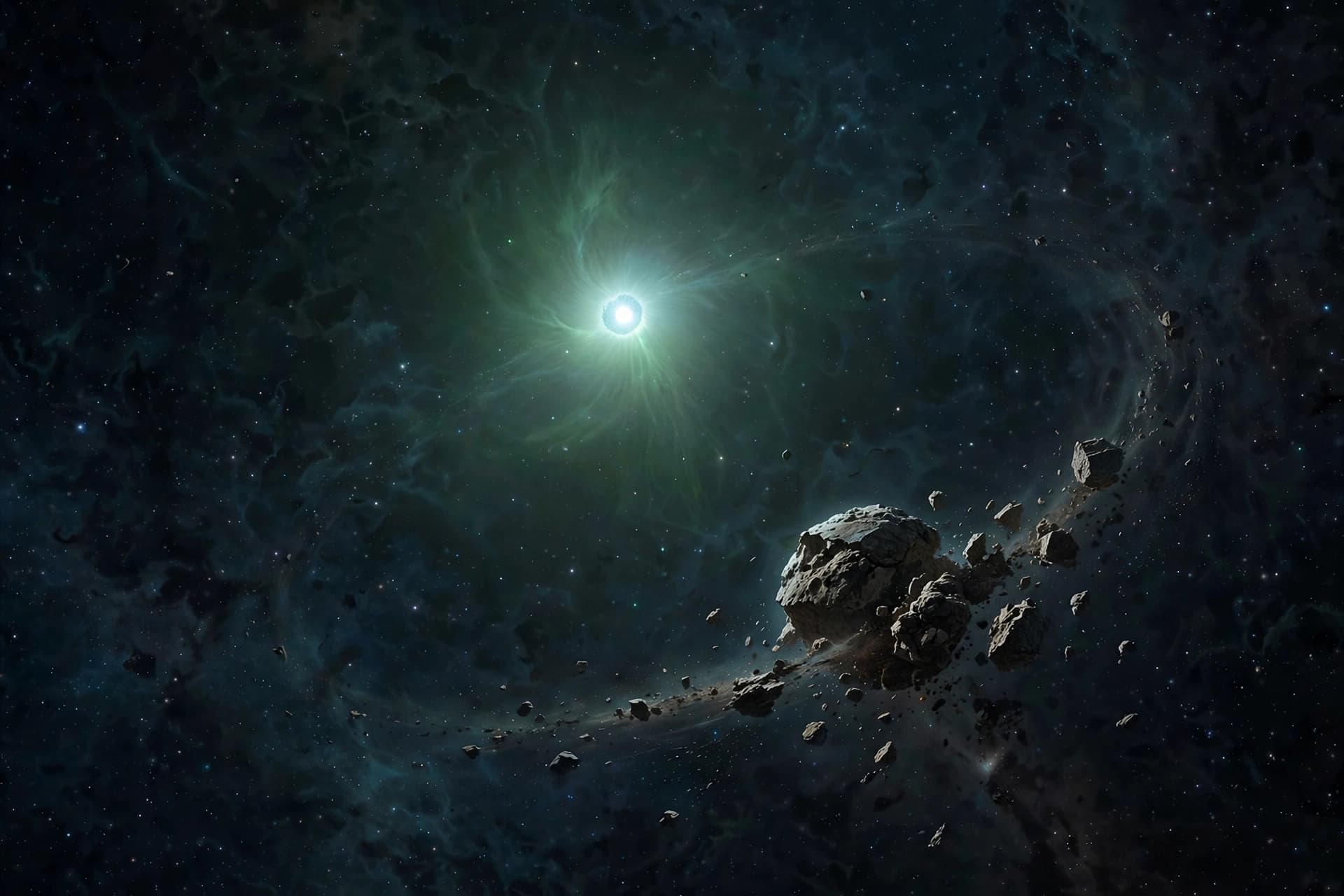
There was a time when the night sky felt like an untouched canvas, a quiet expanse where darkness held its depth and stars spoke in steady, ancient light. To look upward was to encounter distance itself—something immeasurable, something that asked nothing but attention. Yet even this oldest of human experiences has begun, gently and almost imperceptibly, to change.
As moves past the milestone of launching its 10,000th satellite, the sky above us is no longer shaped solely by nature’s hand. The satellites, part of the company’s expanding network, orbit in coordinated patterns, forming a lattice of connectivity designed to bring internet access to even the most remote corners of the Earth. It is, by many measures, a remarkable technical achievement—one that speaks to ambition, engineering precision, and a reimagining of global communication.
But alongside this progress, a quieter observation has emerged. Photographers and astronomers, accustomed to capturing the night sky in its relative stillness, have begun to notice the subtle presence of these satellites as streaks of light crossing their frames. Long-exposure images, once filled only with stars and the slow drift of celestial motion, now occasionally reveal thin, luminous lines—brief but unmistakable traces of human activity in orbit.
One photographer, working under a sky that would once have been considered pristine, described the experience not as disruption, but as a shift. The camera still captures the stars, the constellations still hold their shapes, yet the image carries something new—an overlay of movement that belongs not to the cosmos, but to us. It is a reminder that even in looking outward, we are beginning to see ourselves.
The impact is not uniform, nor is it universally negative. Engineers have worked to reduce the brightness of satellites, experimenting with coatings and orientation techniques that minimize their visibility. Astronomers continue to adapt as well, developing methods to filter out satellite trails from observational data. The conversation, in many ways, is ongoing—less a conflict than a negotiation between access and preservation.
What makes this moment particularly reflective is the scale. A few satellites might pass unnoticed, but thousands begin to form a presence, subtle yet cumulative. The night sky, once defined by its vast emptiness, now carries a faint geometry of human design. It does not erase the stars, but it shares the stage with them.
For those who spend time observing the sky—whether through telescopes or camera lenses—this change invites a reconsideration of what it means to witness the universe. Is the presence of satellites a form of visual noise, or does it become part of a new narrative, one where Earth’s technological reach extends visibly into space? The answer, perhaps, depends on where one stands, and what one hopes to see.
There is also a broader perspective to consider. The same network that leaves traces across the night sky enables communication in regions where connectivity was once limited or absent. It supports navigation, disaster response, and the quiet, everyday exchanges that define modern life. In this sense, the lines captured in photographs are not only marks of intrusion, but also signals of connection.
As launches continue and constellations expand, the balance between these perspectives will likely remain a subject of careful thought. Scientists, engineers, and observers are all part of a shared effort to understand and shape the outcome, ensuring that progress does not come at the expense of something less tangible, but deeply valued.
For now, the sky remains what it has always been—vast, layered, and open to interpretation. The stars still shine, distant and steady. And moving among them, almost like a new kind of constellation, are the satellites we have placed there, quietly tracing our presence across the dark.
In recent observations, astronomers note that while satellite trails are increasingly common in certain conditions, mitigation strategies are also improving. Space agencies and private companies continue to collaborate on reducing visual impact, suggesting that the evolving relationship between technology and the night sky is still being written, line by line.
AI Image Disclaimer Images in this article are AI-generated illustrations, meant for concept only.
Source Check (Credible Media Mentions)
Reuters BBC The New York Times The Guardian Space.com
Published by Banx Network. This article is part of the Banx decentralized media programme, powered by the BXE token on the XRP Ledger.