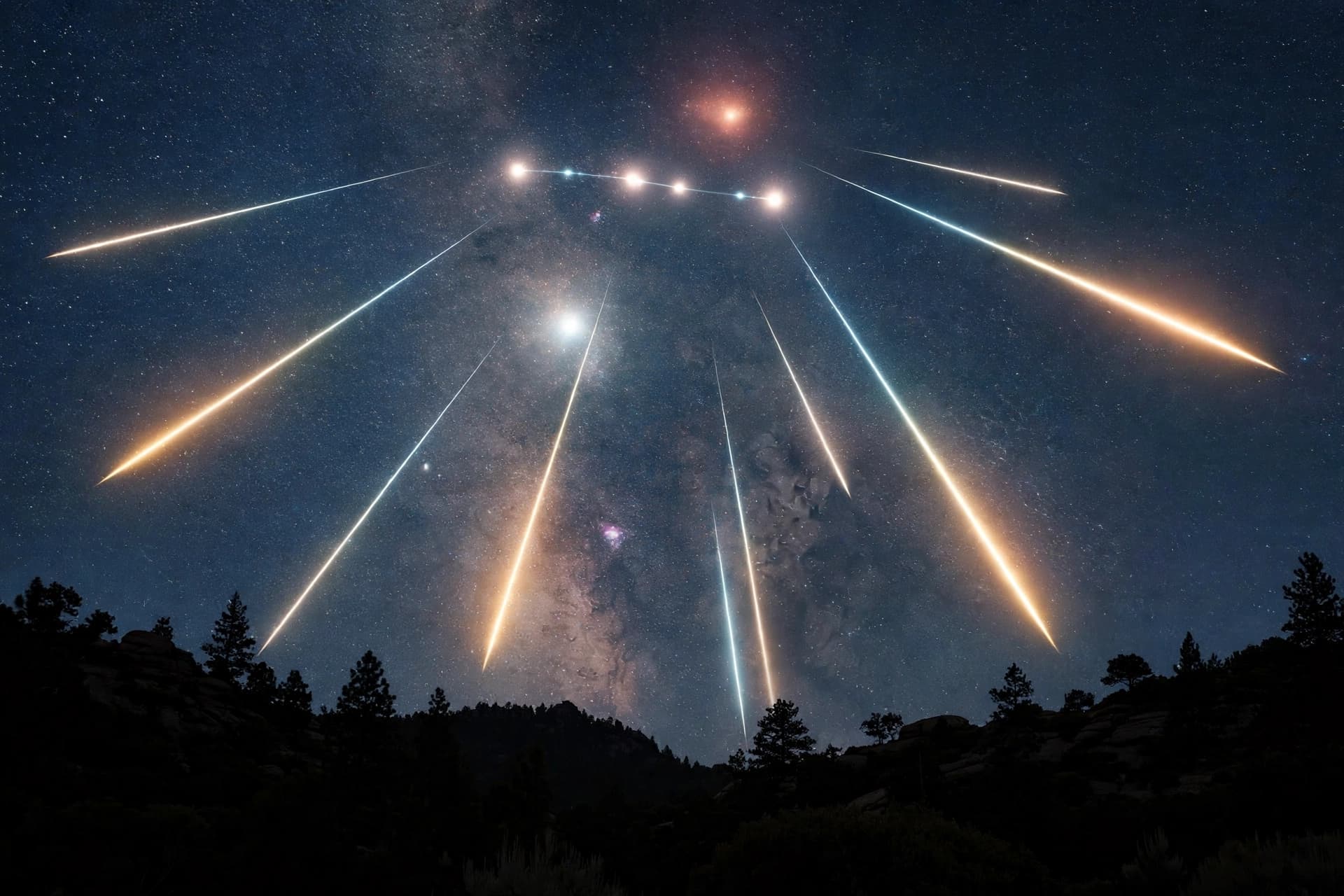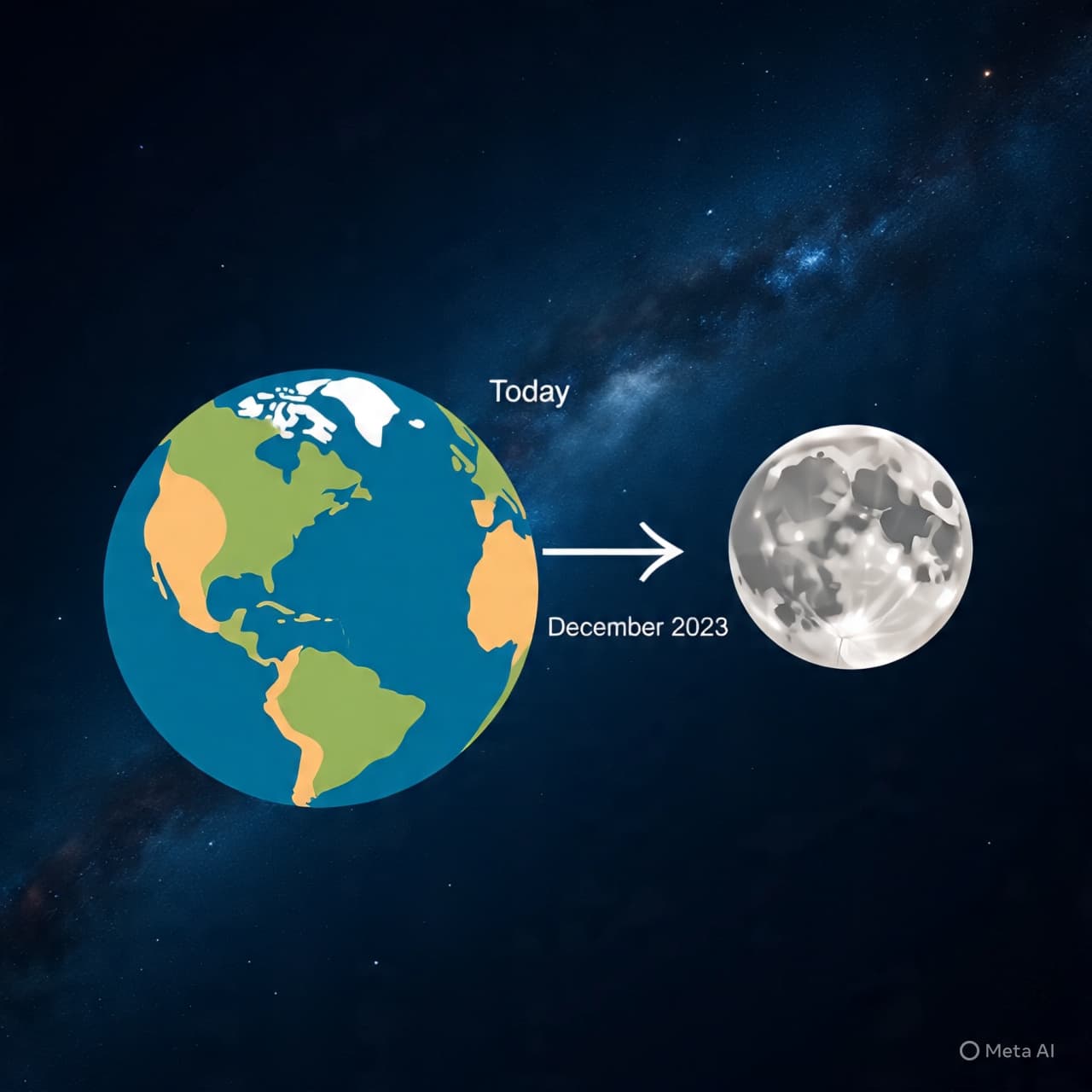
On warm evenings, when the horizon deepens into dusk and the Moon climbs slowly into the darkening sky, it feels like a quiet companion whose presence has always been steadfast. Like an old friend who walks beside us through countless nights, the Moon seems fixed — a silent witness to tides, seasons, and ancient stories told beneath its glow. Yet, in the vastness of cosmic time, even this constant companion moves. Each year, imperceptibly to our eyes, the Moon drifts away from Earth by mere centimeters — a gentle, enduring retreat that speaks to the subtle rhythm of celestial motion and the long dialogue between Earth and its satellite.
This motion is measured not in human lifetimes but in geological epochs. Instruments left by astronauts during the Apollo missions reflect laser beams back to Earth, revealing that the Moon recedes at a rate of about 3.5 to 3.8 centimeters per year. Over millions of years, this adds up, shaping the orbital embrace between our world and the Moon in ways that are both elegant and profound.
From an editor’s vantage point, this slow journey is less a tale of loss and more an invitation to contemplate the scales on which nature operates. The Moon’s gravitational pull, while weakening over time, still orchestrates the tides that rhythmically kiss our coastlines, and this pull helps stabilize Earth’s rotation and tilt — factors that, in turn, influence climate and the seasons that give shape to life.
As the celestial distance quietly increases, Earth’s rotation is slowing — imperceptibly from day to day, yet measurably over millions of years. Just as a dancer’s spin slows with extended arms, Earth’s days grow subtly longer as angular momentum transfers between tide and orbit. In the distant future — hundreds of millions of years ahead — a day might be noticeably longer than 24 hours, not through abrupt change, but the cumulative effect of time itself.
Yet within the span of human experience, these changes unfold so slowly that no individual will observe them in their lifetime. Weather, as we live it — the pattern of rain and sunshine, winds and storms — is governed mostly by the daily interplay of atmospheric dynamics, solar heating, and terrestrial geography, rather than the creeping motion of our lunar neighbor. While the Moon’s gravity does shape the tides, its gradual retreat does not cause noticeable shifts in everyday weather patterns.
That said, scientists reflect on long‑term rhythms of climate and Earth’s axial tilt with humble curiosity. The Moon’s stabilizing influence on Earth’s rotational tilt means that a more distant satellite could, over extraordinary timescales, allow the planet’s tilt to vary more freely — with potential implications for climate patterns far into the future. This is not a prediction of immediate change, but a reminder that celestial and terrestrial systems are intertwined in a vast and intricate cosmic tapestry.
In our present moment, however, the Moon’s slow recession remains a beautiful testament to time’s quiet hand — a whisper of change felt only by instruments and patient minds, not by weather vanes and clouds. It reminds us that even the grandest bodies in the sky are part of a rhythm that spans eons, inviting reflection rather than concern.
And in gentle news: according to astronomical observations, the Moon continues to move away from Earth at a rate of roughly 3.5–3.8 centimeters per year. This motion slightly lengthens Earth’s rotation over geological ages and subtly alters tidal forces, but it does not cause immediate or dramatic effects on current weather patterns experienced on the ground.
AI Image Disclaimer: “Images in this article are AI-generated illustrations, meant for concept only.”
Source Check — credible mainstream / niche sources found:
1. Kompas.com 2. Detik.com 3. ANTARA News / BRIN report 4. Times of India 5. Institute for Environmental Research and Education analysis
Published by Banx Network. This article is part of the Banx decentralized media programme, powered by the BXE token on the XRP Ledger.