The moon has not moved, but our relationship with it has aged. For half a century, it has hovered above Earth as memory more than destination — a symbol of what was done once, and not repeated. Now, as NASA prepares to send astronauts around the moon for the first time in 50 years, that long pause is beginning to close.
The Artemis mission marks a return not to footsteps on lunar soil, but to motion — a crewed journey looping around the moon, passing beyond its far side, and coming home again. It is a path last traveled during the Apollo era, when exploration carried the urgency of rivalry and the certainty of novelty. Artemis arrives in a different mood, shaped by patience, partnerships, and long horizons.
Four astronauts are set to ride aboard the Orion spacecraft, launched by the Space Launch System, a rocket built for deep space rather than spectacle. Their mission will test life-support systems, navigation, communication, and the rhythms of human presence beyond low Earth orbit. Nothing about the flight is casual. Every orbit, every maneuver, is meant to prepare for what comes after.
Unlike Apollo, Artemis is framed not as an endpoint, but as a threshold. NASA has positioned the program as the foundation for sustained lunar exploration — repeated missions, longer stays, and eventually, preparation for journeys farther still. The moon becomes less a destination conquered, more a place revisited and relearned.
There is symbolism here that NASA does not need to announce. Fifty years is long enough for achievement to turn into legend, and legend into abstraction. By circling the moon again, Artemis reconnects exploration with continuity, reminding a new generation that spaceflight is not frozen in black-and-white photographs.
The mission also reflects a broader shift in how space is approached. International cooperation, commercial partnerships, and layered responsibility replace the singular urgency of the past. Exploration becomes quieter, slower, and arguably more durable.
As launch preparations continue, the moment feels less like a leap than a careful step back onto a familiar path. The moon, once left behind as a completed chapter, is returning to relevance — not as a relic of past ambition, but as part of an unfinished story.
When the Orion capsule slips beyond the moon’s far side, briefly out of contact with Earth, it will echo a silence last experienced decades ago. And in that silence, history will not repeat itself exactly — but it will, unmistakably, resume.
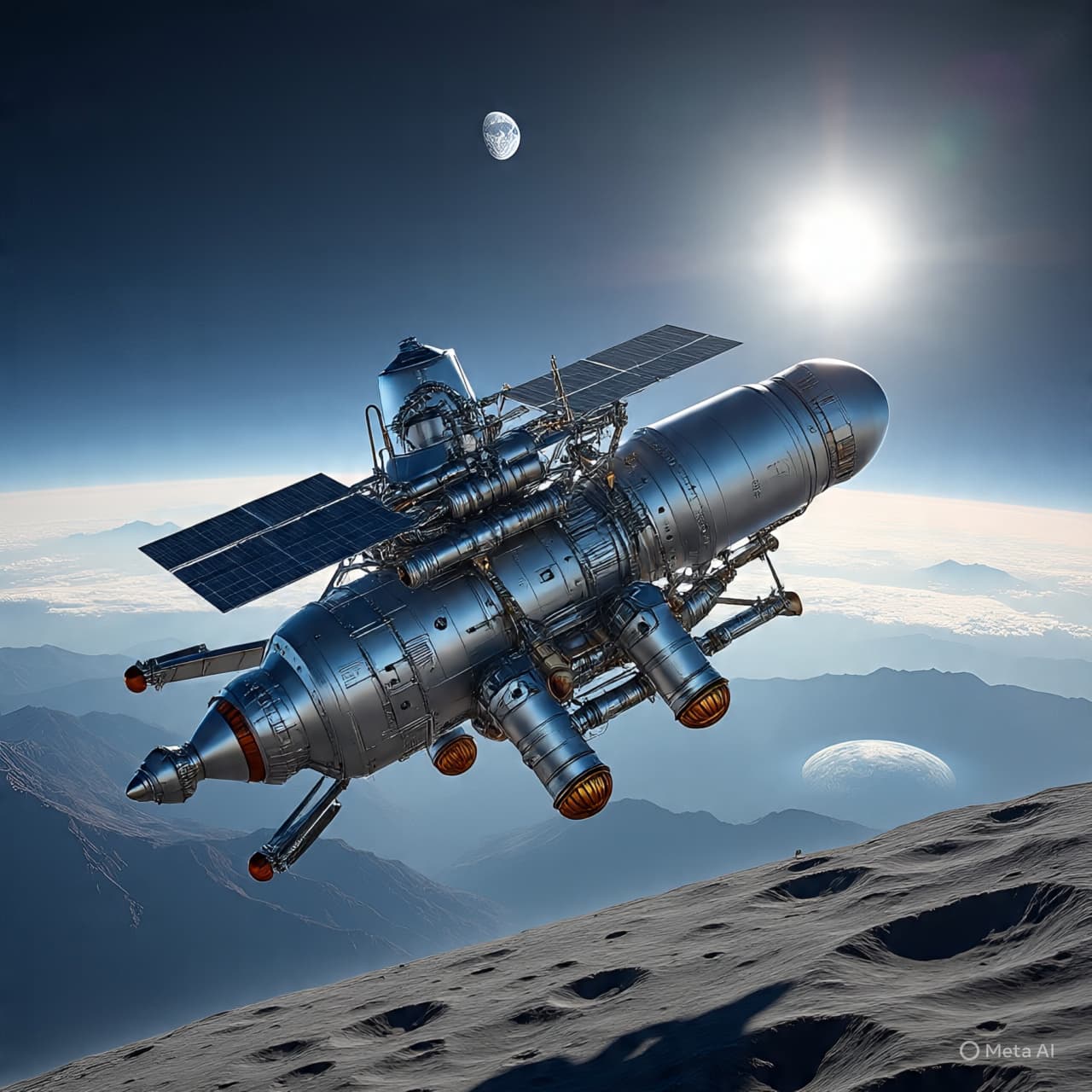
AI Image Disclaimer Illustrations were created using AI tools and are not real photographs.
Sources NASA mission briefings Artemis program documentation Aerospace and space policy analysts
Published by Banx Network. This article is part of the Banx decentralized media programme, powered by the BXE token on the XRP Ledger.