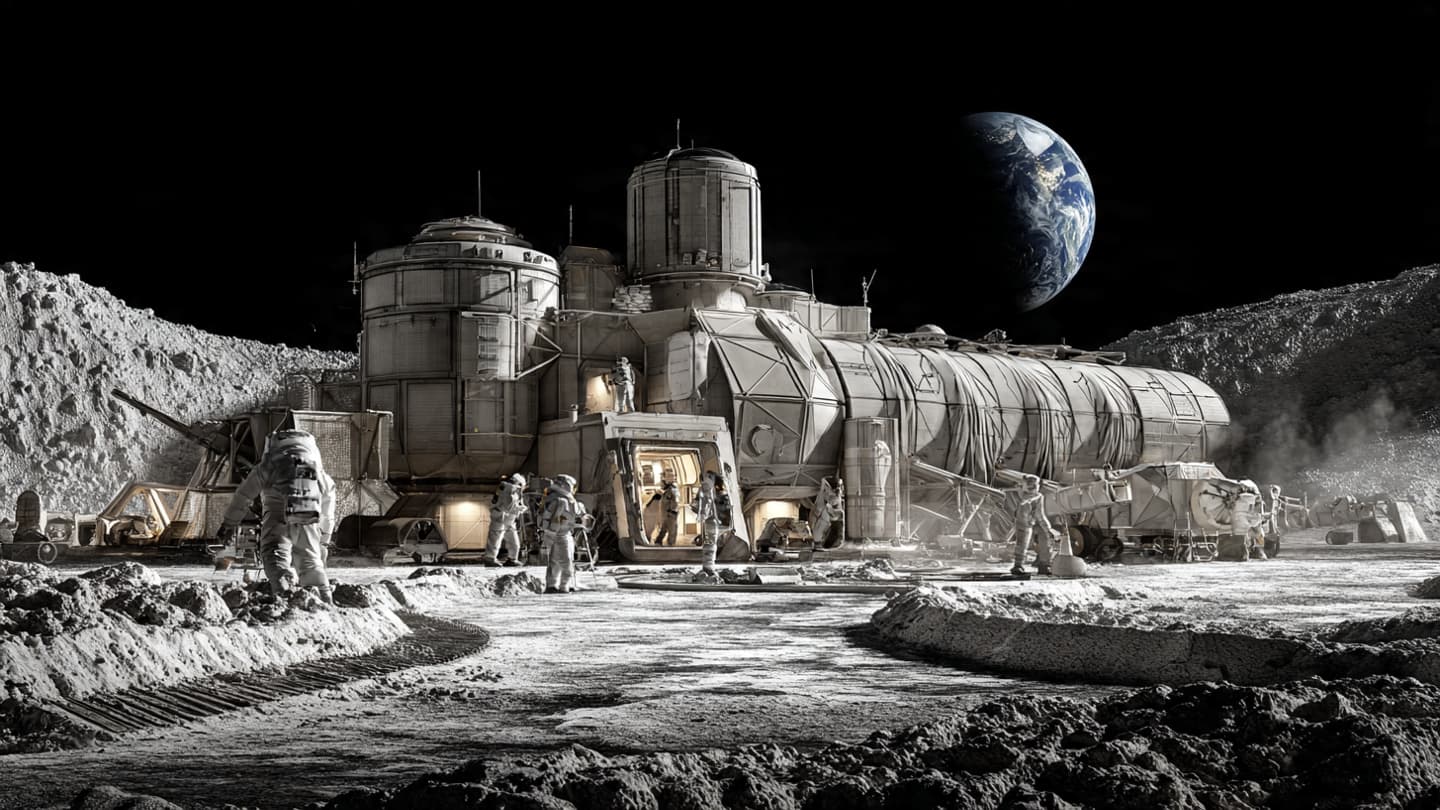
The Moon has always hovered at the edge of human imagination, close enough to touch with vision yet distant enough to remain symbolic. Now, that familiar silver companion in the night sky is being reconsidered not only as a destination, but as a possible place of residence. The idea of living there introduces a quiet shift in how humanity relates to space itself.
The has been developing long-term plans under its broader lunar exploration efforts, including the . These initiatives aim to return astronauts to the Moon and establish sustained presence through a combination of surface habitats, orbital infrastructure, and robotic support systems.
The concept of habitation within the next several years is closely tied to technological readiness. Life support systems, radiation shielding, and sustainable energy generation remain central challenges. Engineers are exploring modular habitat designs that could be deployed incrementally, allowing early missions to build toward more permanent structures over time.
Another key element involves resource utilization. Water ice potentially located in permanently shadowed lunar regions could be converted into breathable oxygen and rocket fuel. This approach would reduce dependence on Earth-based resupply missions and support longer stays on the lunar surface.
Human health in low gravity is also a major focus. Extended lunar stays require careful study of muscle degradation, bone density loss, and psychological adaptation to isolated environments. These factors shape how missions are designed and how long astronauts can safely remain on the Moon.
International and commercial partnerships are expected to play a role in supporting these ambitions. Collaborative frameworks allow shared expertise in propulsion, habitat construction, and surface operations, reflecting a broader shift toward multi-actor space exploration.
If realized, a sustained human presence on the Moon would serve as both a scientific platform and a stepping stone for deeper exploration, including eventual missions to Mars. The Moon becomes not an endpoint, but a practice ground for living beyond Earth.
As plans evolve, the idea of lunar habitation remains both ambitious and carefully measured. The coming years will determine how quickly engineering progress aligns with human readiness to extend life beyond Earth’s surface.
AI Image Disclaimer Visual materials related to this topic may be AI-generated and used for conceptual illustration.
Source Verification Check NASA, Nature, Science, Space Policy Journal, ESA, The Planetary Society
Published by Banx Network. This article is part of the Banx decentralized media programme, powered by the BXE token on the XRP Ledger.