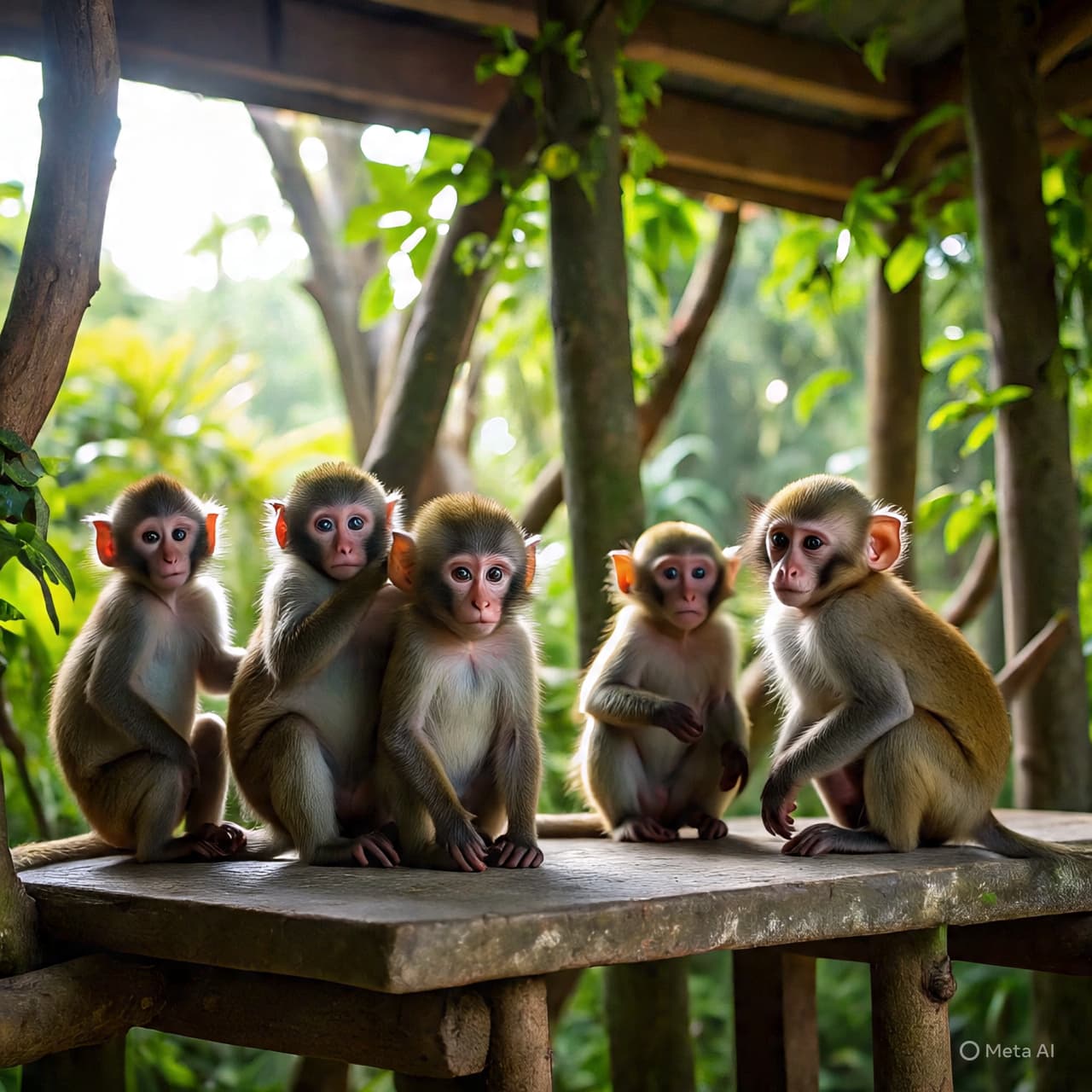
There are stories that travel the world not because they shake governments or shift markets, but because they quietly tug at something universal. In an age of relentless headlines, a small primate named Punch once became an unlikely emblem of loneliness — a solitary figure glimpsed through a screen, stirring sympathy from strangers continents away. Now, the latest update from his zoo arrives with a gentler tone: Punch, once described as alone, has made friends.
Punch, a monkey whose solitary appearance in earlier footage sparked widespread attention online, became known as “the internet’s favorite lonely monkey.” The viral images showed him sitting apart, prompting waves of commentary and concern across social media. Viewers projected human emotions onto the scene — isolation, sadness, longing — and in doing so transformed a brief clip into a global conversation about companionship.
Zoo officials, however, recently offered a reassuring clarification. According to the institution caring for Punch, the monkey was never permanently isolated, and staff have since introduced compatible companions to ensure his social needs are met. The zoo said Punch has successfully bonded with other monkeys in his habitat, engaging in grooming, play, and shared feeding routines — behaviors that signal healthy social integration among primates.
Experts note that many monkey species are highly social animals, relying on structured groups for security and interaction. Temporary separation can occur for medical checks, introductions, or habitat adjustments. In Punch’s case, the earlier images reflected a moment rather than a condition. The zoo emphasized that animal welfare remains its central priority and that Punch’s environment meets established care standards.
The episode underscores how quickly digital narratives can take shape. A short video clip, removed from broader context, can spark powerful reactions. In Punch’s story, the outpouring of empathy revealed something meaningful about human connection — a readiness to care, even across species lines. Yet it also highlighted the importance of patience before drawing conclusions.
Since the introduction of his new companions, Punch has reportedly shown signs of contentment. Zoo caretakers describe him participating in normal troop dynamics, from playful chases to quiet rest alongside others. While animals do not perform happiness for cameras, such behaviors are widely regarded by specialists as indicators of social well-being.
The zoo has welcomed the public’s interest, noting that the attention has provided an opportunity to educate audiences about primate behavior and conservation. Many monkey species face habitat loss and environmental pressures in the wild, issues that often receive less attention than viral moments. In this way, Punch’s brief fame may carry a secondary benefit — a reminder of broader ecological responsibilities.
For the online community that once rallied around him, the update feels like a small but welcome resolution. The image of solitude has given way to one of companionship. It is a modest story in a complex world, but perhaps that is precisely why it resonates.
Zoo officials confirmed that Punch will continue to live within his social group and that caretakers will monitor his integration as part of routine animal welfare practices. The monkey who once seemed alone now shares his space — and his story — with others.
AI Image Disclaimer Visuals are created with AI tools and are not real photographs.
Sources
Reuters Associated Press BBC News The Guardian NBC News
Published by Banx Network. This article is part of the Banx decentralized media programme, powered by the BXE token on the XRP Ledger.