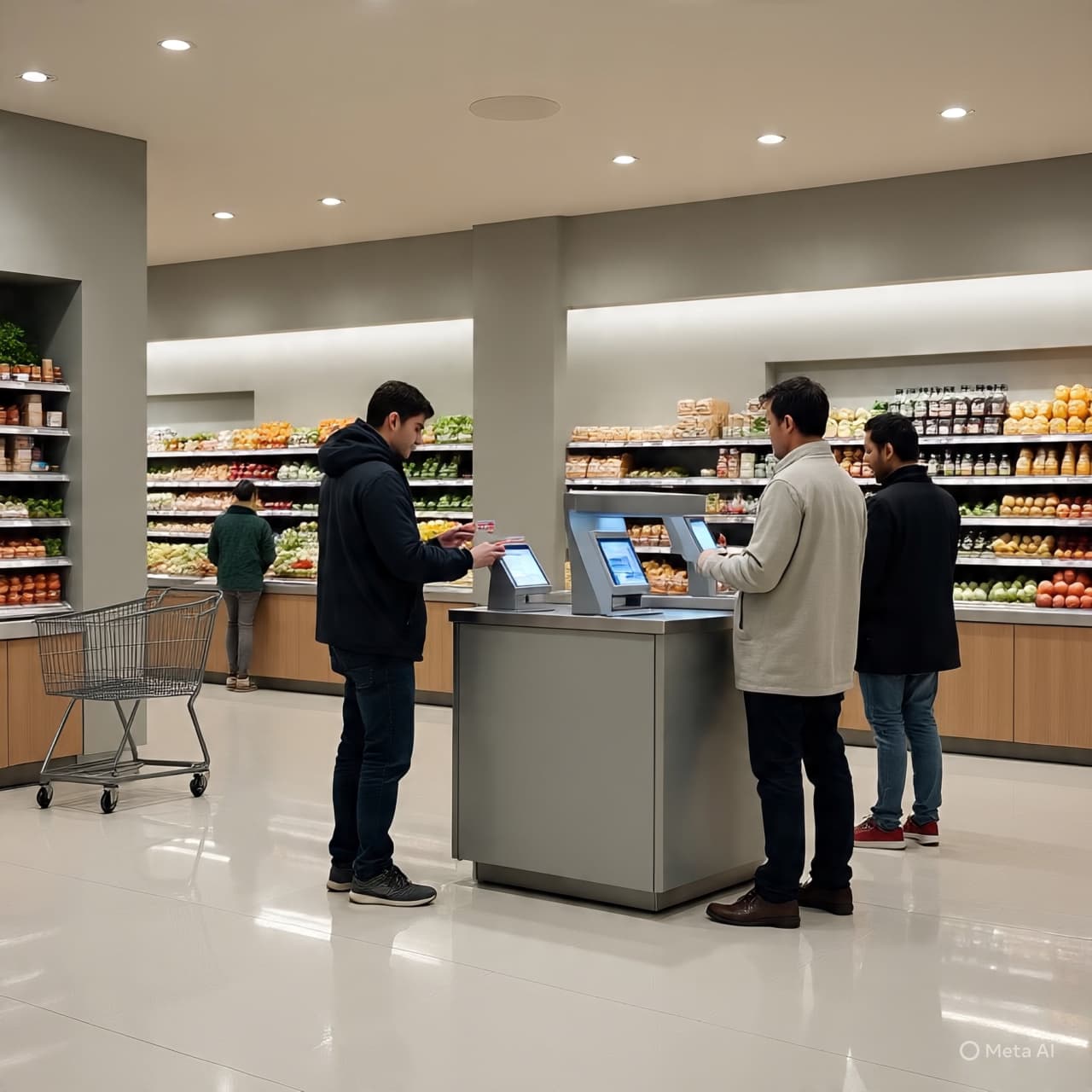
At the checkout counter, there is a brief pause. No wallet opens. No phone lights up. A hand hovers, palm facing downward, as if mid-gesture, and the transaction is already complete. The moment passes quietly, almost unnoticed, folded into the rhythm of daily errands. Yet beneath this small movement sits a larger shift in how money now moves through the world.
Palm-based payment systems are beginning to take root in stores, stadiums, offices, and transit hubs, particularly in parts of the United States and Asia. Using biometric mapping of veins beneath the skin, these systems allow customers to pay simply by placing their palm over a scanner. The technology links the unique structure of the hand to a stored payment method, eliminating the need for cards, cash, or even phones.
Supporters describe it as frictionless commerce brought to its logical endpoint. Over the past decade, payments have steadily shed their physical layers — from coins and notes to plastic cards, then to digital wallets and contactless taps. Palm recognition removes even the intermediary device. The body itself becomes the credential.
Behind the simplicity is a complex infrastructure. Infrared sensors read vein patterns that are difficult to replicate, while encrypted templates — not raw biometric images — are stored and matched in secure databases. Companies developing the systems argue that vein recognition offers stronger protection than fingerprints or facial scans, which can be captured at a distance. A palm, by contrast, must be intentionally presented.
Adoption remains selective, often introduced first in controlled environments such as corporate campuses, sports arenas, or retail chains testing customer response. In these spaces, the appeal is speed. Lines move faster. Lost cards no longer halt purchases. Loyalty programs and receipts can be automatically linked without a word exchanged.
Yet the arrival of palm payments also invites quieter questions about trust and consent. Unlike a card that can be left at home, the body is always present. Critics worry about normalization — that once biometric payment becomes convenient, opting out may feel increasingly impractical. Others raise concerns about data stewardship, surveillance, and how long such identifiers are retained.
Regulators, for now, tread carefully. Existing privacy laws often struggle to keep pace with technologies that blur the line between identity and infrastructure. Much depends on how companies define boundaries: whether biometric data is siloed, whether participation remains voluntary, and whether alternatives continue to exist alongside the new systems.
For consumers, the change is less philosophical than practical. Paying with a palm does not announce itself as a revolution. It arrives quietly, as a faster way to leave the store. The gesture feels natural, almost forgettable. And perhaps that is how financial shifts have always settled in — not with spectacle, but with small efficiencies that slowly reshape habit.
As the open hand replaces the open wallet, the future of payments may not look dramatically different. It may simply feel lighter, leaving nothing to carry, and much to consider.
AI Image Disclaimer Illustrations are AI-generated and serve as conceptual representations.
Sources Amazon Visa Mastercard MIT Technology Review The Wall Street Journal
Published by Banx Network. This article is part of the Banx decentralized media programme, powered by the BXE token on the XRP Ledger.