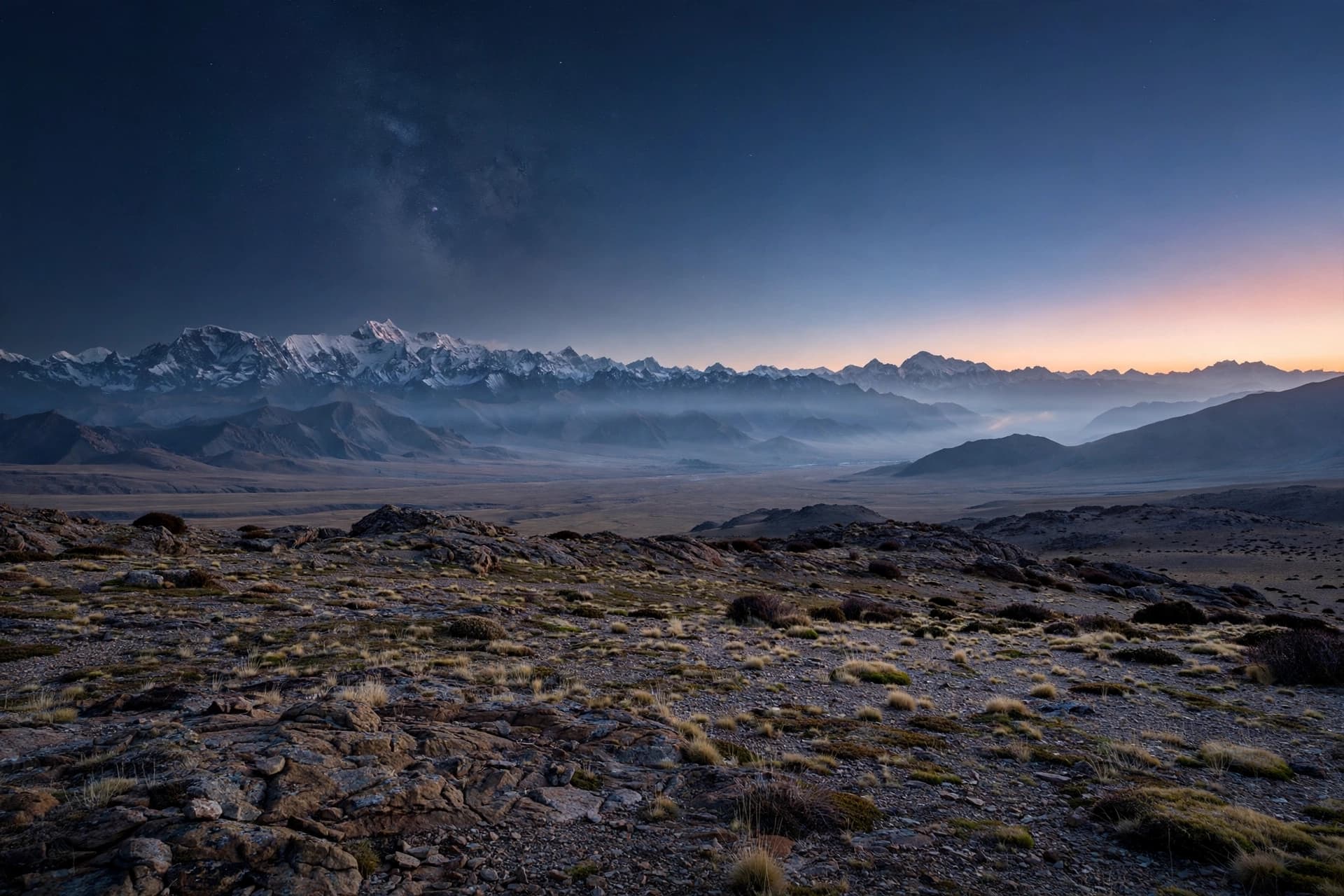
In the high plateaus of northern Tibet, where the air is thin and the earth is vast, the ground carries a stillness that feels permanent. At 10:33 on Thursday night, that stillness broke. A magnitude-7 earthquake struck the sparsely populated county of Baqing in Nagqu, and when the sun rose, the accounting of loss had begun.
At least sixteen people were killed and thirty-two injured, according to Chinese state media, with eleven of the injured in serious condition . At least 339 homes collapsed, and rescue teams from police and fire departments worked through the night to build tents for those displaced . The quake struck at a shallow depth of ten kilometers, according to the China Earthquake Networks Center, and its epicenter sat at an average elevation of nearly 4,900 meters .
The region is remote even by Tibetan standards. Nagqu is more than 400 kilometers from Lhasa, and the epicenter lay in a high-altitude area where the population is sparse and the cold is relentless . Videos released by local official media showed people leaving their homes and seeking shelter outside or in parked cars, one resident describing being woken by the strong tremor and hearing the house squeak around them . A string of smaller tremors of magnitude 3 and 4 followed, a reminder that the earth was not yet finished moving .
Rescue operations were complicated by the terrain and the season. More than 1,600 people were deployed, and supplies including 1,000 prefabricated housing units, approximately 3,000 tents, folding beds, flashlights, and winter clothing arrived in the region . The quake was the strongest to hit China since January 2024, when a magnitude-7.1 event struck the northwestern region of Xinjiang without causing casualties or major damage . China's earthquake administration activated a Level II emergency response, the second-highest on a four-tier scale .
The numbers tell a story of a disaster that could have been far worse. The sparsely populated nature of the region meant that the toll, while tragic, was limited. But for the families of the sixteen who died, and for the thirty-two who were injured, the remoteness offers no comfort. A collapsed home is a collapsed home, whether it sits in a city of millions or a valley where the nearest neighbor is a kilometer away.
Tibet sits at the collision point of tectonic plates, and earthquakes are a familiar, if unwelcome, part of life there. The region has known tremors before and will know them again. What changes each time is the human cost, the specific weight of loss that cannot be captured in magnitude scales or casualty figures. Sixteen people went to sleep on Thursday night in their homes. By Friday morning, their homes were rubble, and they were gone.
Search and rescue efforts continued into Friday, with police and emergency crews working in the cold and thin air. The tents were erected, the supplies distributed, the injured transported to hospitals. The machinery of response moved as it is designed to move. But the work of mourning, of rebuilding, of carrying on in a place where the earth itself is restless—that work belongs to the living, and it will take far longer than the rescue operation ever could.
This article includes AI-generated images for illustrative purposes only.
Sources: Australian Broadcasting Corporation, The Canadian Press, Associated Press, EFE Noticias, NRK
Published by Banx Network. This article is part of the Banx decentralized media programme, powered by the BXE token on the XRP Ledger.