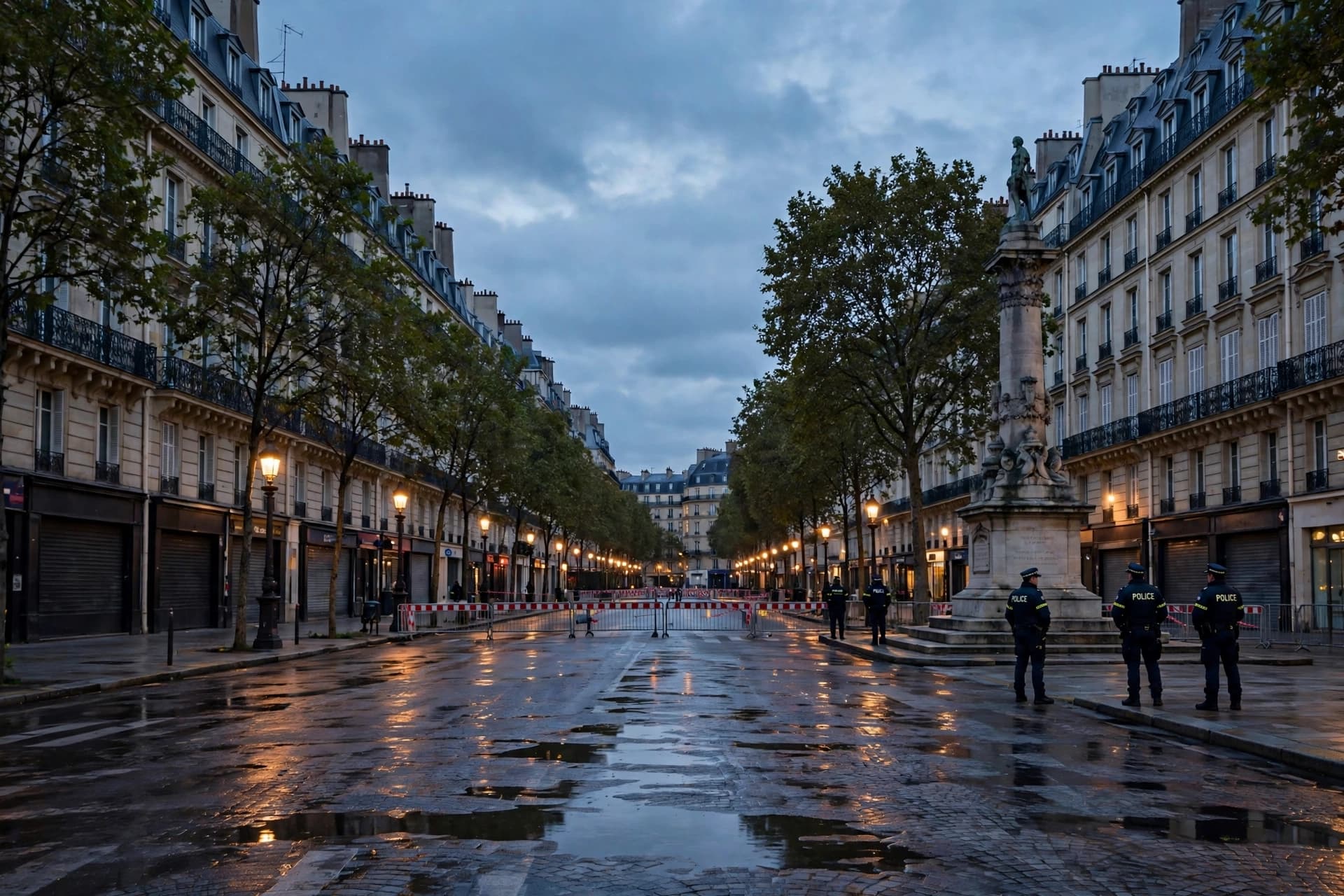
There is a tension that runs through the heart of a republic when the street becomes both the symbol of its freedoms and the site of its fears. France has long understood this tension, has lived with it through revolutions and strikes and the familiar choreography of protest and response. This week, the government of President Emmanuel Macron made a choice that sits uneasily within that tradition. Citing the violence and destruction that followed demonstrations on October 17, authorities issued bans on protests in Paris, Lyon, Lille, and other major cities, and the president declared that only demonstrations organized by trade unions would be permitted on Saturday, October 24 .
The language Macron used was careful, almost gentle, even as the policy was firm. Speaking after a security meeting at the Élysée on Thursday, he said the general recommendation was that there should be no protests in the coming days. "For those who want to continue demonstrating, when they are trade union organizations, the prefects will propose alternative routes," he said. "When they are not trade union organizations, wherever we can, we will ban them" . The goal, he said, was the return of calm. The government has pledged to deploy twenty percent more security personnel than last week, when some 60,000 police and gendarmes were mobilized .
The immediate trigger was the unrest of October 17, when protests in several cities were marred by violence and looting. Macron described what happened as "political acts aimed at bringing down the Republic," alongside what he characterized as ordinary criminality . The bans in Paris cover the area around the Élysée Palace, the National Assembly, the Senate, the Louvre, and major squares from 8 a.m. to 8 p.m. on Thursday, and Lyon went further, banning all demonstrations on Saturday, the day when student groups and the Yellow Vest movement had called for nationwide mobilization .
But the bans have not gone unchallenged. On Thursday afternoon, administrative courts suspended the Paris police prefecture's ban on a demonstration organized by Interfac Île-de-France, a student collective, allowing it to proceed. Thousands marched peacefully through the streets of Paris, mostly young people, under heavy police presence . The legal challenge reflects a deeper question about the balance between order and liberty. In France, the right to protest is a fundamental freedom, and authorities may only restrict it when there is a risk of disturbing public order, with measures that are strictly proportionate and used as a last resort . The courts will likely be asked to weigh the government's bans against that standard in the coming days.
The political context adds another layer. The unrest comes amid broader social and financial anxiety in France, with the value of French government bonds falling in recent days as political and social turmoil has compounded fiscal concerns . The government's decision to restrict protests is not only a matter of public safety but a signal of its determination to reassert control. Whether that signal will calm the situation or inflame it is a question that Saturday may begin to answer.
For now, the streets of Paris and other cities are quieter than they might have been, but the quiet is not the same as peace. The unions will march on Saturday with the government's permission, and the students and others will find their own ways to be heard, as they always have. The republic will continue its long argument with itself, in the courts and in the streets, and the question of how much order is worth how much liberty will be asked again, as it always is.
---
Image Disclaimer: All visuals in this article are AI-generated and are not actual photographs of the events described.
Sources: Yonhap News Agency, KBS, Les Dernières Nouvelles d'Alsace, Brut, AP
Published by Banx Network. This article is part of the Banx decentralized media programme, powered by the BXE token on the XRP Ledger.